

Emerald Pages
◆
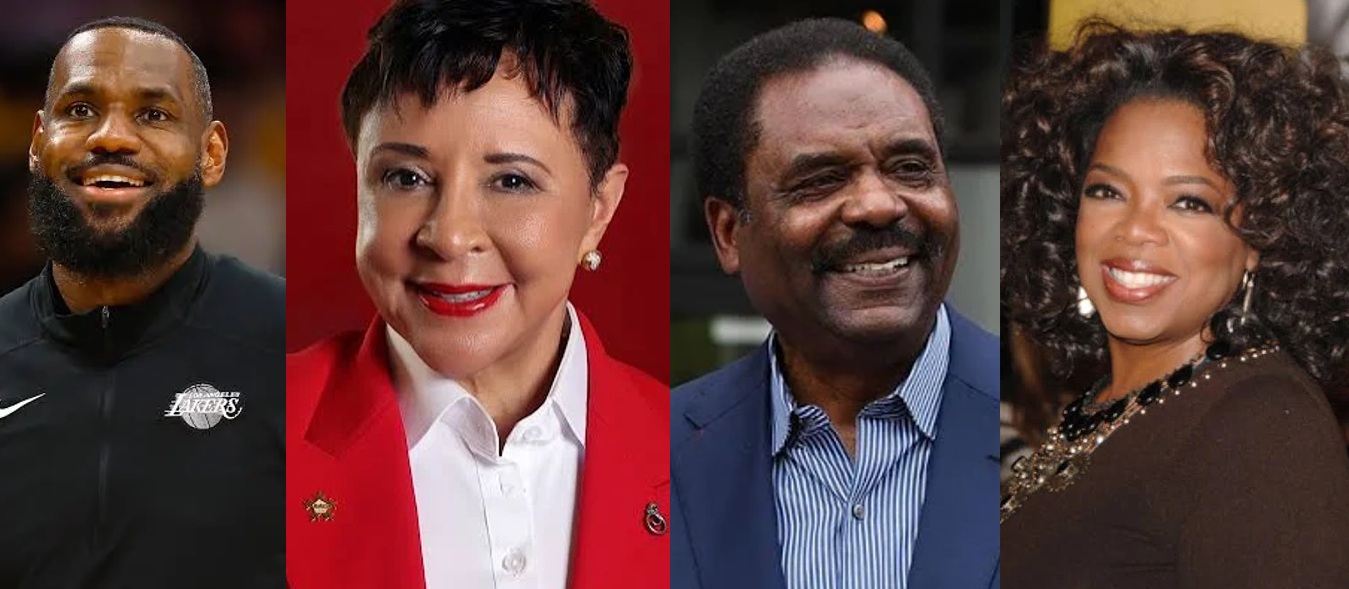
Photo: Emerald Book Image
As of early 2026, there are exactly 17 Black billionaires holding U.S. citizenship, according to Forbes and UrbanGeekz. The list ranges from Alexander Karp (Palantir, $13.4B) to newcomers like Beyoncé and Dr. Dre. A critical question has emerged from academic and activist circles: How many of these 17 are actually pro-Black?
The standard sociological definition of pro-Black behavior goes beyond occasional charity. It demands active investment in Black institutional power, economic autonomy, collective uplift, educational advancement (especially HBCUs), cultural preservation, and marrying within the race as part of a holistic commitment to Black community wellbeing. When all of these criteria are applied together, the number drops to 8 individuals.
That means 47%—less than half—of America's Black billionaires meet the full pro-Black standard. The others either married interracially, remain single, or have not built the institutional infrastructure required for the designation.
The 8: Fully Pro-Black Billionaires
These individuals meet the full criteria: They have demonstrated institutional commitment to Black communities and have Black spouses or long-term partners.
- David Steward ($12.4B) – Major HBCU donor and advocate for minority business ecosystems; married to Thelma Steward.
- Jay-Z ($2.8B) – Roc Nation champions criminal justice reform and economic empowerment; married to Beyoncé.
- Oprah Winfrey ($3.2B) – $25M+ to Morehouse, $20M to NMAAHC; long-term partner Stedman Graham.
- LeBron James ($1.4B) – Founded I PROMISE School in Akron for Black families; married to Savannah James.
- Magic Johnson ($1.6B) – Brings economic infrastructure to urban Black neighborhoods; married to Cookie Johnson.
- Sheila Johnson ($1.2B) – BET co-founder prioritizing Black representation; married to William T. Newman Jr.
- Tope Awotona ($1.4B) – Supports minority entrepreneurship and tech pathways; married to a Black spouse.
- Dr. Dre ($1B) – $70M gift to USC for diverse innovation; in a relationship with Apryl Jones.
The Other 9: Why They Don't Qualify
The remaining 9 Black billionaires fall short of the full pro-Black standard, lacking either the institutional commitment, the cultural/family component, or both:
- Alexander Karp ($13.4B) – No public infrastructure for Black communities; wealth from government data analytics; never married; does not publicly acknowledge that he is Black.
- Robert F. Smith ($10B) – Massive HBCU philanthropy but married interracially; lacks full cultural commitment criterion.
- Michael Jordan ($4.3B) – $100M racial justice commitment but married interracially; lacks full cultural criterion.
- David Grain ($2.3B) – Telecommunications investments not focused on Black infrastructure; no public Black spouse.
- Tiger Woods ($1.5B) – General philanthropy not Black-specific; currently single with primarily non-Black relationships.
- Herriot Tabuteau ($1.5B) – Biopharma wealth without Black institutional focus; no public Black spouse.
- Stefan Kaluzny ($1.3B) – Private equity without Black community infrastructure; no public Black spouse.
- Tyler Perry ($1.4B) – Studio ownership is pro-Black but currently single; missing family structure component.
- Beyoncé ($1B) – Married to Jay-Z (already counted); qualifies through spouse and BeyGOOD work (included in Jay-Z entry).
The Paradox at the Top: Alexander Karp
No figure on the list better illustrates the disconnect between Black identity and pro-Black commitment than Alexander Karp, the co-founder and CEO of Palantir Technologies. With an estimated net worth between $13.4 billion and $16 billion, Karp is the richest Black American—yet he is arguably the least pro-Black of all 17 billionaires on the list.
Karp's distance from Black community engagement is striking across multiple dimensions. His company, Palantir, provides data analytics software to government agencies including Immigration and Customs Enforcement (ICE), the Department of Defense, and intelligence communities—agencies that many pro-Black activists criticize for their role in mass surveillance, deportation, and military actions that disproportionately harm Black and brown communities globally.
The Karp Contrast
Richest Black American: ~$13.4B - $16B
Public acknowledgment of Black identity: None
Investment in Black institutions: None documented
Black spouse/partner: No (never married)
Pro-Black designation: Does not qualify
Perhaps most telling is Karp's personal relationship with his racial identity. Unlike every other Black person on the billionaire list, Karp does not publicly acknowledge that he is Black. In interviews, profiles, and public statements spanning decades, he has consistently avoided any discussion of race or identity. He has never identified as Black in the way the others on this list have—whether through cultural expression, philanthropic focus, or community affiliation. His biracial background (his father is white; his mother is a Black artist) is documented by journalists, but Karp himself has declined to engage with it publicly.
This stands in stark contrast to other billionaires on the list. While some—like Robert F. Smith and Michael Jordan—have married interracially, they at least acknowledge their Blackness and direct significant resources toward Black causes. Karp does neither. He has no documented major gifts to HBCUs, no foundation focused on Black communities, no public advocacy for racial justice, and no Black spouse or partner. He is famously never married and has described himself as preferring a solitary, "freedom-focused" lifestyle.
Karp's case raises uncomfortable questions about representation and responsibility. He is counted as a "Black billionaire" because of how the world perceives him—a biracial man whom Forbes and others categorize as Black. Yet he does not claim that identity himself, nor does he use his extraordinary wealth—the largest fortune of any Black American—to benefit the Black community in any measurable way.
In the pro-Black framework, identity alone is insufficient. The standard demands action, investment, and cultural commitment. By that measure, Alexander Karp is not merely one of the 9 who fall short; he is the furthest from the mark, despite sitting at the very top of the wealth pyramid.
The Marriage Component in Context
Marriage within the race is one component of the pro-Black definition, not the sole determinant. It matters because intra-racial marriage, particularly at the billionaire level, helps retain capital within Black families and communities. It also signals a personal, lived commitment to Blackness that goes beyond public philanthropy.
For context, among high-earning Black Americans earning $100,000 or more, roughly 83% to 88% are married to Black spouses. Among college-educated Black men, 85% have Black wives. The billionaire class shows a much lower rate—just 47% have Black partners. This suggests that at the highest levels of wealth, cultural ties to the Black community may weaken.
The data is clear: every billionaire with a Black spouse in this analysis also exhibits pro-Black institutional behavior. Among those without Black spouses, the rate of institutional pro-Black behavior is significantly lower. The two tend to go together—but marriage is one factor among several.
Ultimately, of the 17 U.S. Black billionaires, only 8 (47%) meet the full, standard definition of pro-Black behavior. At the top of the wealth list stands Alexander Karp—the richest, yet the least connected to the community that, by ancestry, claims him. As the ranks of Black billionaires continue to grow, the question remains: Will extreme wealth translate into collective liberation and cultural continuity, or merely individual success and, in some cases, complete disconnection?
No Ads. By Us. For Us.
This article was only made possible by readers like you. We hope it inspired you to support Emerald Book, so we can continue producing content like this.
We will never show you ads, never sell your data, and never require a subscription to consume our content. Your gift helps us keep the truth accessible.
Please click the Support button on the bottom right of your screen to make a gift of any amount today.
Thank you for making this work possible.