

Emerald Pages
◆
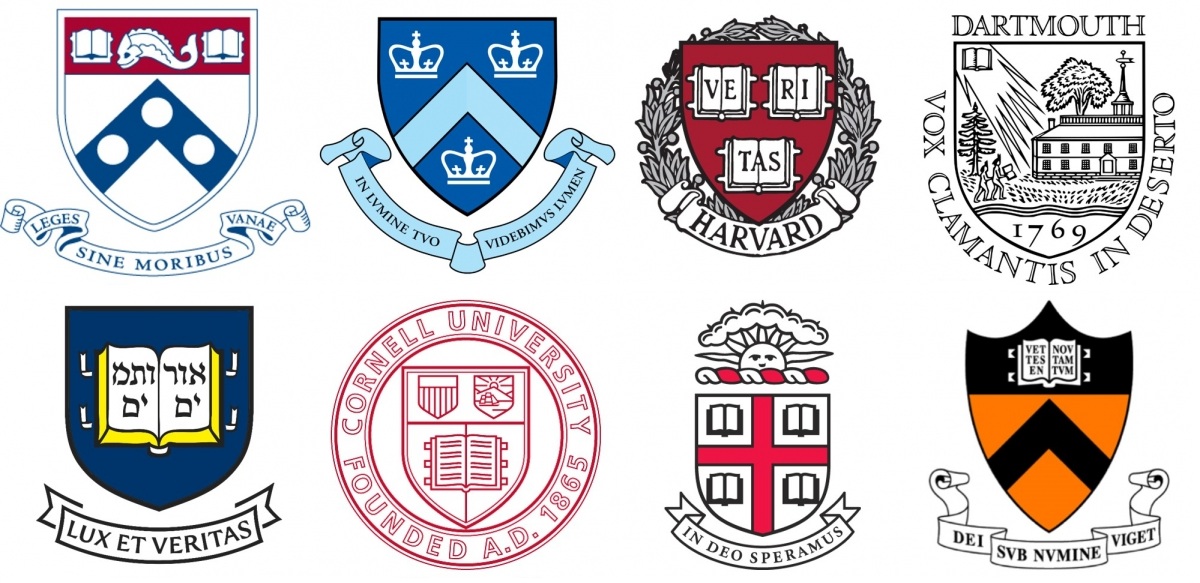
Photo: Emerald Book Image
By the federal government's own published criteria, the research emerging from Historically Black Colleges and Universities is exactly what funding agencies claim to want. The National Institutes of Health and National Science Foundation evaluate proposals using four specific benchmarks for "groundbreaking or impactful" work: high-stakes innovation that changes fundamental understanding, scalability that affects millions of people, economic and national security implications, and the ability to overcome scientific bottlenecks that hold back entire fields. HBCU researchers are hitting every single benchmark. They are pioneering CRISPR-based therapies for cancers that disproportionately kill Black women. They are developing community health interventions that could save thousands of maternal lives annually. They are solving the clinical trial diversity bottleneck that has plagued American medicine for centuries. And yet, they receive less than 1% of all federal Research & Development expenditures.
The numbers are indefensible. In fiscal year 2024, the eight Ivy League universities—collectively sitting on more than $185 billion in endowment wealth—received approximately $6.4 billion in federal funding. Meanwhile, all 100+ HBCUs, which graduate over 70% of Black doctors and produce the majority of health disparity research in America, received just over $1.34 billion for fiscal year 2025. That means the Ivies, despite their immense private fortunes, receive nearly five times the federal taxpayer support as the entire HBCU network combined. The average Ivy League school receives 178 times more philanthropic funding than the average HBCU. Harvard alone holds roughly $50 billion—more than ten times the combined endowment of every HBCU in America. Yet the federal spigot continues to flow overwhelmingly toward the wealthiest institutions.
The Four Benchmarks: How HBCU Research Checks Every Box
Federal agencies like the NIH and NSF define "potentially groundbreaking or impactful" research using four specific benchmarks. Here is how HBCU research measures against each—and why the funding still doesn't come.
Benchmark 1: High-Stakes Innovation (The 'First' Factor)
Reviewers look for projects that don't just add small details to existing knowledge but fundamentally change understanding. At Howard University's Cancer Center, researchers are pioneering immunotherapy approaches tailored specifically to African American populations whose genetic markers have been historically excluded from clinical trials. At Meharry Medical College, scientists are developing novel CRISPR-based interventions for triple-negative breast cancer—an aggressive form that disproportionately kills Black women. At Morehouse School of Medicine, researchers are creating first-of-their-kind community-based participatory research models that are being replicated nationally. These aren't incremental studies. They are paradigm-shifting. Yet Howard remains the only HBCU with the coveted R1 research designation, while the Ivies hold eight.
Benchmark 2: Scalability (Affecting Millions)
Impact is measured by how many people a project touches. Research into racial health disparities—where Black Americans experience significantly higher rates of chronic illness, maternal mortality, and treatable conditions—could affect over 40 million people directly and the entire U.S. health system indirectly. The cost of these inequities exceeded $1.2 trillion in medical expenses and lost productivity between 2003 and 2006 alone. HBCUs are uniquely positioned to lead this work: studies show Black patients have better outcomes when treated by Black doctors, and HBCUs produce the vast majority of Black physicians. By the scalability metric alone, HBCU disparity research should be a federal funding priority. Instead, the National Institute on Minority Health and Health Disparities received only $535 million in FY 2025—barely 1% of the NIH's $48 billion budget.
Benchmark 3: Economic and National Security
The government prioritizes research that maintains U.S. competitive advantage in AI safety, quantum computing, and pandemic prevention. But national security also means a healthy population. When Black maternal mortality rates are three to four times higher than white rates, that's a national security vulnerability. When chronic disease rates create workforce productivity gaps measured in the hundreds of billions, that's an economic security failure. HBCU researchers are developing community-based interventions that reduce these disparities—work that directly serves national interests. The funding, however, flows to wealthy institutions studying problems that affect fewer people. Research that protects the national power grid receives priority funding. Research that protects Black mothers does not.
Benchmark 4: Overcoming a 'Bottleneck'
Sometimes a whole field of science is stuck because of one missing piece. HBCUs are solving specific bottlenecks in clinical trial diversity, genetic research representation, and community health delivery. For decades, medical research has been conducted overwhelmingly on white male subjects. HBCU researchers are asking: what happens when drugs and treatments developed on that narrow population are applied to everyone else? The answer—worse outcomes, higher side effect rates, and preventable deaths—represents a bottleneck that HBCUs are uniquely equipped to solve. Their "lived experience" and community trust give them access to patient populations that Ivy League researchers cannot easily reach. This is precisely the kind of "impact" that federal criteria claim to reward. Yet the bottleneck persists, because the institutions best positioned to solve it are systematically underfunded.
- 70% — The share of Black doctors graduated by HBCUs, despite these institutions receiving a fraction of federal research funding.
- $12.8 billion — The cumulative funding deficit owed to 16 land-grant HBCUs under the 1890 Morrill Act, a legal mandate states simply ignored for decades.
- Less than 1% — The share of all federal R&D dollars that reaches HBCUs, even as their research meets every official 'groundbreaking' benchmark.
- 178x — The amount more philanthropic funding the average Ivy League school receives compared to the average HBCU.
- $929 million — Total R&D spending by all 59 major research HBCUs combined in 2024, compared to over $117 billion nationally.
The 'Overhead' Subsidy: Paying Rich Schools for Being Rich
Here is where the criteria become explicitly unfair. A significant portion of federal research funding is for "indirect costs" or "overhead"—what the government pays universities for lights, heat, administration, and building maintenance during research projects. Schools like Harvard and Yale charge the government overhead rates between 64% and 69%. For every $1 million in research the government buys from Harvard, it pays an additional $690,000 for campus maintenance. Critics argue this functions as a direct federal subsidy for schools that already have the private wealth to maintain their own buildings. The federal government is effectively taxing itself to maintain the real estate of the richest institutions in the country.
For HBCUs, the formula works entirely differently. Lower research volume means lower negotiated overhead rates. Less infrastructure means fewer successful grant applications. Fewer grants mean less indirect cost recovery. An HBCU might receive a $500,000 research grant but negotiate only 40% overhead—$200,000—compared to Harvard's nearly $700,000 on a $1 million grant. The wealth gap widens with every funding cycle. The criteria claim to reward scientific merit. In practice, they reward historical wealth. This is not a bug in the system. It is a feature that has been operational for generations.
Historical State Neglect: The $12.8 Billion Theft
Today's funding disparities didn't emerge from neutral criteria. Under the 1890 Morrill Act, states were legally required to equitably fund land-grant HBCUs. Many states simply refused. Recent federal analysis identified a cumulative deficit of over $12.8 billion across just 16 land-grant HBCUs—a conservative estimate of what was legally owed and never delivered. This is not a funding gap. It is a debt. States took resources that belonged to HBCUs and redirected them to predominantly white institutions. There remains no strong federal "accountability mechanism" to enforce these mandates. States that ignored the law for a century face no consequences. The federal government has never forced compliance. The debt remains unpaid.
This historical theft has compounding effects. Less funding in the past means less infrastructure today. Less infrastructure today means fewer successful grant applications. Fewer grants mean less indirect cost recovery. Less recovery means less capacity to hire top researchers. Less capacity means lower R1 designation prospects. Lower designation means less funding tomorrow. The cycle is self-perpetuating, and it was intentionally designed that way by states that chose to violate federal law for generations.
The 'R1' Barrier: A Designation That Locks HBCUs Out
The "R1" designation—the highest Carnegie Classification for research activity—functions as a key that unlocks larger federal grants. Currently, Howard University is the only HBCU with this status. The other 15 HBCUs actively pursuing R1 status face a catch-22: they cannot win enough large federal grants without the R1 designation, but they cannot achieve R1 designation without winning large federal grants.
Meanwhile, every single Ivy League institution holds R1 status. So do dozens of predominantly white public universities with endowments smaller than some HBCUs. The designation itself has become a proxy for institutional wealth, not research quality. A coalition of 15 HBCUs is currently campaigning to reach R1 status this year, but without targeted federal intervention, the barrier will remain firmly in place. The criteria for R1 status are not race-neutral. They are wealth-positive. And wealth, in American higher education, remains racially stratified by design.
Lobbying Power: The $1.5 Million vs. $500,000 Divide
Political influence compounds every other disadvantage. In early 2025, the eight Ivy League schools spent over $1.5 million on federal lobbying—triple what the entire 100+ HBCU network spent in the same period. When federal agencies draft grant criteria, when Congress allocates research budgets, when the NIH decides which "impact" metrics matter most, wealthy institutions have a seat at the table. HBCUs do not. This is not an accident. It is the predictable outcome of a system where money buys access, and access buys favorable rules.
2025–2026 Policy Shifts: Moving the Goalposts Mid-Game
Just as HBCUs were beginning to build research capacity, federal policy shifted dramatically. The same agencies that publish "groundbreaking" criteria have simultaneously made it harder for HBCUs to meet them.
Elimination of DEI Criteria: As of March 2025, the NIH and other agencies no longer require "Recruitment Plans to Enhance Diversity" in grant applications. Data tables that previously calculated the percentage of underrepresented minorities have been revised or removed. The explicit evaluation of workforce diversity as a scientific priority has vanished.
Grant Terminations: Between early 2025 and mid-2026, the NIH terminated over 5,100 research grants totaling more than $4.4 billion. An internal survey found these cuts disproportionately affected minority scientists and projects specifically focused on health equity—the exact research that meets the "groundbreaking" scalability and bottleneck benchmarks. The research didn't become less important. The political priorities changed.
Redefining 'Gold-Standard Science': In 2025, federal leadership announced a new strategy prioritizing research based on "clinical need—not identity." This shift treats racial disparity research as an "ideological" pursuit rather than a biological or scientific one, making it harder for projects focused specifically on Black-white health gaps to qualify as "impactful" under new guidelines.
The 'Diversity Vocabulary' Crackdown: Federal agencies have begun using automated text-analysis tools to scan grant abstracts for terms like "health equity," "structural racism," and "BIPOC." Research indicates that words reflecting diversity language in NIH grant abstracts decreased by 51% between late 2024 and mid-2025. In 2025 alone, diversity-related terms were deleted from grant renewals at a 10-fold higher rate than any other words. The NSF now allows program officers to recommend declining a proposal without traditional external review—"Return Without Review"—if the project doesn't align with current priorities. Proposals involving DEI concepts are being returned before they ever reach a scientific panel.
The Inconsistency: How 'Impact' Changed Overnight
Whether the criteria used by the NIH and NSF are "consistent" depends on whether you are looking at the scientific framework or the policy priorities. While the core scientific standards are meant to be stable, both agencies have undergone massive structural changes in 2025 and 2026 that have created significant inconsistency in how research on racial disparities is treated.
Pre-2025: The primary goal of "impact" included scientific merit plus addressing health inequities and workforce diversity. Review was multi-stage, conducted by expert panels with specific diversity criteria.
2025–2026: The primary goal of "impact" has shifted to scientific merit defined as "colorblind" excellence, with alignment to national security and clinical need. Automated scans for "misaligned" language now occur. Administrative returns without full review are common. Starting in January 2025, the NIH reorganized its five standard criteria into three core factors: Importance, Rigor and Feasibility, and Expertise and Resources (rated only as "acceptable" or "unacceptable"). In March 2025, the NIH announced that "Recruitment Plans to Enhance Diversity" are no longer required and will not be considered in funding decisions.
The same research proposal submitted in 2024 and 2026 could receive completely different evaluations. The research didn't change. The political definition of "impact" did.
'They Check Every Box. The System Still Rejects Them.'
Consider a representative comparison. An HBCU research team proposes a study on reducing Black maternal mortality—a crisis where Black women die at three to four times the rate of white women. The project meets every federal benchmark: high-stakes innovation (novel community health interventions with culturally competent care models), scalability (affects millions of women nationally), national security (a healthy population is a secure population, and workforce productivity depends on maternal health), and bottleneck-solving (addressing the specific gap in clinical trial diversity and culturally competent care that has existed for centuries).
An Ivy League team proposes a study on a rare genetic condition affecting 10,000 people nationally. The project also meets the benchmarks: innovation, some scalability, scientific merit. Both proposals are submitted to the NIH. Which one receives funding? Historically, the Ivy League proposal wins at a rate that bears no relationship to the human impact of the research. The Ivy League has better facilities, more famous investigators, higher overhead rates, and more lobbying power. The HBCU has the research that could save more lives. The funding follows the facilities. The criteria are, in practice, a proxy for wealth.
Economic Vulnerability and Student Impact
The research funding gap has downstream effects on students. HBCUs serve a high proportion of first-generation and low-income students who rely heavily on Pell Grants. Cuts to broader social safety nets—Medicaid and food assistance—indirectly strain these institutions by reducing the financial stability of their student base. When students cannot afford to stay enrolled, HBCUs lose tuition revenue. When HBCUs lose revenue, they cannot invest in research infrastructure. When research infrastructure lags, grants don't come. The cycle is brutal and self-reinforcing.
In 2025 and 2026, the Trump administration has tied federal funding to the elimination of Diversity, Equity, and Inclusion initiatives. HBCUs that maintain these programs face the threat of losing federal aid. Some federal research contracts linked to diversity have already been terminated. Educational leaders have been warned that institutions must comply with executive orders targeting "racial quotas" or risk losing Title IV federal financial aid access—the lifeblood of their students' ability to attend college at all.
Recent Federal Actions: Mixed Signals
While historical gaps persist, current federal policy is marked by a mix of direct support and new restrictions. The Department of Education has reallocated hundreds of millions of dollars from Minority-Serving Institution programs (which were deemed unconstitutional by some officials) directly to HBCUs and tribal colleges. In late 2025, the Department redirected $435 million from other MSI programs into the Strengthening HBCUs program. The Department of Education reallocated $495 million in 2025 specifically to HBCUs to bolster their research capacity.
Simultaneously, the federal government has frozen or canceled hundreds of millions in grants for some Ivy League institutions, such as Columbia University and Harvard University, over policy disagreements and allegations of failing to protect students from antisemitism. The Ivies are not immune to political pressure, but their massive endowments mean they can weather funding freezes in ways HBCUs cannot.
Bipartisan efforts such as the HBCU Research Capacity Act (introduced April 2026) aim to boost federal research funding to help these schools compete with larger research universities. The Act aims to simplify the federal grant application process so HBCUs can compete more effectively against wealthier institutions. But legislation alone cannot undo centuries of theft, a $12.8 billion unpaid debt, and recent policy shifts that actively devalue the research HBCUs are best positioned to conduct.
Conclusion: The Criteria Are Not Neutral
The data is unambiguous. HBCU researchers are doing exactly what federal agencies claim to reward: groundbreaking science that scales to affect millions, addresses national vulnerabilities, and solves bottlenecks that have held back entire fields. By the published criteria, they should be thriving. By every funding metric, they are systematically excluded.
The Ivies don't need federal research dollars to maintain their buildings or pay their lights. They have $185 billion in endowments. HBCUs cannot afford another decade of being asked to produce groundbreaking research without the infrastructure to compete. If the federal government is serious about both scientific excellence and equal opportunity, the criteria must change—not to favor HBCUs, but to stop systematically favoring the already wealthy. The $12.8 billion debt must be paid. The accountability mechanism must be enforced. The definition of "impact" must include the millions of lives that disparity research could save. Anything less is not a funding gap. It is a policy choice.
No Ads. By Us. For Us.
This article was only made possible by readers like you. We hope it inspired you to support Emerald Book, so we can continue producing content like this.
We will never show you ads, never sell your data, and never require a subscription to consume our content. Your gift helps us keep the truth accessible.
Please click the Support button on the bottom right of your screen to make a gift of any amount today.
Thank you for making this work possible.