

Emerald Pages
◆
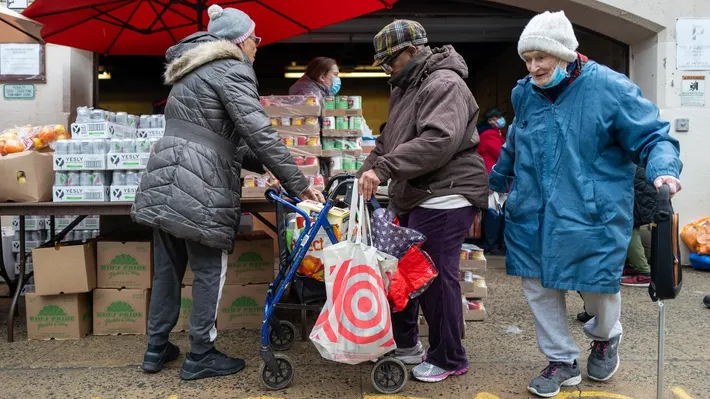
Photo: Spencer Platt | Getty Images
By nearly every measurable metric, the cost of living crisis in America has not only persisted through May 2026 — it has evolved into a more insidious and targeted economic assault. While the national conversation has shifted away from pandemic-era inflation, a new wave of price hikes driven by geopolitical tensions and renewed trade wars is crashing down on households. For Black families, who entered this moment with just 15 cents of wealth for every dollar held by their white counterparts, the crisis is no longer just an inconvenience. It is a state of emergency.
The data is stark. Roughly 49% of American families still cannot afford basic essential expenses, and half of all adults report that rising costs are derailing their 2026 financial goals. But these national averages mask a brutal reality: while the headline inflation rate sits at 3.3%, the cost of necessities — housing, energy, and food — has risen 36% faster than other goods. And for Black households, who spend a disproportionate share of their income on these very essentials, the math is unforgiving.
The Trump Policy Connection: Tariffs and Energy Shocks
The current wave of price distress is not a random act of nature. In early 2026, gasoline prices surged to a national average of $4.30 per gallon, driven in part by geopolitical instability. But economists point to a more direct intervention: new trade policies and tariffs implemented in late 2025 are now fully working their way through supply chains. Experts estimate these policies could raise annual costs for typical households by $4,000 to $8,000, hitting items like cleaning supplies, personal care products, and used car parts — categories where price hikes are hardest to avoid.
The Wealth Gap as a Fault Line
Understanding why Black Americans are feeling this pain more acutely requires looking at the balance sheet. The median Black household holds just $44,100 in net worth, compared to $284,310 for white households. More devastating in a monthly crisis: the median Black family has roughly $2,200 in checking and savings — a cushion that is wiped out by a single minor emergency or a few months of price spikes. In contrast, the median white household has $10,000 in liquid savings. When gas prices rose by nearly a dollar per gallon in early 2026, that $75 fill-up represented a catastrophic line item for families already living paycheck to paycheck.
- Housing Trap: 57% of Black renters are "cost-burdened," spending over 30% of income on housing — the highest rate of any demographic.
- Energy Shocks: Electricity costs are up $40 per month since 2017. For low-income families, that is often the difference between air conditioning and groceries.
- The Gas or Food Choice: For the poorest third of households, 1 in 10 now spends 10% of their entire income just on gasoline.
The real-world impact is showing up in emergency rooms and on street corners. Reports from May 2026 highlight parents like Dexia in Florida, who now pays $15 more per week for gas — a cost that forced her to stop taking her son to the park because she only has enough fuel for school and work. Others, like Sarah in the CNN report, are skipping lunch every day just to offset the extra $70 they spend at the pump. This is not a budgeting issue; it is a structural failure.
The Story of Celeste: When Work Is Not Enough
The abstract numbers find their human face in Celeste Walker, a single mother in Atlanta whose story was profiled in the 2025 book "There Is No Place for Us." Celeste worked up to three jobs simultaneously — including a warehouse position and running a small food business from her kitchen — just to scrape together rent. But when her rental home was destroyed by an arsonist, her landlord (a private equity firm) demanded two months' rent to break the lease. The resulting credit destruction, combined with a devastating diagnosis of ovarian and breast cancer, pushed her into the "shadow realm" of extended-stay hotels. She famously told reporters she didn't see a doctor sooner because "life was lifing" — she couldn't afford to miss a single shift.
Celeste's experience illustrates a broader regression. For Black Americans, the combination of rising unemployment (which surged to 7.5% in late 2025, more than double the national average) and income volatility (over 33% of Black adults see income fluctuate month-to-month) creates a trap. Without reserves, families are forced into high-cost debt — credit card balances have hit a record $1.2 trillion — just to cover routine expenses. It is a cycle that turns a temporary price spike into a generational setback.
Looking Ahead: The Summer of 2026
The next few months offer little respite. Economists expect the national unemployment rate to hit 4.6% by June, its highest level since 2021. And while overall inflation may cool toward 3% by late 2026, the immediate horizon is defined by volatility. Mortgage rates are expected to stay in the 3.5% to 3.75% range through mid-year, keeping homeownership a distant dream for the 44.7% of Black households who own homes — still 30 percentage points behind white homeownership. For renters, property owners are passing on higher insurance and utility costs, ensuring that the 57% of Black renters already in crisis face even deeper strain.
The data confirms what families already know: the cost of living crisis is getting worse, and Trump-era trade policies have acted as an accelerant. For Black America, the question is no longer about "recovery." It is about survival — and whether the structural wealth gap has become too wide to ever close.
No Ads. By Us. For Us.
This article was only made possible by readers like you. We hope it inspired you to support Emerald Book, so we can continue producing content like this.
We will never show you ads, never sell your data, and never require a subscription to consume our content. Your gift helps us keep the truth accessible.
Please click the Support button on the bottom right of your screen to make a gift of any amount today.
Thank you for making this work possible.