

Emerald Pages
◆
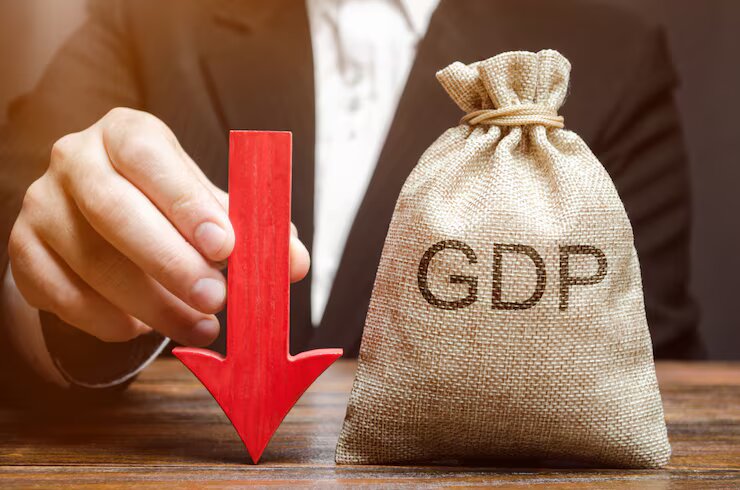
Photo: Freepik
It's not that "income after taxes" is universally better than GDP — it's that it answers a different (and often more human) question. For decades, we have looked to Gross Domestic Product as the ultimate report card on a nation's success. If GDP is up, the story goes, everything is fine. But try telling that to a family whose wages have stagnated for a decade while corporate profits soar. That disconnect is exactly why average income after taxes — what economists call disposable income — is rapidly becoming the more honest lens for understanding economic wellbeing.
First, let's clarify what GDP actually measures. Gross Domestic Product tracks the total value of all goods and services produced in a country. It tells you how big the economy is and whether it's growing or shrinking. But it does not — and was never designed to — tell you who benefits from that growth. A nation can post impressive GDP numbers while the typical household sees no improvement whatsoever. This blind spot is where average income after taxes becomes essential.
So what does "income after taxes" capture better? FRED's after-tax income (basically disposable income) tells you how much money households actually have to live on. That makes it far stronger for understanding real living standards, financial stress or comfort, and the effects of taxes and policy on everyday people. After all, a dollar in corporate profits doesn't pay for a child's education or cover an emergency room visit. But a dollar of disposable income just might.
Four Ways GDP Misleads Us
The case for focusing on after-tax income isn't abstract — it's grounded in several specific failures of GDP as a wellbeing indicator:
- GDP ignores inequality. GDP can rise while most people see no improvement. Corporate profits surge, wages stagnate — GDP goes up — but typical households don't feel richer.
- GDP ≠ take-home money. GDP includes corporate earnings, government spending, and investment activity. None of that directly equals what lands in your bank account.
- GDP doesn't adjust for taxes or transfers. Two countries can have similar GDPs, but one taxes heavily and redistributes (leading to higher household stability) while the other doesn't (leading to more inequality). After-tax income captures that difference.
- GDP includes things that don't improve well-being. Natural disasters (rebuilding), healthcare costs, and military spending all boost GDP. That doesn't mean people are better off.
None of this is to say that GDP is useless. It remains essential if you want to understand overall economic output, business cycles, or make national and global comparisons. "Income after taxes" can't replace that — it's narrower by design. But if your question is about how people are actually experiencing the economy, GDP is simply the wrong tool.
A Better Way: The Emerald Economic Index System
This insight — that average income after taxes is often a more honest measure of economic wellbeing than GDP — is exactly why we use it in our Emerald Economic Index System. The EEIS is the only index system designed to measure the health of the Black economy: the real, lived financial experience of households that official GDP figures systematically obscure. While headlines celebrate growth, the EEIS tracks whether that growth translates into actual purchasing power, financial security, and improved living standards for ordinary people.
The results are often sobering. Periods of robust GDP growth frequently coincide with flat or declining after-tax incomes for the bottom half of earners. That disconnect — between what the economy supposedly delivers and what people actually take home — is the gap the Emerald Economic Index System is built to illuminate. Because if we care about power, inequality, and quality of life, then income after taxes isn't just a useful alternative. It's the more honest lens.
So the real takeaway is simple: GDP tells you the size and growth of the economy. Income after taxes tells you how people actually experience that economy. One is a measure of production; the other is a measure of human wellbeing. And for anyone watching the gap between Wall Street and Main Street, it's clear which one matters more.
No Ads. By Us. For Us.
This article was only made possible by readers like you. We hope it inspired you to support Emerald Book, so we can continue producing content like this.
We will never show you ads, never sell your data, and never require a subscription to consume our content. Your gift helps us keep the truth accessible.
Please click the Support button on the bottom right of your screen to make a gift of any amount today.
Thank you for making this work possible.