

Emerald Pages
◆
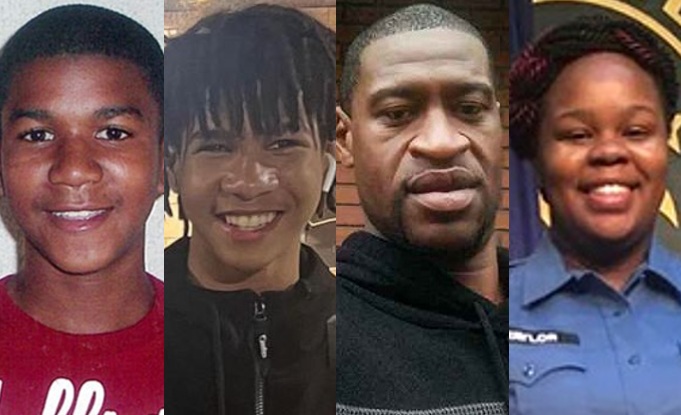
Photo: Emerald Book Image
They will not stop killing Black people. Not because every officer or vigilante wakes up filled with conscious hatred, but because the system has made it abundantly clear that taking a Black life carries no real threat to one's freedom, wealth, or career. The killings continue for the same reason water flows downhill: it is the path of least resistance. When there are no material consequences for the trigger finger, the chokehold, or the knee on the neck, the killing becomes a predictable, even rational, outcome of a system that values Black death as an acceptable cost.
The data is chilling in its consistency. Year after year, despite viral videos and global protests, police kill roughly 1,000 Americans annually. Black people are killed at more than twice the rate of white people. And yet, since 2005, only a handful of officers have been convicted of murder or manslaughter for on-duty killings. Most return to work. Many receive paid leave. The message is unmistakable: you can kill a Black person and your life, your pension, your liberty, will remain intact. As legal scholars have documented, doctrines like qualified immunity actively shield individual officers from personal financial liability, ensuring that even when a settlement is paid, it comes from the city budget—taxpayer money—not the officer's own pocket.
This is not merely about policing. The logic extends to vigilantes, to security guards, to neighbors who call the police on Black people existing while Black. The underlying message—broadcast through acquittals, hung juries, and the routine dismissal of charges—is that the life of a Black person is legally cheap. When juries are told to find intent, when prosecutors refuse to bring charges, when judges offer lenient sentences, they are all participating in the same architecture of non-consequence. The individual choice to use lethal force against a Black person is made easier because the perceived cost of that choice is effectively zero.
The Architecture of Escape: How the System Protects Killers
The most devastating insight from critical legal studies is that the system is not broken—it is working exactly as designed. The mechanisms that shield those who kill Black people are intentional features, not accidental glitches.
- Qualified Immunity: This judge-made doctrine shields government officials, including police officers, from civil lawsuits unless they violated "clearly established" law. Because every killing is subtly different, lawyers can argue no prior case exactly matches the facts, allowing officers to escape personal financial liability.
- Taxpayer-Funded Settlements: When cities pay millions to settle wrongful death lawsuits, the money comes from public funds. The officer pays nothing. Their union often pays their legal fees. The financial consequence is absorbed by the very community that was harmed.
- The Blue Wall of Silence: Officers who witness misconduct rarely testify against their colleagues. Departmental investigations are often pro forma. Officers who kill are frequently reinstated after brief paid suspensions, their pensions untouched.
- The Intent Doctrine: To secure a murder conviction, prosecutors must prove the officer intended to kill. But officers are trained to describe their fear, to claim they saw a weapon that wasn't there, to frame the killing as a tragic but necessary split-second decision. Juries, conditioned to trust police, often acquit.
- Arbitration and Union Contracts: Even when officers are fired, union contracts often allow them to appeal through arbitration, where former police officials frequently overturn terminations and order reinstatement with back pay.
Because these mechanisms collectively ensure that killing a Black person carries no meaningful threat to an officer's material well-being—their job, their savings, their freedom—the rational choice, from a purely self-interested perspective, is to shoot first and ask questions later. The system has effectively decriminalized the killing of Black people.
When the Targets Enforce Consequences: Historical Precedents
The only moments in American history when the killing of Black people meaningfully declined were moments when Black communities created their own consequences. During the civil rights movement, the threat of mass economic disruption forced federal intervention. In the 1960s, the Black Panther Party's armed patrols—legally carrying firearms while monitoring police activity—led to measurable reductions in police brutality in Oakland. Why? Because officers suddenly faced a genuine threat to their own physical safety. The calculus shifted.
The Deacons for Defense and Justice, an armed Black self-defense group in Louisiana, successfully protected civil rights workers and local Black communities from Klan violence. Their strategy was simple: they announced they would shoot back. The Klan, accustomed to unarmed victims, chose different targets. Consequences work. The historical record is unambiguous: when oppressors believe they will face retaliation—economic, legal, or physical—their behavior changes.
Today, however, such strategies have been systematically criminalized. Anti-militia laws, enhanced surveillance, and the classification of Black self-defense as "domestic terrorism" have made it nearly impossible for Black communities to replicate these models. The state has learned that the most effective way to protect those who kill Black people is to disarm and disorganize the potential enforcers of consequences.
The Limits of Viral Outrage
In the 21st century, when a video of a killing goes viral, millions share it. Hashtags trend. Statements are issued. But then the news cycle moves on. The officer is named, then forgotten. The family receives a settlement and a statement of condolences. The officer, in most cases, remains free, often employed, always pensioned.
Social media is exceptional at documenting injustice but terrible at delivering justice. A viral video does not pierce qualified immunity. A trending hashtag does not convince a jury to convict. A corporate statement of solidarity does not amend a police union contract. A hashtag only forces change if it successfully migrates off the screen and transforms into an unyielding, physical disruption—like a sustained labor strike, a permanent redirection of capital, or an unabsorbable legal challenge. Without those offline teeth, the killing continues.
The hard truth is this: until the people who kill Black people face a credible threat to their own freedom, their own wealth, or their own safety, the killings will not stop. They will not stop because the system has taught them that they can kill and walk free. They will not stop because the law has made Black life cheap. They will not stop because consequences are the only language power understands—and right now, that language is not being spoken.
No Ads. By Us. For Us.
This article was made possible by readers like you. We hope it inspired you to support Emerald Book, so we can continue producing content like this.
We will never show you ads, sell your data, or require a subscription. Your gift helps us keep the truth accessible.
Click the Support button to give a gift of any amount today.
Thank you for making this work possible.