

Emerald Pages
◆
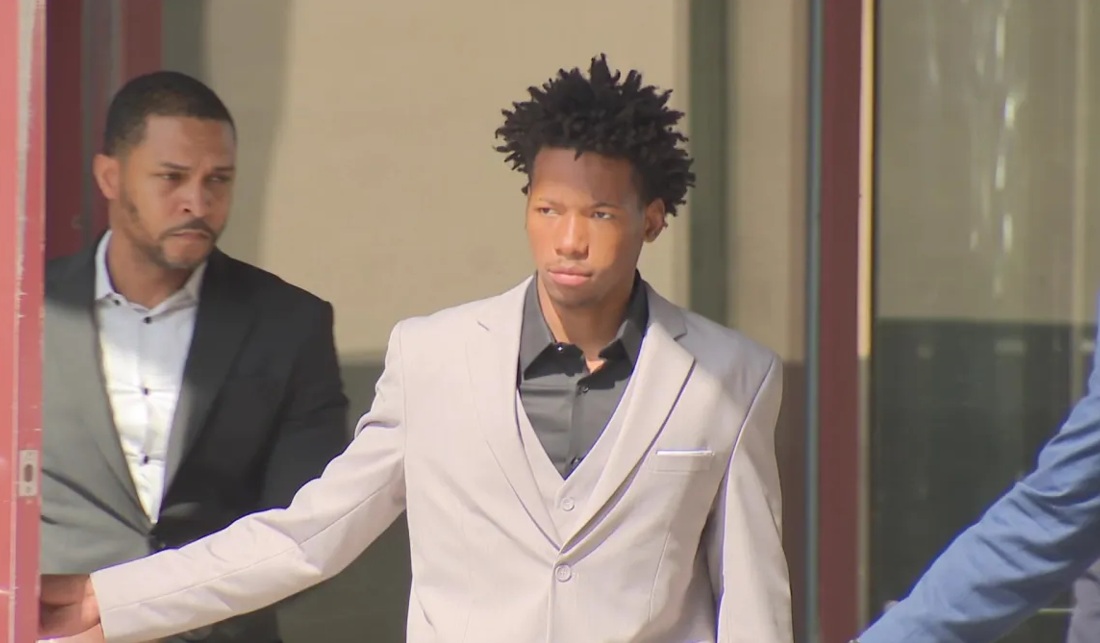
Photo: NBC 5
The numbers are unforgiving. In Collin County, Texas, Black residents make up roughly 10.8% of the population. In the city of Frisco—where 17-year-old Karmelo Anthony fatally stabbed 17-year-old Austin Metcalf in April 2025—the Black population stands at 10.0%. According to basic probability theory, a purely random sample of 12 people from Collin County yields a roughly 99.4% chance that at least one person of color would be selected. Expanding that to a panel of 18 jurors (12 primary and 6 alternates), the probability of an all-white panel drops to approximately 13%. Yet, when Anthony's murder trial began on June 3, 2026, the final jury contained exactly zero Black members. This is not a mathematical fluke. Legal scholars and civil rights advocates argue it is the predictable product of a system that prioritizes procedural "race neutrality" over actual demographic fairness.
The Karmelo Anthony case has become a national flashpoint. On April 2, 2025, a physical confrontation erupted under a team tent during bad weather at Kuykendall Stadium in Frisco, Texas. Anthony, who has pleaded not guilty to first-degree murder, claims he acted in self-defense. The victim, Austin Metcalf, was white. The racial dynamics of the case made the jury selection process particularly contentious. When the finalized panel was seated on June 3, 2026, multiple media outlets covering the Collin County Courthouse proceedings confirmed that the 12 primary jurors and 6 alternates were entirely non-Black, effectively resulting in an all-white panel.
To understand how an all-white jury emerged from a county where Black residents make up over 10% of the population, one must examine the three-step funneling process of jury selection. First, the court summoned a large initial pool. In this case, about 600 Collin County residents were summoned. Statistically, this pool should have contained roughly 50 Black citizens. However, the judge then dismissed hundreds of people "for cause" via written questionnaires. Jurors were disqualified if they admitted they had already watched viral news coverage and made up their minds, stated they could never vote to sentence an 18-year-old to prison, or claimed financial or childcare hardships. This first wave of cuts drastically reduced the number of Black candidates remaining.
The Strike Zone and the Batson Challenge
The second bottleneck occurred when the court randomized the remaining jurors to create the "strike zone"—the top 45 candidates who could actually be selected. Mathematically, in a random group of 45 people from Collin County, one would expect about 4 or 5 Black individuals. In Anthony's trial, exactly three Black candidates—all women—ended up in the active strike zone. This was not a statistical anomaly; it fell within normal variation. The anomaly occurred when the count went from three to zero.
During the final phase, prosecutors used their peremptory strikes to dismiss all three qualified Black women from the jury pool. The defense team filed a legal objection known as a Batson challenge, arguing that the prosecution had intentionally struck 100% of the available Black jurors within the striking zone based on race. Under the landmark 1986 Supreme Court case Batson v. Kentucky, it is strictly illegal to strike a juror based solely on race. If a defense team objects, the prosecutor must state a non-racial reason for the strike. Legally, this reason does not have to be highly persuasive—it just cannot be explicitly tied to race.
- The Prosecution's Reason: The state argued that the three Black women were struck because they were educators. Because the fatal stabbing occurred at a high school track meet involving young students, prosecutors claimed they did not want traditional school educators on the panel.
- The Defense's Objection: Anthony's defense team noted that prosecutors did not strike a white female juror who also worked as an educator. The state countered that her job was as an esthetician teaching adults at a trade school, not a traditional high school environment.
- The Judge's Decision: Presiding Judge John Roach Jr. reviewed the prospective jurors' questionnaires, overruled the defense's objection, and officially denied the Batson challenge, allowing the all-white jury to be seated.
This dynamic reveals the low bar for "race-neutral" reasons. The prosecutor's explanation does not have to be compelling or even logically consistent—it simply cannot mention race. Civil rights groups like the Equal Justice Initiative frequently criticize this system, noting that Batson challenges rarely succeed because it is easy for lawyers to find a facially neutral reason—such as occupation, demeanor, neighborhood, or media exposure—to dismiss minority jurors without technically breaking the law.
The Myth of the 'Jury of Peers'
The concept of a "jury of your peers" further compounds the issue. Legally, this phrase does not mean a jury that shares a defendant's race, age, or background. The U.S. Constitution's Sixth Amendment does not actually contain the phrase "jury of peers" at all—it only guarantees an "impartial jury." Under Supreme Court precedent, your "peers" are simply other registered voters or driver's license holders living in the county where the crime occurred. The law explicitly states that a Black defendant is not entitled to a jury that includes Black people, just as a female defendant is not entitled to a jury of women. The legal standard is purely geographic, not demographic.
Furthermore, the requirement for a diverse representation of the community—the "fair cross-section" standard—applies only to the initial pool of potential jurors. The rule is that the courthouse must pull a random, fair cross-section of local residents to show up on day one. For Anthony's trial, the court pulled a massive pool of roughly 500 to 600 local residents. However, the "fair cross-section" rule stops applying the moment lawyers begin cutting people during individual questioning. The final 12 people sitting in the box do not have to reflect the community's demographics at all.
Because "peers" is defined by county boundaries, the baseline population numbers heavily dictate who ends up on a jury. Karmelo Anthony is being tried in Collin County, Texas. According to U.S. Census data, Collin County's population is roughly 49.6% non-Hispanic white, 18.7% Asian, 16.1% Hispanic, and only 10.8% Black. Frisco itself is 45.5% white, 33.6% Asian, 10.4% Hispanic, and 10.0% Black. Because Black residents are a statistical minority in the county, they make up a small fraction of the 500 to 600-person pool to begin with. When prosecutors used their peremptory strikes to eliminate the few Black candidates who advanced to the final round, the pool dropped to zero.
This is why the phrase "jury of your peers" causes so much public frustration. To the general public, it implies a jury that understands a defendant's life experiences and cultural background. To the legal system, it simply means 12 random citizens from the local area who swear they can be fair. In Anthony's case, his defense team argued that a completely white jury drawn from an affluent suburban environment cannot truly act as "peers" who understand the racial dynamics, fears, or implicit biases that a young Black man faces during a sudden, violent confrontation. However, under the letter of the law, the panel is considered legitimate.
A System of Procedure, Not Outcome
The core issue that legal historians and critical race scholars point to is a structural design: the law focuses entirely on the process while ignoring the outcome. When the Supreme Court designed rules like the Batson challenge, the theoretical goal was to create a "colorblind" system. The law treats race neutrality as a checklist: Did the prosecutor use a specific racial slur or admit to racism? No. Did the prosecutor provide an explanation that doesn't explicitly mention race? Yes (they said "educators"). Therefore, under the letter of the law, the process is deemed "race-neutral."
However, critics argue that this framework allows implicit bias and systemic racism to operate completely unchecked. It turns a constitutional protection into an exercise in creative writing. As long as an attorney is smart enough to give a facially neutral reason—like a juror's posture, neighborhood, clothing, or occupation—they can legally achieve an all-white jury. When asked how an all-white jury could be statistically possible given the demographic breakdown of the county and city, the defense noted that a random sample would not result in an all-white jury. The panel became entirely white because jury selection is not purely random. Instead, the initial random pool is systematically whittled down by human intervention.
As opening statements began on June 4, 2026, the focus shifted to how this specific panel would react to the evidence. Texas self-defense law requires a defendant to show that a "reasonable person" would have feared for their life. Critics note that what a white juror in an affluent suburb considers "reasonable" can be vastly different from the lived reality and survival instincts of a Black teenager. Legal studies have shown that a jury's racial makeup heavily influences how they view a case, with all-white juries statistically more likely to view a young Black man as the "aggressor." The Karmelo Anthony trial, now underway at the Collin County Courthouse, stands as a case study in how the American legal system uses race-neutral procedures to produce racially skewed outcomes.
No Ads. By Us. For Us.
This article was only made possible by readers like you. We hope it inspired you to support Emerald Book, so we can continue producing content like this.
We will never show you ads, never sell your data, and never require a subscription to consume our content. Your gift helps us keep the truth accessible.
Please click the Support button on the bottom right of your screen to make a gift of any amount today.
Thank you for making this work possible.