

Emerald Pages
◆
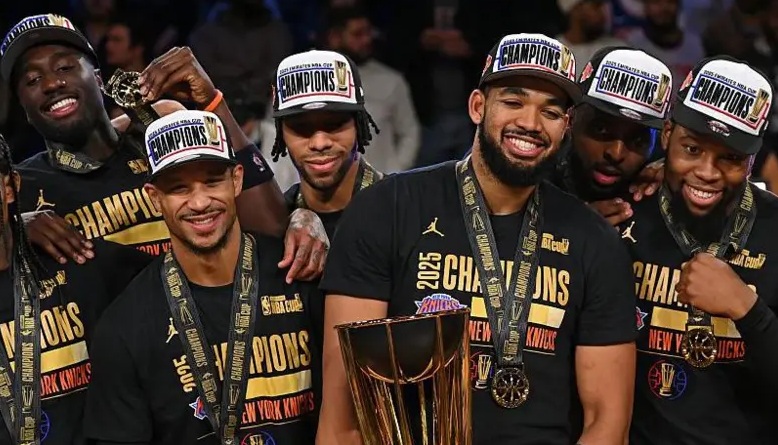
Photo: Getty Images
The 2026 NBA Finals are absolute cinema. The New York Knicks, fresh off a stunning sweep of the Cavaliers, are facing Victor Wembanyama's San Antonio Spurs after a grueling Game 7 war. We are told this is the apex of competition—a battle of wills, legacies, and cities. But if you look past the buzzer-beaters and the highlight reels, the reality is far less romantic. The National Basketball Association is not a sports league; it is a cartel. It is a closed shop where 28 white billionaire majority owners treat 450 predominantly Black players as appreciating assets, using taxpayer land to build real estate fiefdoms, all while convincing the public that the final score matters.
Economists have a specific definition for a cartel: an organization of independent businesses that act together to control prices, limit competition, and restrict output. By that measure, the NBA fits perfectly. You cannot start a rival team tomorrow. The league strictly limits supply to 30 franchises. It fixes the price of labor through a salary cap and a draft designed to prevent a free market for talent. This isn't capitalism; it's collusion—legitimized by a legal loophole called the "Rule of Reason," which argues that sports leagues need these anti-competitive measures to exist. But who benefits from this existence?
The numbers reveal the racialized hierarchy of this arrangement. Approximately 93.3% of NBA majority owners are white. Following Michael Jordan's exit from the Hornets, there are zero Black majority owners left in the league. Meanwhile, hovering between 70% and 78% of the players on the court are Black. The front office might be "diverse" by corporate standards (50% of coaches are POC), but the boardroom—where the decisions about arena subsidies, revenue sharing, and franchise relocations happen—is overwhelmingly white. This is not a bug; it is a feature of the cartel. The labor is Black and brown, but the capital is white and consolidated.
The Real Estate Shell Game
If you believe the primary business of the NBA is selling tickets to basketball games, you have already lost the plot. The real money is not in basketball-related income (BRI); it is in concrete, steel, and asphalt. The modern NBA owner is first and foremost a real estate developer. The basketball team is merely the "anchor tenant" designed to justify the seizure of public land and the issuance of municipal bonds.
Consider the model: An owner buys a team. They then go to the local city council and threaten to move the franchise to Las Vegas or Seattle unless the city builds them a $1 billion arena. The city, terrified of the psychic loss of "their team," agrees. Public bonds are floated—usually paid for by regressive sales or hotel taxes that hit the working class hardest. In Oklahoma City, voters approved $850 million in public money for a new Thunder arena while the billionaire ownership group chipped in just 5.5%. In New York, Madison Square Garden operates under a decades-old deal that exempts it from property taxes entirely, saving the owners tens of millions annually while the subway crumbles.
- The Arena District: Owners buy the land around the subsidized arena for pennies on the dollar. They build luxury apartments, office towers, and retail plazas (e.g., "Thrive City" in SF or the "Deer District" in MKE). The team makes money 41 nights a year; the real estate makes money 365 days a year.
- The Tax Loophole: The "Roster Depreciation Allowance" allows owners to treat player contracts like depreciating machinery, writing off the purchase price of the team against their other business incomes. The team can "lose" money on paper while the owner buys a new yacht.
- The Flip: Since 2010, the average NBA team value has increased by over 600%. Joe Tsai bought the Nets for $2.3B; it’s now worth nearly $4B. The Warriors sold for $450M in 2010; now valued at $8B. You don't win by winning games; you win by holding the asset.
This leads to the most cynical realization of all: It does not matter who wins the Finals. From a balance sheet perspective, the New York Knicks and the San Antonio Spurs are printing money regardless of the score. In fact, due to the luxury tax system (where "bad" teams get checks from "good" teams) and the equal sharing of the $76 billion national TV deal, it is financially prudent to be mediocre. Winning costs money—it forces you into the luxury tax. Losing allows you to collect tax redistribution checks, secure high draft picks, and keep payroll low. The fans argue about banners; the owners cash distribution checks.
The Human Currency
In this cartel, the human beings—the players—are reduced to "trade assets." A 22-year-old rookie has no choice in where he lives or works; he is assigned to a city via a draft that strips him of agency. A veteran with a family can be traded at 2:00 AM on a Thursday and must report to a new state within 48 hours. Their contracts are used as "matching salary" in trade machines, reduced to spreadsheets and expiring deals.
While superstars like LeBron James have leveraged "player empowerment" to reclaim some agency, the other 90% of the league are fungible parts. They chase the dream of a championship—that glorious, fleeting moment of confetti and validation—unaware that the owners have rigged the game. The owners didn't create basketball; they created the infrastructure of basketball. They erected a fence around the garden of dreams and now charge admission. The players spend their lives destroying their knees for a chance to be the product, while the owners build skyscrapers with the profits.
As you watch the 2026 Finals, appreciate the artistry of Wembanyama and the grit of the Knicks. They are transcendent athletes. But don't mistake the art for the architect. The outcome of Game 7 will not change the distribution of wealth in the league. It will not end the taxpayer shakedowns. It will not rebalance the racial demographics of the ownership boxes. The winner gets a trophy. The owners get a tax break. And the cycle of extracting value from Black labor to fund white real estate wealth continues—swish, and repeat.
No Ads. By Us. For Us.
This article was only made possible by readers like you. We hope it inspired you to support Emerald Book, so we can continue producing content like this.
We will never show you ads, never sell your data, and never require a subscription to consume our content. Your gift helps us keep the truth accessible.
Please click the Support button on the bottom right of your screen to make a gift of any amount today.
Thank you for making this work possible.