

Emerald Pages
◆
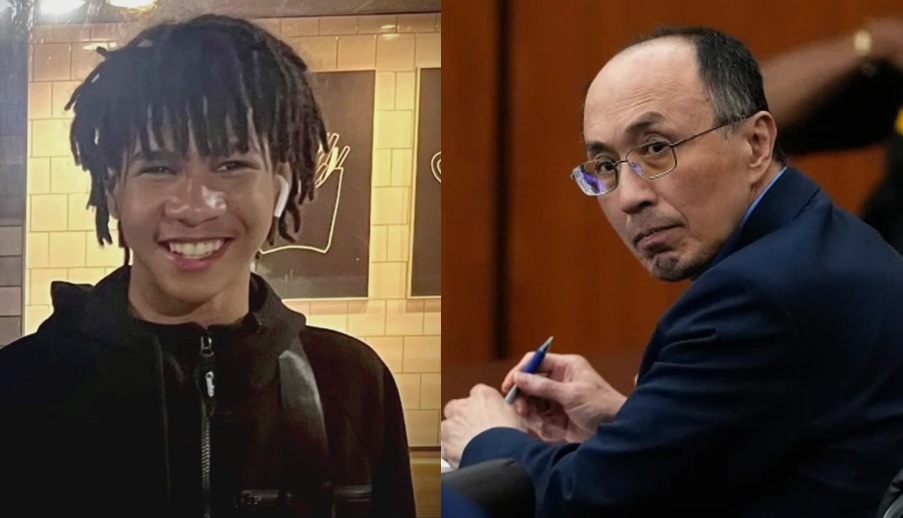
Photo: News19 | Erik Verduzco | AP Photo
On June 1, 2026, a jury in Richland County, South Carolina, delivered a verdict that would ignite a firestorm of outrage across the nation: Rick Chow, the gas station owner who shot 14-year-old Cyrus Carmack-Belton in the back, was found not guilty of murder. To the millions who followed the case, the verdict felt like a profound miscarriage of justice. In the hours that followed, a familiar refrain emerged: "The law required this outcome." But that framing deserves closer examination.
The case stemmed from a fatal encounter on May 28, 2023. Chow and his son, Andy, chased 14-year-old Cyrus Carmack-Belton from their Shell gas station on Parklane Road in Columbia. The accusation: shoplifting a bottle of water. Security footage later proved the teen had stolen nothing. During the pursuit, which lasted over 130 yards, Chow drew his .45-caliber pistol and fired a single shot, striking Cyrus in the back and killing him. The prosecution argued this was an execution—an angry, armed man hunting down a terrified child. The defense argued something else: defense of another.
To understand the verdict, one must first understand who carries the burden of proof. In a criminal trial, the defendant does not have to prove their innocence. Instead, the state must prove guilt beyond a reasonable doubt. When the defense raised a claim of “defense of others,” the burden did not shift to Chow. Rather, it placed an almost impossible weight on the prosecution: they had to prove a negative—that a scared, fleeing teenager did not momentarily point a loaded firearm at Andy Chow during a chaotic, split-second fall in the grass.
The Presence of the Firearm
The most damaging piece of evidence for the prosecution was one they could not erase: the gun. When Cyrus Carmack-Belton’s body was recovered, a loaded 9mm semiautomatic pistol equipped with a tactical laser sight was found next to him. While the prosecution successfully argued the teen never stole the water, they had to concede he was armed. Once a weapon is introduced into a narrative, the legal perception of the event shifts from a dispute over petty theft to a lethal confrontation.
- The Son’s Testimony: Andy Chow testified under oath for nearly three hours, claiming that when Cyrus fell and got back up, he pointed the gun directly at Andy’s face. “I thought he was going to shoot me,” Andy told the jury, adding that he raised his hands and screamed to his father, “He’s got a gun!”
- The 911 Call: The defense played the frantic 911 call made by Andy Chow moments after the shooting. Before any legal strategy could be formed, Andy can be heard telling the dispatcher the teenager “pulled a gun” on him. This consistency made it difficult for the prosecution to prove the story was a recent fabrication.
- Line of Sight: While bystander witnesses testified they did not see a gun, the defense successfully argued that “not seeing” a gun during a fast-moving, 130-yard chase is not the same as proving a gun was never drawn. The defense suggested the teen’s hands were obscured by a hoodie or his fall.
The prosecution leaned heavily on a brutal piece of forensic reality: Cyrus was shot in the back. He was running away. To a reasonable person, this is the antithesis of self-defense. However, the defense countered that in a dynamic, high-adrenaline pursuit, a human body can turn in a fraction of a second. They argued that the bullet’s trajectory did not mathematically disprove that the teen had just pointed the weapon a split second prior. Because the prosecution could not produce video of that exact millisecond, the defense argued reasonable doubt existed.
The “Initial Aggressor” Loophole
Critics of the verdict, including the victim’s family, argue that the Chows were the clear aggressors. They chased a child. They were armed. They confronted him over a false accusation. Under common sense, the chase itself is an act of violence. But under South Carolina statute, the jury was instructed on a technical distinction: chasing a suspected shoplifter—even aggressively—does not legally constitute the use of “deadly force.”
Yet this legal distinction raises a fundamental question: From the perspective of a 14-year-old child, what is the difference between being chased by an armed adult and being chased by an adult who has not yet drawn his weapon? The argument that the Chows were not "lethal aggressors" because their guns were initially concealed ignores the reality of terror. A teenager running for his life cannot be expected to know that the weapons on the adults chasing him are not yet in hand. The legal framing, critics argue, criminalizes the victim for reacting to the inherent danger of the pursuit while shielding the pursuers for creating that danger in the first place.
The prosecution attempted to hammer this point home, arguing that the entire situation was created by the Chows. If they had simply stayed in the gas station, as the law and basic decency would suggest, Cyrus Carmack-Belton would be alive. The defense’s successful pivot—focusing solely on the split-second the teen allegedly turned around—effectively granted the Chows a legal immunity for the 130-yard armed hunt that preceded the shot. In the eyes of the public and legal critics, this is a case study in how self-defense law can be used to excuse the person who initiated the conflict.
But perhaps the most persistent claim following this verdict has been that "the law" compelled the acquittal. This deserves scrutiny. There is no autonomous force called "the law" that descends from on high to dictate outcomes. The law does not speak. The law does not reason. The law does not chase children or pull triggers.
What actually happened in that courtroom was a series of choices made by human beings. Rick Chow chose to chase a child. Rick Chow chose to carry a firearm. Rick Chow chose to pull the trigger. Judge Heath Taylor chose to instruct the jury on a narrow definition of "initial aggressor" that separated the chase from the shooting. Judge Taylor chose to deny the jury's request to go home for the night, forcing exhausted deliberators to push through to a verdict. And the jury chose to believe Andy Chow's testimony about a pointed gun, despite the physical evidence of a bullet entering the teenager's back.
To call this outcome "the law" is to erase human agency. It allows society to treat injustice as though it were a weather event—something that simply happened, rather than something that was decided. The statutes on the books in South Carolina did not march into the jury room and return a verdict. Twelve people did. A judge did. A defense attorney did. A defendant did.
The Pressure of Deliberation
The mechanics of the jury room also came under intense scrutiny. After a five-day trial, the jury began deliberating. At approximately 5:50 p.m., the forewoman asked Judge Heath Taylor if they could go home for the night. Several jurors reportedly wanted to resume the next day. Judge Taylor denied the request, citing concerns that the massive media attention and public tension might compromise the jurors if they went home. He ordered dinner and told them to “push on through.”
At 8:50 p.m.—less than three hours after being told they could not leave—the exhausted jury returned with a unanimous “not guilty” verdict. Critics argue that the judge’s refusal to allow a night of rest created a pressure-cooker environment, pushing jurors to find the fastest path to a unanimous decision just to go home, rather than carefully parsing the tragedy of a child’s death. That was another choice.
For many, the verdict highlights a systemic failure. The jury was asked to validate the fear of the armed adult (Chow) while discounting the terror of the Black child running for his life. Under a fair application of common sense, Cyrus had every right to be terrified and to flee. Yet, because the legal instructions isolated the final second of the conflict and ignored the context that created it, the chase was legally separated from the shooting.
The acquittal means Chow walked free after three years in jail without bond. However, the family’s attorney, Todd Rutherford, has vowed to pursue a civil lawsuit. In civil court, the burden of proof drops from “beyond a reasonable doubt” to a “preponderance of the evidence” (more likely than not). In that arena, the Chows’ decision to chase an innocent child over a water bottle will take center stage—not just the split-second pull of the trigger.
For the community of Columbia and the family of Cyrus Carmack-Belton, the “not guilty” verdict is a devastating conclusion. But as the family prepares for their civil battle, the broader question remains: When we call this outcome "the law," are we describing reality or hiding from it?
No Ads. By Us. For Us.
This article was only made possible by readers like you. We hope it inspired you to support Emerald Book, so we can continue producing content like this.
We will never show you ads, never sell your data, and never require a subscription to consume our content. Your gift helps us keep the truth accessible.
Please click the Support button on the bottom right of your screen to make a gift of any amount today.
Thank you for making this work possible.