

Emerald Pages
◆
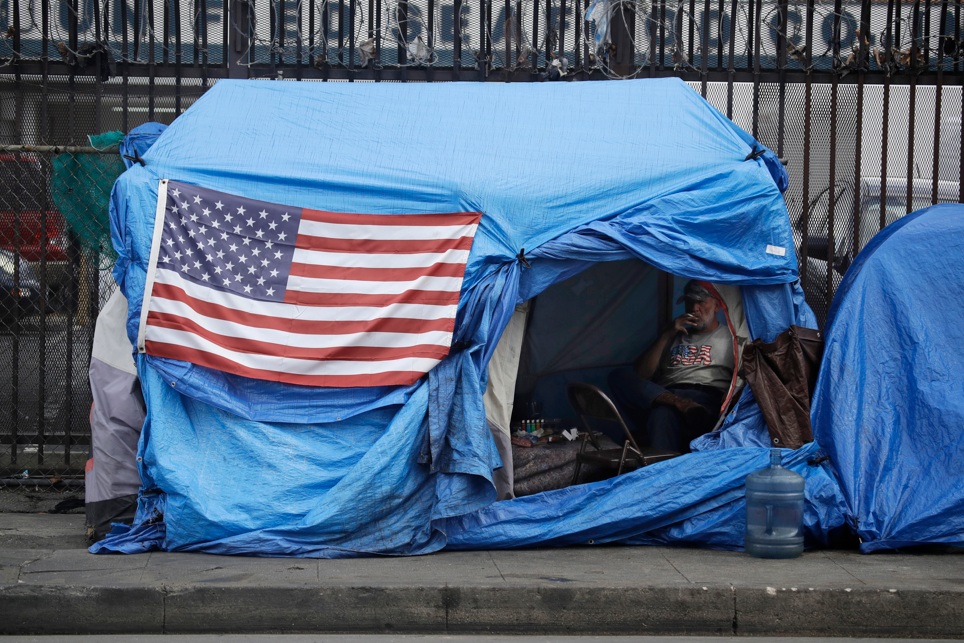
Photo: Zach Fannin
For generations, Americans have been fed a simple promise: work hard, play by the rules, and you will rise. The "rags-to-riches" story is our national folklore, a comforting myth that suggests poverty is a temporary inconvenience rather than a permanent trap. But when we strip away the rhetoric and examine the cold, hard data from economists at Harvard, Stanford, and the Brookings Institution, a different reality emerges. The truth is that no one chooses to be poor. Poverty is not a lifestyle preference or a cultural virus; it is a structurally reinforced condition that is statistically designed to be self-perpetuating. And the American Dream? For the majority of citizens born at the bottom, it is not mathematically possible.
The evidence for this structural gridlock is overwhelming. If you are born into the bottom 20% of income earners in the United States today, the deck is so severely stacked against you that sheer willpower rarely matters. This isn't an opinion—it is the conclusion of the landmark Opportunity Insights study led by economist Raj Chetty. The data shows that while 90% of children born in the 1940s grew up to earn more than their parents, that number has collapsed to just 50% for children born in the 1980s and beyond. The American Dream has become a literal coin toss. Furthermore, the chance of making the dramatic leap from the bottom quintile to the top quintile—the true "rags-to-riches" story—stands at a paltry 7.5% to 9%. If you aim for the top 1%, your odds fall to roughly 1%. These are not the odds of a land of opportunity; they are the odds of a casino.
The myth of the "culture of poverty" is perhaps the most insidious lie in this system. It is a convenient narrative that blames the victim, suggesting that the poor remain poor because they lack the right values, work ethic, or family structure. But labor statistics demolish this argument entirely. According to the U.S. Bureau of Labor Statistics, millions of Americans are classified as the "working poor"—individuals who spend at least 27 weeks a year in the labor force but whose wages still fall below the poverty line. These people are working. They are showing up. They are playing by the rules, yet the game is rigged. The concept of a "poverty culture" falls apart further when we look at intergenerational movement. When young children from low-income neighborhoods are randomly moved via housing vouchers to higher-opportunity areas (with better schools and lower crime), their adult earnings skyrocket. The person didn't change; the structure did.
The High Cost of Being Poor
If poverty were a simple lack of money, escaping it would be a matter of earning more. But poverty is actually a vicious cycle of high costs and absent safety nets. Economists call this the "poverty trap," a self-reinforcing mechanism where being poor forces financial decisions that actively prevent wealth accumulation. For example, a wealthy person can buy a reliable car in cash, avoiding interest. A poor person may have to use loans with interest rates exceeding 20%, paying twice the car's value over time. The wealthy pay their bills online for free; the poor often rely on check-cashing stores that extract a percentage of every dollar earned.
- The "Poor-Health" Tax: Without quality insurance, minor issues become catastrophic debt, wiping out savings and forcing missed work.
- No Room for Risk: The wealthy can start a business and fail. The poor cannot afford the risk of failure, forcing them into safe, low-wage jobs.
- Cognitive Tunneling: Chronic stress about survival (rent, food, safety) reduces mental bandwidth, making long-term planning (5-10 year wealth strategies) nearly impossible.
This biological reality of "toxic stress" explains why the time horizon for the poor is measured in days, not decades. When you don't know if your car will start tomorrow or if your landlord will evict you next week, you cannot focus on building a stock portfolio or networking for a C-suite job. You are in survival mode. Meanwhile, the structural economy has taken a K-shaped trajectory: high-paying tech and executive roles have soared, low-wage service jobs have proliferated, but the stable mid-tier manufacturing and administrative jobs that once formed the middle class have vanished. These missing rungs on the ladder make it impossible to transition smoothly from poverty to wealth.
The Geography of Destiny
Perhaps the most damning evidence against the American Dream is the "geography of opportunity." Where you are born determines your fate more than your talent. In San Jose or San Francisco, the chance of moving from the bottom to the top fifth is between 12% and 16.8%. In the Southeast and Rust Belt—cities like Charlotte, Atlanta, or Cleveland—that probability falls below 5%. This means that a hardworking child in one American city is three times more likely to succeed than an equally hardworking child just a few states away. We do not have a single "American Dream"; we have a patchwork of local oligarchies. Furthermore, the window for mobility is shockingly narrow. A person starting in the bottom tier in their late 20s has a 28% chance of reaching the top two quintiles. If they are still in the bottom tier by their late 40s, that probability collapses to just 3%. The trap gets stickier with age.
The claim that "people are poor because they want to be" is not just cruel; it is statistically illiterate. It ignores that wealth is a function of inheritance, safety nets, and systemic access—not just effort. The American Dream is technically possible, just as winning the lottery is technically possible. But as a universal promise for the average citizen, it has become a myth. We have moved from a nation of opportunity to a nation of inheritance, where the single greatest predictor of your adult wealth is the wealth of your parents. Until we dismantle the structural barriers—the housing costs, the healthcare debt, the underfunded schools, and the predatory financial systems—poverty will remain a trap, not a choice. It is time to stop judging the poor for failing to climb a ladder that we, as a society, have deliberately set on fire.
No Ads. By Us. For Us.
This article was only made possible by readers like you. We hope it inspired you to support Emerald Book, so we can continue producing content like this.
We will never show you ads, never sell your data, and never require a subscription to consume our content. Your gift helps us keep the truth accessible.
Please click the Support button on the bottom right of your screen to make a gift of any amount today.
Thank you for making this work possible.