

Emerald Pages
◆
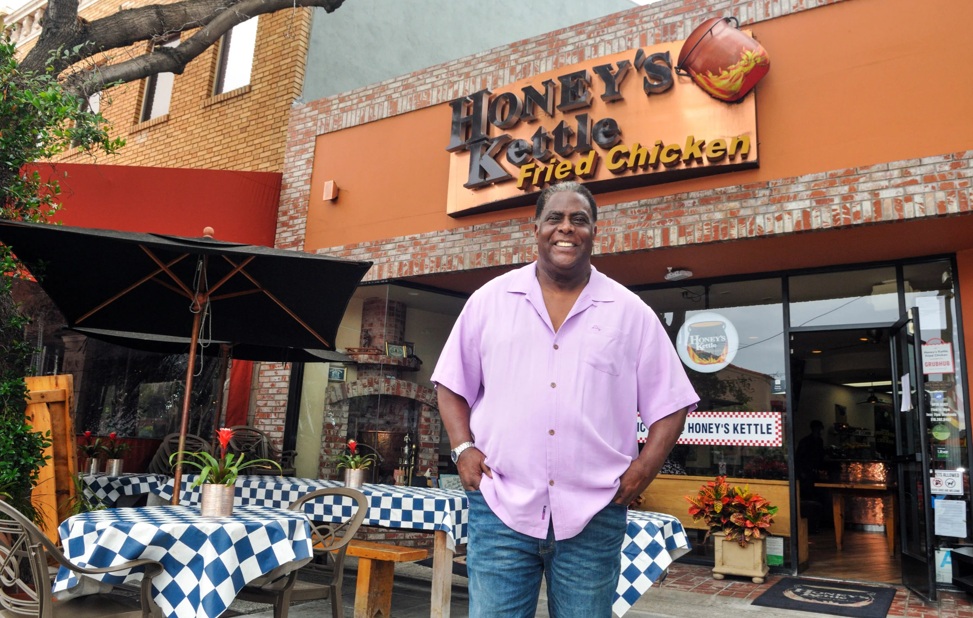
Photo: Honey's Kettle Fried Chicken / Chef Vincent Williams
Welcome to this week’s Black Business of the Week. Every week, we celebrate Black-owned establishments shaping culture, community, and commerce. Today — June 7, 2026 — we honor Honey's Kettle Fried Chicken, the Black-owned restaurant that has transformed a 1,200-square-foot Culver City kitchen into a fried chicken empire. Founded in 2000 in Compton, California, by Chef Vincent Williams (known to regulars as Chef Vinny), this Los Angeles institution serves more than 50,000 pieces of chicken per week using a proprietary kettle-cooking method that traces its roots back to early American colonial kitchens — where Black cooks pioneered the very techniques Williams honors today.
Located at 9537 Culver Blvd, Culver City, CA 90232, Honey's Kettle is far more than a quick-service restaurant. It is a living archive of African American culinary heritage, a family-run enterprise, and a testament to what $1,000 and four decades of chicken experience can build. Williams, who has been in the chicken business for over 40 years, developed his “New, Old-Fashioned” concept in a Compton test kitchen starting in 1999. One year later, with just $1,000 of his own money, he opened the first official doors on Alondra Boulevard. Today, that single flagship kitchen generates roughly $3 million in annual revenue and accommodates approximately 500 customers daily.
The Visionary: Chef Vincent Williams’ Four-Decade Journey
Behind every great business is an even greater origin story. Vincent Williams grew up in Altadena, California, absorbing the flavors and techniques of Southern cooking long before he ever dreamed of owning a restaurant. After leaving a previous franchise business, he set up a “test kitchen laboratory” in Compton in 1999. His mission? To perfect a custom kettle-cooking method that would deliver a crust so crisp it “shatters” — without the greasy, oil-soaked disappointment that plagues so much fast-food fried chicken.
But Williams was not just tinkering with recipes. He was also researching. While studying at local libraries, he dove into early American colonial cookbooks and discovered that open-fireplace kettle cooking — the very technique he was modernizing — was heavily pioneered by Black cooks. That realization transformed Honey’s Kettle from a restaurant into a mission. “I view this as a vehicle to honor and preserve those multi-generational Black culinary traditions,” Williams has said. Today, the business remains a family enterprise, with his son Trenton handling day-to-day kitchen operations — from preparing the signature “milkshake-thick” batter to managing sustainable farm supply chains.
The Method: Why Kettle-Frying Changes Everything
The secret to Honey’s Kettle lies not in a gimmick but in chemistry and craftsmanship. The kitchen uses massive, deep vats filled with roughly 50 pounds of premium, 100% pure peanut oil. Wet, heavily battered chicken is dropped directly into the kettle, where the high-grade oil is kept at an intense heat. That heat instantly sears the exterior, creating what fans describe as a “shattering” crisp crust that locks natural juices inside. The result? Chicken that is never greasy, never oil-soaked, and never forgettable.
To achieve this, kitchen staff must use a heavy, custom-forged tool called a kettle fork to scrape and dislodge the chicken pieces manually from the bottom of the vats during the cooking cycle. It is labor-intensive, hands-on, and deliberately old-school. And the ingredients match the method: Honey’s Kettle rejects standard mass-market poultry, sourcing its meat strictly from local, sustainable farms.
The Menu: What to Order (and How to Eat It)
While the kettle chicken is the undisputed star, Honey’s Kettle offers a full lineup of scratch-made Southern sides and beverages that have earned their own cult followings.
- The Main Attraction: Fresh-fried, heavily battered kettle chicken served alongside local honey for dipping.
- Signature Biscuits: Famous scratch-made, “drop-style” buttermilk biscuits that arrive hot and ready for the warm honey dispenser.
- House Beverage: Freshly squeezed, hand-shaken “Ice Shaker Lemonade” — tart, sweet, and aggressively chilled.
- Traditional Sides: Fresh-shucked corn on the cob, slow-cooked green beans, hand-mashed potatoes, homemade cole slaw, and red beans and rice.
One menu item you will not find? Freezers. Williams refuses to freeze any of his chicken, insisting that fresh, never-frozen poultry is non-negotiable for achieving that signature texture.
Expansion Without Compromise: Honey Drop Kitchen
In 2020, as the restaurant industry reeled from pandemic shutdowns, Honey’s Kettle did something unexpected: it expanded. Rather than opening another costly brick-and-mortar location, Williams launched Honey Drop Kitchen, a delivery-centric spinoff operating out of regional cloud kitchens across Los Angeles. Available via standard third-party apps like DoorDash and UberEats, Honey Drop Kitchen allows the brand to capture wider delivery demand without heavy real estate overhead — a smart, scalable model that preserves the quality of the flagship while extending its reach.
The kitchen stops dropping new batches of chicken into the kettles roughly 15 to 20 minutes before closing to clean the vats. Arrive early, or risk missing out.
Hours, Location & Visitor Tips
Honey’s Kettle Fried Chicken operates its main brick-and-mortar storefront in Downtown Culver City. Here is everything you need to know before you go:
- Flagship Address: 9537 Culver Blvd, Culver City, CA 90232.
- Sunday – Thursday: 9:30 AM – 10:00 PM
- Friday – Saturday: 9:30 AM – 11:00 PM
- Delivery Sub-Brand: Honey Drop Kitchen operates out of regional delivery hubs across Los Angeles (orderable via DoorDash or UberEats).
- The Smart Parking Hack: Street parking on Culver Boulevard is notoriously tight. Instead, use the nearby Culver City Public Parking Structures (Cardiff or Ince structures), which offer the first hour completely free.
- Beat the Crowds: Weekends are packed, especially Sunday afternoons and Friday/Saturday evenings. For fastest service, aim for 11:00 AM or 3:00 PM.
- The “Warm Honey” Trick: The restaurant keeps a warm honey dispenser available to patrons. Fill condiment cups and dip both your biscuits and your chicken strips. You will thank us later.
- Eat it Fresh: Reviewers unanimously agree: the “shattering” crust is at its absolute peak when eaten hot on-site. It does not hold its signature crunch well when refrigerated and reheated.
- Ordering Limit Disclaimer: The kitchen stops dropping new batches into the kettles roughly 15–20 minutes before closing to clean the vats. Arrive or order well before the final hour.
Why Honey’s Kettle Fried Chicken Matters
In an era of consolidation, frozen supply chains, and homogenized fast food, Honey’s Kettle Fried Chicken stands as a defiantly independent, proudly Black-owned counterweight. Chef Vincent Williams has not merely built a profitable business — he has built an archive. Every kettle-fried piece of chicken is a tribute to the Black cooks who pioneered open-fire cooking in colonial America. Every batch of “milkshake-thick” batter is a rejection of shortcuts. And every customer who bites through that shattering crust experiences something increasingly rare: food made with history, intention, and a $1,000 dream that started in a Compton test kitchen 26 years ago.
As we close this week’s Black Business of the Week feature, we encourage you to make the drive to Culver City, grab a warm honey cup, and taste a legacy. Just remember: arrive before the last kettle drop.
No Ads. By Us. For Us.
This article was only made possible by readers like you. We hope it inspired you to support Emerald Book, so we can continue producing content like this.
We will never show you ads, never sell your data, and never require a subscription to consume our content. Your gift helps us keep the truth accessible.
Click the Support button to make a gift of any amount today.
Thank you for making this work possible.