

Emerald Pages
◆
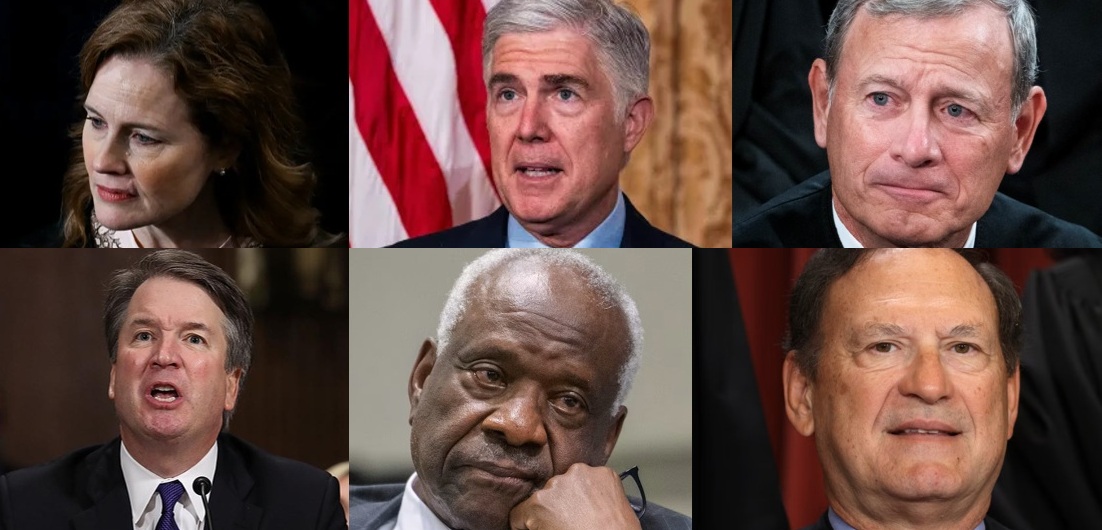
Photo: Emerald Book Image
The U.S. Supreme Court did not need to burn down the Voting Rights Act of 1965 to render it nearly useless. On April 29, 2026, in a 6–3 ruling for Louisiana v. Callais, the conservative majority took a wrecking ball to Section 2 — the law’s last standing enforcement pillar — by fundamentally changing what victims of racial gerrymandering must prove in court. Going forward, plaintiffs must now demonstrate intentional racial discrimination, a near-impossible legal standard, rather than simply showing a map has discriminatory effects.
For decades, Section 2 has been the primary tool to challenge maps that dilute Black voting power. By raising the burden of proof to "intent," the Court has effectively legalized a wide range of redistricting strategies that disadvantage minority communities, as long as lawmakers do not explicitly admit their bias. While the VRA still technically exists, critics — including the three dissenting justices — argue this ruling "demolishes" its core purpose. But the ramifications extend far beyond politics. This decision severs the economic pipeline that flows directly from political representation → resource allocation → Black eonomic mobility.
The Economic Chain Reaction: From Polling Place to Paycheck
To understand the future economic damage, you have to follow the chain of consequences that this ruling unlocks. When it becomes harder to draw districts that reflect Black voting strength, the result is not just a loss of seats — it is a loss of leverage. Here is how the "gutting" of Section 2 will directly affect the Black economy over the next decade:
- Public Contracts & Procurement: Fewer majority-minority districts lead to fewer Black committee chairs and mayors. Those positions control billions in government contracts, MBE set-asides, and infrastructure spending. Expect a contraction in Black-owned firms winning public bids.
- Targeted Investment & Infrastructure: Lawmakers respond to the voters who put them in office. As Black political influence is diluted, state budgets will likely deprioritize investments in aging water systems, broadband, and transit in Black communities — widening the infrastructure gap.
- Small Business Capital Access: The CDFI (Community Development Financial Institutions) fund and small business loan programs often rely on congressional earmarks and state-level economic development corps. With less representation, advocates predict a freeze on new capital access programs for Black entrepreneurs.
- Workforce Development & Wage Laws: Labor protections, minimum wage increases, and job training programs historically succeed when backed by a coalition that includes strong Black voting blocs. Weakening those blocs slows the passage of policies that raise wage floors in Black-majority industries.
This is not speculation; it is historical precedent. Following the 2013 Shelby County v. Holder decision — which gutted Section 5 preclearance — researchers noted a sharp drop in minority political influence, followed by a rise in voter ID laws and polling place closures. Economically, those same states saw slower growth in Black homeownership and business formation compared to states still under federal oversight. Today’s ruling builds directly on that trajectory, accelerating the economic divergence.
Wealth Building: The Long-Term 'Fade' Effect
The most dangerous economic impact of this ruling is not immediate — it is cumulative. Economists call this the "policy fade." When a community loses its ability to block unfavorable legislation or demand favorable funding, the gap in median income, home equity, and business revenue widens slowly, year over year, until it becomes a chasm.
For the Black economy, which has historically relied on public sector employment and government-backed business growth as a ladder to the middle class, this ruling erects a barrier. If districts can be drawn to dilute Black voting power without fear of legal consequence (because proving "intent" is nearly impossible), then over the next 5–10 years, we will observe a measurable decline in:
- State-level minority business enterprise (MBE) office funding.
- Equitable school funding formulas in Black-majority areas.
- Access to mortgage credit through state housing finance agencies.
- Black representation on zoning and planning boards that approve commercial developments.
The message is clear: The political landscape is shifting, and economic self-defense is no longer optional. The chain of Voting power → Representation → Investment → Wealth has been broken at the first link by Louisiana v. Callais. The ruling does not touch your bank account today, but it quietly re-routes the river of public dollars away from Black communities for a generation. The work of building economic independence, business ecosystems, and alternative capital streams just became the primary mission — because the government's obligation to ensure equitable representation has been constitutionally defanged.
No Ads. By Us. For Us.
This article was only made possible by readers like you. We hope it inspired you to support Emerald Book, so we can continue producing content like this.
We will never show you ads, never sell your data, and never require a subscription to consume our content. Your gift helps us keep the truth accessible.
Please click the Support button on the bottom right of your screen to make a gift of any amount today.
Thank you for making this work possible.