

Emerald Pages
◆
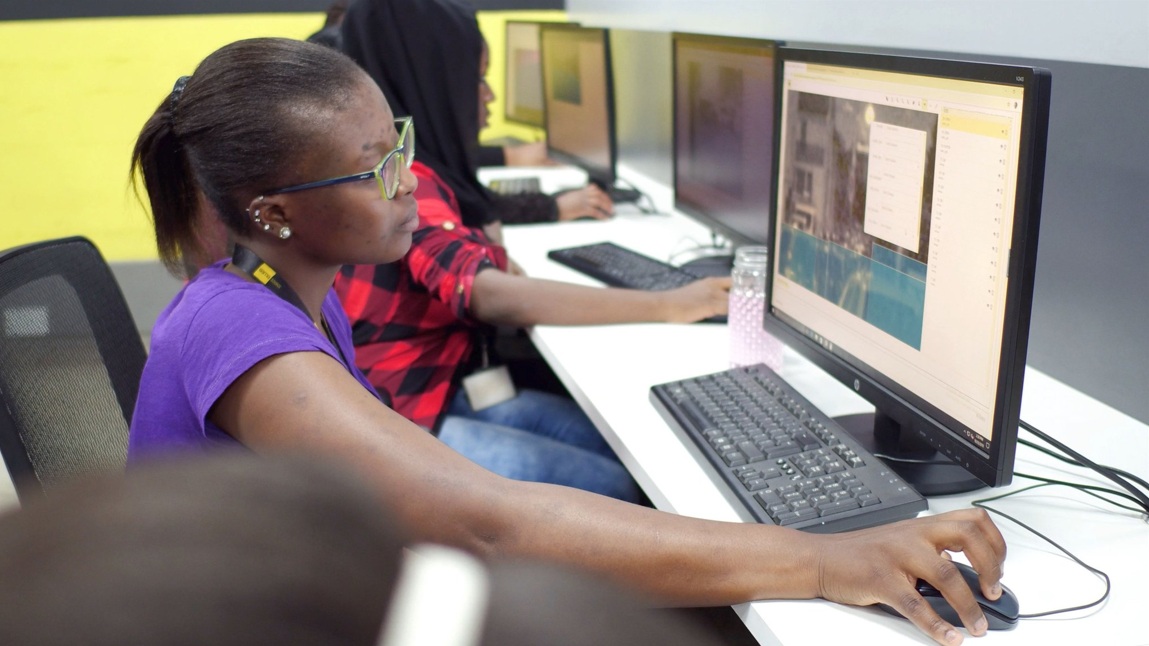
Photo: BBC
The illusion of artificial intelligence as an autonomous, self-sustaining entity is one of the most powerful myths of the twenty-first century. In reality, the chatbots that draft our emails, the algorithms that screen our resumes, and the models that guide our cars are entirely dependent on a sprawling, hidden human infrastructure. Without a constant tether to human cognition, these systems would collapse into incoherence within months. But the nature of that tether is far darker than most users imagine. According to data from the World Bank and industry analysts, between 150 and 430 million people globally are involved in micro-task gig work that feeds AI. And a disproportionate share of the most dangerous, traumatic, and poorly compensated labor falls on Black workers in the Global South.
The AI industry operates on a three-tiered human structure. At the top are roughly 2 to 5 million highly paid engineers and computer scientists in Silicon Valley and other Western hubs who design the architectures. But beneath them lies a hidden army of millions: data labelers, annotators, and content moderators who perform the repetitive, often disturbing work of teaching machines how to see, read, and behave. A third tier of subject matter experts—PhDs, lawyers, and medical professionals—handles complex reasoning tasks. Yet it is the second tier—the anonymous click-workers of Nairobi, Manila, and rural India—who bear the physical and psychological weight of the AI boom. And within that group, Black workers in East Africa have become the primary targets for the industry's most exploitative practices.
The economic mechanics of this exploitation are brutally simple. Tech giants isolate themselves from liability by contracting through third-party vendors like Sama, Appen, and Scale AI. These vendors, in turn, recruit workers in countries with high unemployment, fluent English speakers, and weak local labor protections. Kenya, Uganda, and Madagascar have become central hubs, particularly for the most psychologically damaging form of this work: content moderation and safety alignment. To make ChatGPT "safe" for Western consumers, workers in Nairobi were tasked with reading and labeling the internet's most depraved material—graphic sexual abuse, torture, and hate speech. They were paid between $1.32 and $2 per hour, according to a landmark TIME investigation. Meanwhile, OpenAI secured billions in valuation based on the "clean" safety data these workers produced.
The Architecture of a Digital Plantation
This dynamic is not accidental; it is structural. Civil rights groups and academics have begun using the term "digital colonialism" or "AI coloniality" to describe the extraction of value from former colonies in the form of cheap cognitive labor. The high-value intellectual property and wealth remain concentrated entirely in Western tech hubs. The dangerous, low-paid, psychologically damaging physical labor is outsourced to Black and Brown bodies in the Global South. The pattern mirrors historical colonialism: raw materials (in this case, human-generated data and cognitive effort) are extracted from the periphery, refined into high-value products (AI models) in the metropole, and sold back to the very populations who were exploited to create them.
The human toll is severe and measurable. Industry studies have shown that content moderators in Africa suffer worse mental health outcomes than their counterparts in Europe or North America, primarily because third-party vendors provide inadequate psychological support. Workers sit through grueling nine-hour shifts, manually reviewing explicit images and text, with little more than a short break and no access to ongoing therapy. Over 27% of annotators report direct negative impacts on their mental health. And because these workers are classified as independent contractors on platforms like Remotasks or Appen, they have no safety net. If a worker is slow, files a complaint, or falls below an automated accuracy score, the platform can deactivate their account instantly—without backpay, severance, or appeal.
- Wage Arbitrage: OpenAI paid Kenyan contractors $1.32–$2/hour while securing billions in valuation.
- Psychological Toll: Over 27% of annotators report lasting mental health trauma from reviewing graphic content.
- No Labor Rights: Workers can be deactivated instantly for slow performance or complaints, with no severance or appeal.
- Digital Colonialism: Wealth concentrates in Silicon Valley; trauma and low wages are outsourced to the Global South.
The geographic concentration of this exploitation is striking. Tech companies specifically target East Africa (Kenya, Uganda, Madagascar) for English-language annotation and moderation. South Asia (India and Bangladesh) handles the largest total volume of computer vision and autonomous driving data. Southeast Asia (the Philippines) is a massive hub for customer-service AI training. And beyond national borders, AI companies actively recruit refugees and displaced populations—Venezuelan migrants, Syrians in the Middle East, people in active conflict zones—because they have no other economic options. These are populations with no bargaining power, no recourse, and no choice but to accept pennies for labor that makes billionaires richer.
Why AI Can Never Escape This Dependency
A common rejoinder from techno-optimists is that automation will eventually replace these human labelers. The reality is the opposite. AI developers will likely never stop needing human annotators, but the type of labor is shifting—and becoming more, not less, dependent on exploited expertise. Computer scientists have hit a major mathematical wall known as "Model Collapse": when an AI trains repeatedly on data generated by other AIs, it loses diversity, forgets rare knowledge, and begins hallucinating nonsense. To prevent this decay, models must constantly be refreshed with fresh, organic, real-world data generated and verified by humans. Humans are the "ground truth" anchor that prevents AI from drifting into mathematical madness.
Furthermore, as AI models tackle complex fields like law, medicine, and advanced programming, tech companies are no longer hiring cheap click-workers for core reasoning alignment. Instead, they are paying premium rates to human experts—PhDs, software engineers, medical professionals—who write step-by-step logic proofs and grade the AI on nuanced reasoning. But the lower-tier labeling work remains, and it remains exploitative. The global market for training data is projected to surge toward nearly $16.3 billion by 2033, but almost none of that wealth will reach the hands of the workers in Nairobi and Manila who generate it. The system is designed to extract, not to compensate.
The legal landscape is slowly shifting. The EU AI Act increasingly mandates human oversight for high-risk applications, meaning a "human-in-the-loop" is required by law. But without enforcement of wage standards and worker protections, this simply codifies exploitation into regulatory frameworks. In Kenya, grassroots labor organizations like the Data Labelers Association of Kenya (DLA) are organizing to demand safer conditions, baseline wage transparency, and mental health support. Platforms like Karya in India are pioneering "ethical data sourcing," paying rural workers livable wages directly and bypassing corporate intermediaries. But these are small experiments in a vast ocean of exploitation.
The Uncomfortable Truth
Black workers in East Africa bear a massive and disproportionate share of the psychological trauma required to keep modern AI safe and clean. They are the unseen ghosts in the machine, the digital janitors who scrub the internet's filth so that Western consumers can enjoy polite, helpful chatbots. The AI revolution is not a story of autonomous intelligence; it is a story of wealth extraction, racialized labor arbitrage, and a new form of colonialism that hides behind lines of code. Until we reckon with the human cost of artificial intelligence, we are not building a better future. We are simply digitizing the past.
No Ads. By Us. For Us.
This article was made possible by readers like you. We hope it inspired you to support Emerald Book, so we can continue producing content like this.
We will never show you ads, sell your data, or require a subscription to consume our content. Your gift helps us keep the truth accessible.
Click the Support button to give a gift of any amount today.
Thank you for making this work possible.