

Emerald Pages
◆
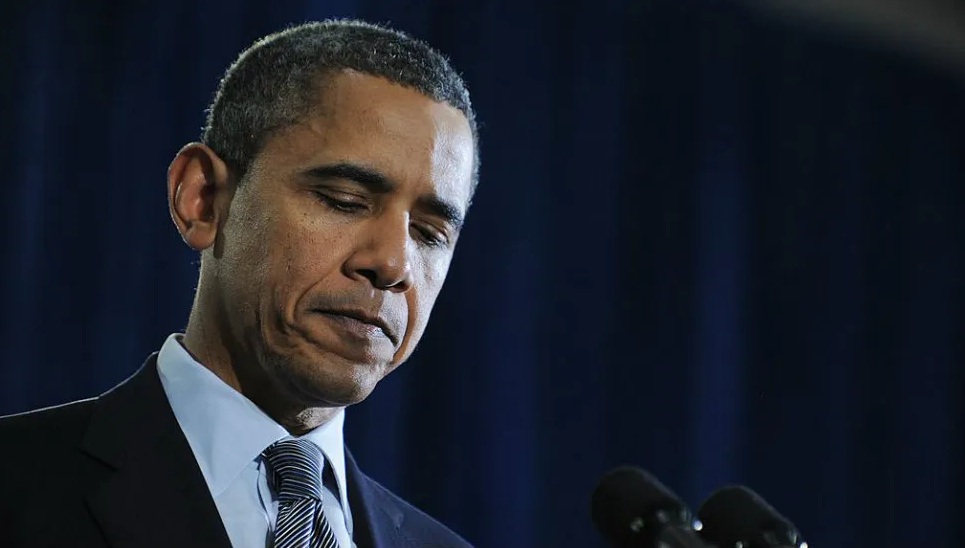
President Barack Obama Photo: Getty Images
When Barack Obama stepped onto the national stage, he carried a philosophy forged in the belief that exceptional merit could transcend racial and political division. His entire political identity was built on the promise of bipartisanship, national unity, and ending the gridlock in Washington. He genuinely believed that if a Black leader was qualified, articulate, calm, and fair enough, it would finally bridge the nation's deepest divides.
Within weeks of taking office in January 2009, that belief collided with an immovable wall. Despite inheriting a catastrophic economic crisis and holding a Democratic majority, Obama extended unprecedented olive branches to Republicans. He traveled to Capitol Hill to meet with the House Republican Caucus. He adopted conservative policy ideas—including the individual mandate originally proposed by the Heritage Foundation—to win cross-party support for healthcare reform. He even kept Robert Gates as Secretary of Defense in a gesture of unity.
The response was swift and total. The $831 billion economic stimulus package passed with zero Republican votes in the House and only three in the Senate. When Obama pulled Senator Chuck Grassley aside during Affordable Care Act negotiations and asked if there was any single change that would earn his vote, Grassley looked away and admitted there was not. The realization came in waves, but the definitive turning point arrived in February 2009—barely one month into his presidency.
The Myth of Post-Racial Politics
The hardest lesson Obama had to learn was this: there exists a non-trivial segment of white America that will never accept Black leadership, regardless of how excellent, scandal-free, or accommodating that leadership proves to be. This was not a failure of his personal diplomacy or policy concessions. It was a fundamental feature of American race relations.
Political scientists now understand that Obama's presidency triggered what researchers call "zero-sum mentality"—the perception that progress for Black Americans inherently means loss for white Americans. For millions, seeing a young Black urban progressive in the White House felt not like a triumph of the American dream, but as a literal displacement of their traditional status and cultural dominance. The "birther" movement, championed by Donald Trump, was not a fringe conspiracy; it was a direct effort to cast a Black man as an illegitimate "alien" who did not belong in the nation's highest office.
- The Stimulus Shock (2009): Zero House Republican votes despite Obama adopting their proposed tax cuts
- The Healthcare Collapse (2009): Months of negotiations ended with Grassley admitting no concession would ever be enough
- The McConnell Doctrine (2010): "The single most important thing we want to achieve is for President Obama to be a one-term president"
- The Secret Inauguration Pact: GOP leaders met the night of Obama's inauguration to plot total non-cooperation
What made this realization so devastating was that Obama had structured his entire political identity around disproving the racist archetypes of the "angry Black man." He was so meticulously calm that critics called him aloof. He was so intellectually rigorous that opponents called him elitist. He was so personally scandal-free that his biggest controversy was wearing a tan suit. None of it mattered. The opposition was not based on his policies or his character; it was based on what he symbolized: a rapidly diversifying America where white political dominance was no longer guaranteed.
The Strategic Trap of Appeasement
This brings us to the essential lesson for every Black leader who will follow. When a leader tries to appease this un-winnable opposition—by diluting their message, softening their demands, or bending over backward to prove they are "one of the good ones"—they fall into a trap. Concessions are not read as good-faith bridge-building. They are read as weakness. The goalposts simply move further.
Worse, appeasement demoralizes your base. When Black voters and progressive allies see their leader catering to the very people who oppose their progress, enthusiasm plummets. Voter turnout drops. And the leader loses the very people who could have powered them to victory.
The successful path forward is not strengthening your weaknesses by trying to win over people who will never accept you. It is strengthening your strengths. This means anchoring firmly in the Black community as your foundation while building a broad coalition of non-Black allies who are open to progress. Because Black Americans make up roughly 13-14% of the U.S. population, no Black leader can win statewide or national power alone. The math requires a multiracial coalition. But that coalition must be built with the millions of Americans—white, Hispanic, Asian, and Indigenous—who are not part of the staunch opposition.
The Blueprint in Action
We see this strategy working today. In Georgia, Senator Raphael Warnock did not downplay his identity; he ran openly as the Black pastor of Martin Luther King Jr.'s Ebenezer Baptist Church. He held fast to Black voters in Atlanta while simultaneously mobilizing suburban white moderates and young voters of all races by focusing on voting rights and healthcare access. Governor Wes Moore of Maryland and House Democratic Leader Hakeem Jeffries maintain strong, unapologetic roots in Black political and cultural institutions while successfully messaging to broad, diverse coalitions.
These leaders understand what Obama had to learn the hard way: you cannot win over everyone, and exhausting yourself trying to do so is a losing strategy. The path to power is not conversion—it is mobilization. By accepting that a certain segment of the population will never change, you free yourself from the trap of appeasement and focus your energy where it belongs: keeping your base fiercely motivated and building unbreakable bridges with the allies who are ready to move the country forward.
The hardest lesson of the Obama presidency is not a reason for despair. It is a reason for strategic clarity. The opposition that will never accept Black leadership exists. Acknowledge it. Then stop wasting a single ounce of energy trying to appease it. Build your strength. Mobilize your coalition. And win.
No Ads. By Us. For Us.
This article was made possible by readers like you. We hope it inspired you to support Emerald Book, so we can continue producing content like this.
We will never show you ads, sell your data, or require a subscription to consume our content. Your gift helps us keep the truth accessible.
Click the Support button to give a gift of any amount today.
Thank you for making this work possible.