

Emerald Pages
◆
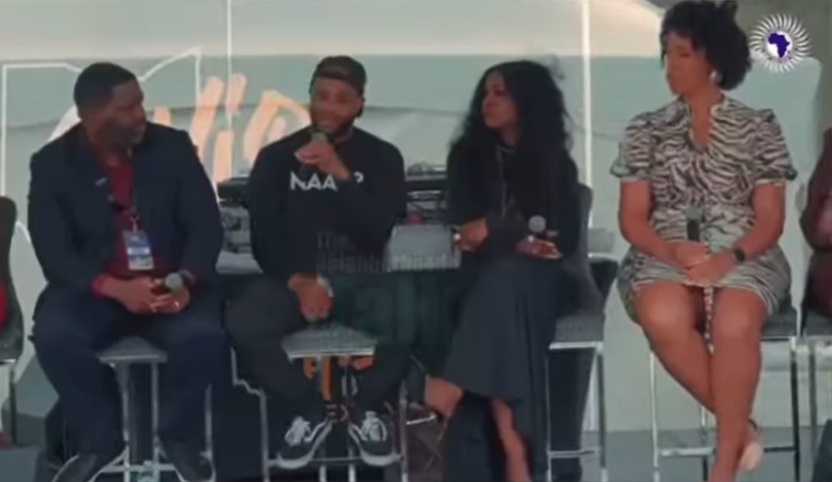
Photo: Instagram | @theneighborhoodtalk
A routine community forum descended into open defiance last week when a NAACP panelist was met with thunderous boos and jeers after urging the audience to embrace "Black and Brown unity." The hostile reaction, captured in a viral video clip circulating across social media, reflects a deepening fracture in America’s historic coalition of minority voters—a fracture now underscored by stark new polling data showing that nearly half of Hispanic voters and 40% of Asian voters cast their ballots for Donald Trump in the 2024 election.
The incident occurred during a town-hall-style panel discussion hosted by a local NAACP chapter. When the moderator asked the panelist to clarify who exactly required solidarity, the man on the panel responded, "For me, that's Black and Brown people throughout this city." Before he could finish his sentence, the room erupted. "Solidarity with whom?" a female audience member shouted, capturing the skepticism that has become increasingly common in Black political spaces since the election.
The viral moment did not occur in a vacuum. It punctuates a year of mounting economic frustration within Black America. While the broader U.S. economy has shown signs of recovery, data from the Economic Policy Institute confirms that Black communities have remained in a "silent recession" for the last 12 months, with unemployment rates nearly doubling that of white counterparts and housing insecurity spiking in urban centers. For many in the audience, the call for abstract racial unity rang hollow against the backdrop of tangible economic pain.
The Numbers That Broke the Coalition
The skepticism on display at the NAACP forum is grounded in concrete electoral data. According to exit polls analyzed by Pew Research Center and NBC News, the 2024 presidential election saw a seismic shift in voting patterns that directly contradicts the "unified minority" thesis long championed by civil rights organizations.
- Hispanic Shift: Donald Trump captured between 45% and 48% of the Hispanic vote—a record high for a Republican candidate, up from just 28% in 2016.
- Asian American Shift: While a majority still voted Democrat, Trump’s share of the Asian vote surged to 40%, a 10-point jump from 2020.
- Black Consistency: In stark contrast, over 86% of Black voters remained with the Democratic ticket, creating an enormous 40-point gap in political allegiance between Black voters and other minority groups.
- Economic Divides: Post-election surveys reveal that Hispanic and Asian voters prioritized inflation (43%) and crime (28%) over racial justice issues, which ranked below 10% for those demographics.
For the audience members booing the NAACP panelist, these numbers represent more than just political disagreement. They see a betrayal of mutual interest. Why are Black people being asked to sacrifice their political power for groups that just voted against their survival? This sentiment echoes a growing "Black autonomy" movement that argues traditional civil rights coalitions have become one-way streets, demanding Black support while offering little in return.
A Recession of One's Own
The economic context of the booing cannot be overstated. Throughout 2025 and into 2026, Black Americans have experienced what economists call a "K-shaped recovery within a recession." While tech and white-collar sectors stabilized, Black-led industries—hospitality, gig economy labor, and public sector education—continued to shed jobs. Federal Reserve data indicates that Black household wealth dipped another 4.5% over the last year, even as overall GDP grew.
This economic isolation has fueled political divergence. The NAACP panelist’s call for "solidarity to eat, to flourish" was met with hostility because, to the audience, the communities he was asking them to embrace were perceived as having just voted against policies designed to put food on Black tables. The Biden/Harris administration’s Inflation Reduction Act and student debt relief initiatives—overwhelmingly supported by Black voters—were rejected by the same Hispanic and Asian voters who now receive the bulk of the national "coalition" rhetoric.
As the 2026 midterms approach, the question hanging over the NAACP panel is the same one facing the Democratic Party as a whole: Can a coalition survive when one member is paying all the costs while others collect the dividends? If the sound of those boos is any indication, the era of automatic "Black and Brown" unity may be coming to a close, replaced by a harder, more pragmatic, and far more isolated political calculus for Black America.
No Ads. By Us. For Us.
This article was only made possible by readers like you. We hope it inspired you to support Emerald Book, so we can continue producing content like this.
We will never show you ads, never sell your data, and never require a subscription to consume our content. Your gift helps us keep the truth accessible.
Please click the Support button on the bottom right of your screen to make a gift of any amount today.
Thank you for making this work possible.