

Emerald Pages
◆
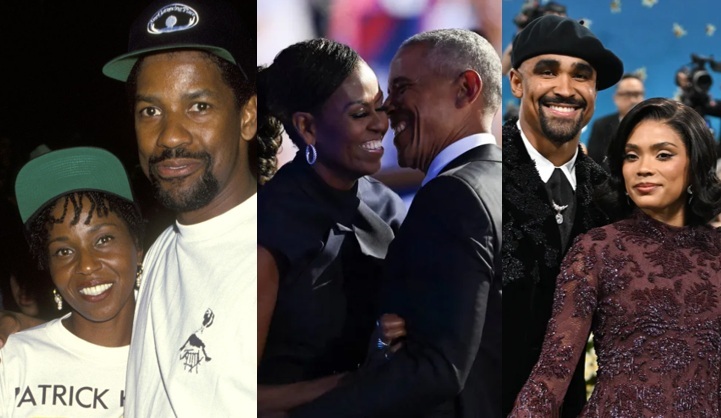
Photo: Verified Pro-Black Celebrity Couples | Getty Images
For generations, the fight for racial equality in America has operated under a common assumption: that the nation's core institutions—the legal system, the political process, the economy, and public education—can be reformed from within to fully dismantle systemic racism. This assumption, while hopeful, is proving to be historically and structurally false. Each of these systems, by design, is ill-equipped to solve a problem it was never meant to address. This is not a failure of will but a failure of architecture. Consequently, a different framework is required: a pro-Black agenda centered not on asking for a seat at a broken table, but on building a self-sufficient buffer zone that insulates Black communities from institutional harm.
To be pro-Black means to actively support, empower, and celebrate Black people, culture, and systems while working to dismantle systemic racism. It is an affirmative stance centered on Black agency, self-determination, and joy. A pro-Black agenda does not require being anti-anyone else; it simply recognizes that the specific historical and ongoing harms inflicted on Black Americans require targeted, collective solutions. As our analysis of four major systems reveals, relying on them to self-correct is a dead end. A pro-Black approach, however, bypasses their limitations entirely by building independent power and prioritizing community well-being over institutional preservation.
The Legal System: Blind to Structure
The American legal system is built to adjudicate individual acts of discrimination, not to remedy systemic outcomes. Statutes like the Civil Rights Act ban specific discriminatory actions, but they rarely mention "racism" as a structural phenomenon. To win a constitutional claim, plaintiffs must usually prove intentional racial malice—a nearly impossible task when policies are "facially neutral" but produce wildly unequal results, such as school funding based on local property taxes. The legal doctrine of disparate impact was designed to address outcomes, but courts have gutted it, requiring proof of intent. The legal system, therefore, cannot prosecute the machinery of systemic racism; it can only punish the most explicit operators. It is a system that protects precedent and property, not equity.
The Political System: Trapped by Majority Rule
Political representation, while important, is structurally neutralized by majoritarian rule. Even when Black representatives introduce legislation targeting systemic issues—like police reform or reparations studies—they are easily outvoted in statehouses and Congress. Furthermore, racial gerrymandering dilutes collective voting power, and the need to compromise with dominant blocs often results in symbolic victories without material change. A Black mayor or governor must still operate within existing budgets, tax structures, and legal precedents. The political system manages inequality; it does not erase it.
The Economic System: Rewarding Historical Advantage
The economic system is designed to reward existing capital, not redistribute it. Corporate executives, even those with the best intentions, have a fiduciary duty to maximize shareholder profit, making structural redistribution illegal. Individual corporate promotions cannot close the massive 8-to-1 white-to-Black household wealth gap, as the system naturally favors those who already hold generational wealth.
The Educational System: Superficial, Inconsistent, and Politically Restricted
Public schools do teach Black history, but they do it superficially, inconsistently, and under heavy political restrictions. Because the educational system is funded and managed locally, what a student learns about Black history depends entirely on their zip code. The system treats Black history as an isolated, optional add-on rather than a foundational part of American history. Data and curriculum studies show exactly how the system fails to teach this history accurately.
The 8% Time Limit: Even when teachers are enthusiastic about the subject, research shows that U.S. history classrooms devote only 8% to 9% of total class time to Black history. This usually translates to just one or two isolated lessons per school year, typically crammed entirely into Black History Month.
The "Heroes and Holidays" Trap: Analysis from the Johns Hopkins Institute for Education Policy reveals that standard curricula heavily filter the content. Lessons are usually restricted to a sanitized, passive narrative of slavery and a few prominent Civil Rights leaders (like Martin Luther King Jr. and Rosa Parks). The system routinely omits the deep structural mechanics of racism—such as redlining, the wealth gap, and the school-to-prison pipeline—as well as Black contributions to science, literature, medicine, and pre-colonial African history.
The Mandate vs. Reality Gap: Only 12 states explicitly mandate a K-12 African American history curriculum. However, even in states with these mandates, there is a massive execution gap. Many state mandates have no enforcement or accountability mechanisms, meaning individual school districts or teachers can simply choose to ignore them. Since 2021, over 44 states have introduced bills or passed laws restricting how teachers can discuss race, racism, or systemic bias. Teachers face job termination or lawsuits if a lesson makes a student feel "discomfort," causing many educators to censor their own history lessons out of fear.
WHERE BLACK AMERICANS ACTUALLY LEARN BLACK HISTORY
| Source | Percentage |
|---|---|
| Family & Friends | 43% |
| The Media / Documentaries | 30% |
| The Internet | 27% |
| College / Higher Education | 24% |
| K-12 Public Schools | 23% |
Note: Percentages do not equal 100% because respondents could choose multiple sources. Source: Pew Research Center
Because public schools are ill-equipped to handle this education, a landmark Pew Research Center poll found that only 23% of Black adults learned most of their history from K-12 schooling. Instead, the vast majority had to bypass the school system entirely, learning from family, media, the internet, or higher education.
- Legal Failure: Requires proof of individual intent; ignores "facially neutral" policies that produce racial disparities.
- Political Failure: Majority rule and gerrymandering neutralize minority representation; elected officials manage existing structures.
- Economic Failure: Prioritizes shareholder profit and historical capital advantages; individual promotions cannot close the wealth gap.
- Educational Failure: Property tax funding ties school resources to historically redlined neighborhoods; only 23% of Black adults learn Black history from K-12 schools.
The Solution: A Pro-Black Buffer Zone
Because these four pillars fail to counteract systemic racism, a pro-Black agenda shifts its focus from internal reform to external construction. The goal is not to build a completely separate parallel society, but to create a self-sufficient buffer zone—a position of cultural, economic, and social leverage that protects the community from systemic harm while allowing it to interact with the broader world on its own terms.
This buffer zone operates on multiple levels. An economic buffer secures basic necessities through community land trusts, Black-owned credit unions and banks, and cooperative food networks—insulating the community from discriminatory banking and employment practices. A legal/political buffer organizes unified voting blocs, funds independent legal defense funds, and controls local municipal seats. A cultural buffer establishes independent media, community-run after-school programs (Freedom Schools and weekend pods), and mentorship networks that anchor Black identity and history, providing psychological armor against institutional bias and state-sanctioned censorship.
This educational buffer is particularly crucial. Rather than waiting for public schools to lift curriculum restrictions, communities build their own educational buffers: Freedom Schools and weekend pods that teach unedited history, literacy, and political advocacy outside of school hours; independent archives that digitize historical documents and literature so the state cannot censor or delete them. The public school system operates exactly like the legal and political systems: it is designed to transmit standard, state-sanctioned narratives. If you want a complete, systemic understanding of Black history, the institutional school system is structurally built to fall short.
Data from the Pew Research Center indicates that the majority of Black Americans already align with pro-Black principles: 79% feel a personal responsibility to look out for other Black people, and 58% view supporting Black-owned businesses as an effective strategy for equality. While younger generations may embrace more intersectional identities, the core commitment to collective uplift remains strong.
Ultimately, the American legal, political, economic, and educational systems are ill-equipped to dismantle systemic racism because they were built on foundations that codified it. A pro-Black agenda succeeds where these systems fail because it is unapologetically targeted. It explicitly acknowledges historical theft and builds direct, targeted solutions to reverse it. The question is not whether we should pursue a pro-Black agenda, but whether we have the collective courage to build the buffer zones that history has proven necessary.
No Ads. By Us. For Us.
This article was only made possible by readers like you. We hope it inspired you to support Emerald Book, so we can continue producing content like this.
We will never show you ads, never sell your data, and never require a subscription to consume our content. Your gift helps us keep the truth accessible.
Please click the Support button on the bottom right of your screen to make a gift of any amount today.
Thank you for making this work possible.