

Emerald Pages
◆
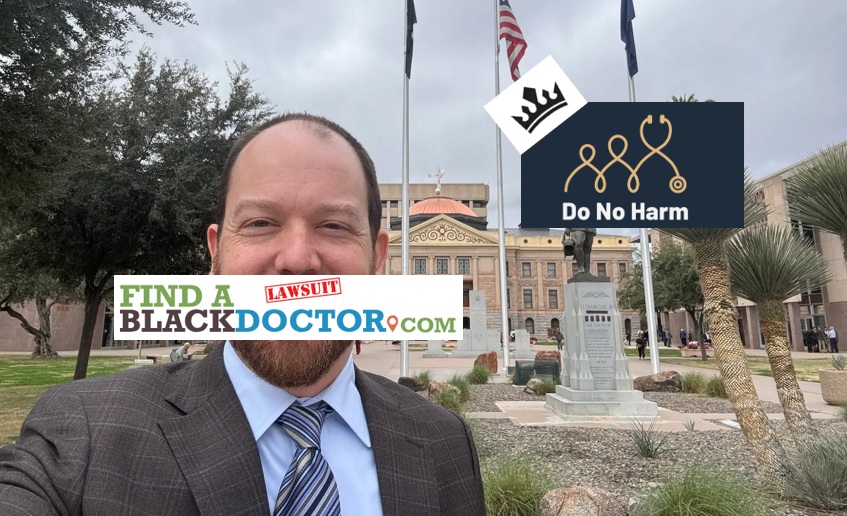
Photo: Emerald Book Image
On its surface, the lawsuit appears nonsensical. A white dermatologist from Colorado, Dr. Travis Morrell, is suing an online directory called "Find a Black Doctor" — a platform explicitly created to help Black patients find Black physicians and dentists. The website's name says exactly what it does. Yet Dr. Morrell claims he applied to join, was ignored, and was constructively rejected because he is white. The listing, notably, is free. He lost no money. So what is this really about?
The answer lies not in dermatology but in a coordinated legal strategy. Dr. Morrell is backed by Do No Harm, a conservative medical advocacy group founded in 2022 specifically to oppose Diversity, Equity, and Inclusion (DEI) initiatives in healthcare. Filed in Manhattan federal court, the lawsuit targets the directory platform, its founder Dr. Dina Strachan, and the very concept of race-specific medical resources. The legal argument rests on Section 1981 of the Civil Rights Act of 1866 — a Reconstruction-era law that guarantees all citizens the same right to "make and enforce contracts" regardless of race.
The directory's mission, by contrast, is rooted in documented medical reality. Black Americans make up approximately 13% of the U.S. population but only about 5% of active physicians. Research consistently shows that racial concordance — patients sharing a race or ethnicity with their doctor — improves trust, communication, and health outcomes, particularly for Black men and women. The website was created specifically to help Black patients navigate historic systemic biases in medicine and find culturally responsive care. Including a white doctor, supporters argue, would confuse or mislead patients seeking exactly what the directory promises.
A Lawsuit Designed to Set Precedent
Dr. Morrell is not acting alone. Do No Harm, which now boasts over 50,000 members including doctors, nurses, and medical students, was founded by retired kidney specialist Dr. Stanley Goldfarb, a former associate dean at the University of Pennsylvania's medical school. According to its mission statement, the organization believes that "identity politics" and "woke ideology" are lowering healthcare standards and promoting racial segregation. The group actively files strategic lawsuits to challenge race-based programs in medicine.
This lawsuit is a textbook test case. The group does not actually need Dr. Morrell to appear in "Find a Black Doctor" — in fact, a white doctor listing would defeat the platform's purpose. Instead, the goal is to obtain a federal ruling that any race-based eligibility requirement in a commercial directory violates civil rights law. That precedent could then be used to challenge minority scholarships, medical fellowships, hospital diversity programs, and other race-conscious initiatives nationwide.
- 2022: Do No Harm is founded to oppose DEI in medical education and practice.
- 2023: Supreme Court bans affirmative action in college admissions, energizing anti-DEI litigation.
- 2025: Do No Harm successfully sues a similar Black doctors directory in Philadelphia, forcing it to open to all races.
- May 2026: The group files the current lawsuit against "Find a Black Doctor" in Manhattan federal court.
The directory's supporters argue that the First Amendment protects a private website's right to curate its own content and message. Forcing "Find a Black Doctor" to include white physicians, they say, would be like forcing a dating site for Jewish singles to accept all applicants or requiring a magazine focused on Latinx culture to feature non-Latinx voices. The platform exists to solve a specific disparity — not to serve as a general marketplace.
Two Irreconcilable Views of Fairness
From Do No Harm's perspective, any program that uses race to include or exclude people is inherently discriminatory, regardless of its stated purpose or the historical disparities it seeks to address. They argue that the Civil Rights Act of 1866 — written to protect newly freed Black Americans from post-Civil War discrimination — should be applied in a strictly colorblind manner. If a directory cannot exclude Black doctors, it should not be able to exclude white doctors either.
From the directory's perspective, this lawsuit exploits a law meant to protect minority rights in order to dismantle voluntary, community-driven solutions to real health disparities. Dr. Strachan and her supporters note that the listing is free, that no money has changed hands, and that no white patient has been denied care. The only alleged injury is that one white doctor was denied free advertising on a platform whose name explicitly signals its audience and purpose.
The court will ultimately have to decide a difficult constitutional question: Does a website's right to control its own message and serve a specific audience outweigh the anti-discrimination obligations of a commercial business? And if the listing is free, does a legally enforceable "contract" even exist under Section 1981?
Whatever the outcome, one thing is clear. This lawsuit was never about Dr. Morrell's dermatology practice in Colorado. He never actually wanted to be listed in "Find a Black Doctor" — a directory whose name and purpose make clear it serves patients seeking Black providers. He does not need those patients, nor would they likely seek him out on a platform designed for racial concordance. The application he filed was simply a legal trigger, a required step to gain standing in federal court. The real goal was never integration or access to new clients. It was to attack a race-conscious resource and fulfill a political agenda. Backed by Do No Harm — a group formed specifically to oppose DEI initiatives — this lawsuit is a weapon, not a grievance. And win or lose, the organization has already achieved its objective: forcing a federal court to debate whether "Find a Black Doctor" has the right to exist as intended.
No Ads. By Us. For Us.
This article was only made possible by readers like you. We hope it inspired you to support Emerald Book, so we can continue producing content like this.
We will never show you ads, never sell your data, and never require a subscription to consume our content. Your gift helps us keep the truth accessible.
Please click the Support button on the bottom right of your screen to make a gift of any amount today.
Thank you for making this work possible.