

Emerald Pages
◆
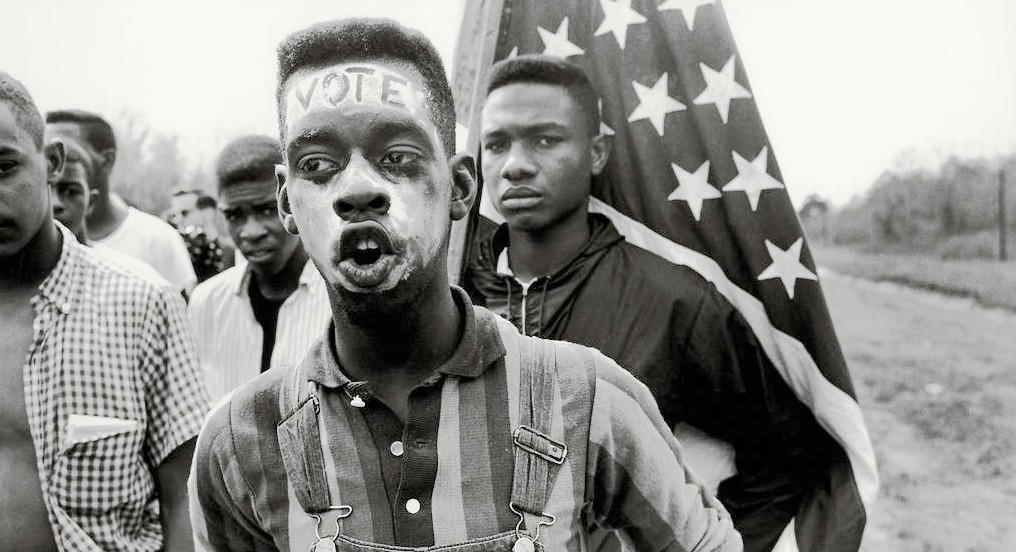
Photo: Bruce Davidson | Magnum Photos
In a major cover story published this week, The New York Times Magazine declared that "The Civil Rights Era Is Collapsing Before Our Eyes." Investigative journalist Nikole Hannah-Jones draws a direct line between the end of Reconstruction in 1877 and the current rollback of voting rights, racial gerrymandering in states like Tennessee, and a conservative Supreme Court that has gutted the heart of the Voting Rights Act. But beneath the alarming headlines lies a more unsettling philosophical question—one that strikes at the very foundation of American democracy: if a right can be taken away by a legislative vote or a judicial opinion, was it ever truly a right, or merely a temporary privilege?
The answer, according to legal historians and critical race theorists, is deeply uncomfortable. The United States has never truly guaranteed rights to Black Americans. Instead, it has offered revocable access to legal remedies for individual acts of discrimination while leaving the engine of systemic racism untouched. The current collapse is not a sudden failure of a robust system. It is the exposure of a system that was always fragile because it was built on a profound misunderstanding—or deliberate misdirection—about what racism actually is and how the law chooses to see it.
To understand why the Civil Rights Era is collapsing, one must first understand what it actually achieved—and what it deliberately left standing. The landmark legislation of the 1960s—the Civil Rights Act of 1964 and the Voting Rights Act of 1965—was revolutionary in one specific way: it made explicit, intentional, individual acts of discrimination illegal. A landlord cannot say "no Black tenants." An employer cannot admit to paying Black workers less. A poll worker cannot openly require a literacy test. These were real victories. But they were victories against a particular kind of racism: the overt, name-calling, "whites only" sign variety.
The Legal Gap: Discrimination vs. Systemic Racism
The American legal system treats racism and discrimination as entirely separate categories. Discrimination—defined as an individual actor explicitly treating someone differently based on race—is illegal. But systemic racism—the accumulated, intergenerational outcome of policies, algorithms, zoning laws, funding formulas, and lending practices that produce stark racial disparities—is almost entirely unregulated by civil rights law. The government prosecutes the former and largely ignores the latter.
This distinction explains the paradox at the heart of the Hannah-Jones essay. The Supreme Court has, over the past decade, issued rulings that make it nearly impossible to prove discrimination without a smoking gun. In the 2013 Shelby County v. Holder decision, the Court effectively struck down Section 5 of the Voting Rights Act, which required states with a history of discrimination to pre-clear any voting changes with the federal government. Chief Justice John Roberts argued that the law was outdated because "things have changed dramatically." But as Hannah-Jones notes, within hours of the ruling, states like Texas and North Carolina implemented voter ID laws and redistricting plans that courts later found to disproportionately harm Black voters. The law required proof of intentional racial animus. The states simply redesigned the system to achieve the same outcome without saying the quiet part out loud.
- The Intent Requirement: Under current doctrine, plaintiffs must prove lawmakers acted with "discriminatory intent," not just that a policy has a discriminatory effect. This is nearly impossible to prove in modern politics, where explicit racism is rare.
- Colorblindness as a Weapon: The conservative legal doctrine of "colorblindness" argues that the government should never consider race. But ignoring race in a world shaped by centuries of racial hierarchy locks in existing disparities.
- Individual Acts vs. Structural Outcomes: You can sue an individual employer for bias. You cannot sue a tax code, a zoning board, a lending algorithm, or a historical pattern of redlining—even though those things determine wealth, housing, education, and health outcomes far more than any single act of bigotry.
This brings us to the second and more troubling distinction: anyone can experience discrimination, but only certain groups suffer from systemic racism. A white person can absolutely be the victim of an individual discriminatory act—a biased hiring manager, a rude waiter, an unfair police encounter. But systemic racism refers to a closed loop of reinforcing disadvantages across every major institution: housing, education, employment, healthcare, criminal justice, and political representation. It is not about meanness. It is about power, history, and accumulated effect. When the law conflates these two things—when it treats a white person's isolated bad experience as legally equivalent to a Black person's multigenerational structural exclusion—it renders itself incapable of addressing the actual problem.
The "Second Redemption" and the End of Paper Rights
Hannah-Jones's essay draws a chilling historical parallel. The First Reconstruction (1865–1877) saw the passage of the 13th, 14th, and 15th Amendments—constitutional guarantees of freedom, citizenship, and voting rights for Black men. Within a decade, however, the "Redemption" era began: Southern states rewrote constitutions, imposed poll taxes and literacy tests, and the Supreme Court ruled in the 1883 Civil Rights Cases that Black Americans must stop being "the special favorite of the laws." Jim Crow lasted for nearly a century.
The Second Reconstruction—the Civil Rights Movement—produced the 1964 and 1965 Acts. And now, Hannah-Jones argues, we are entering a "Second Redemption." The same language is being used. The same arguments about "colorblindness" and "the law should not favor any group" are being deployed. And the same result is taking shape: the systematic decimation of Black political power, not through explicit racism, but through surgical redistricting, voter ID laws, polling place closures, and Supreme Court doctrines that look neutral but function as a cudgel.
This brings us back to the philosophical heart of the matter. If the Voting Rights Act—passed with blood and fire on the Edmund Pettus Bridge—can be hollowed out by five lawyers in robes, was it ever a "right" in the meaningful sense? Philosophers distinguish between natural rights (inherent to human beings, regardless of government) and legal rights (what the state chooses to enforce at a given moment). The United States has never truly operated on natural rights for Black people. It has offered legal rights—and legal rights are only as strong as the courts and legislatures that uphold them.
This is not a theoretical quibble. It is the difference between a right and a privilege. A privilege is revocable at the pleasure of those in power. A right, properly understood, is not. When the Supreme Court can erase Section 5 of the Voting Rights Act with a single opinion; when a state legislature can draw a map that eliminates a majority-Black district; when a police officer can stop, search, and kill with near-total immunity—these are not the hallmarks of a society that has granted rights. They are the hallmarks of a society that has extended temporary, conditional access to the legal system, access that can be withdrawn the moment the political winds shift.
What Is Actually Collapsing?
The New York Times essay is not an alarmist fantasy. It is a sober documentation of ongoing events. The Supreme Court's 2026 term has continued to narrow the scope of what remains of the Voting Rights Act. Tennessee's legislature has moved to eliminate one of the last majority-Black congressional districts in the state. Legal challenges to gerrymandering are failing because courts cannot prove "intent." The architecture of the Second Reconstruction is coming down, brick by brick.
But the collapse is not a tragedy in the sense of a sudden disaster. It is the inevitable conclusion of a system that was always built on sand. The Civil Rights Movement won the language of equality. It won the ability to sue individual bigots. It did not win a fundamental restructuring of American political economy. It did not dismantle the zoning laws that concentrate poverty. It did not rewrite tax codes that privilege inherited wealth. It did not desegregate the algorithms that deny mortgages. It won paper rights—and paper burns.
The question that lingers after reading Hannah-Jones's essay is not whether the Civil Rights Era is collapsing. The evidence suggests it is. The real question is whether Americans—and particularly white Americans, who have the luxury of treating this as an abstract legal debate—will finally understand that individual discrimination is a sideshow. The main event has always been systemic racism. And the law, as currently constructed, does not know how to see it, name it, or stop it. If a right can be taken away, it was never a right. It was a rental. And the lease is coming up.
No Ads. By Us. For Us.
This article was only made possible by readers like you. We hope it inspired you to support Emerald Book, so we can continue producing content like this.
We will never show you ads, never sell your data, and never require a subscription to consume our content. Your gift helps us keep the truth accessible.
Please click the Support button on the bottom right of your screen to make a gift of any amount today.
Thank you for making this work possible.