

Emerald Pages
◆
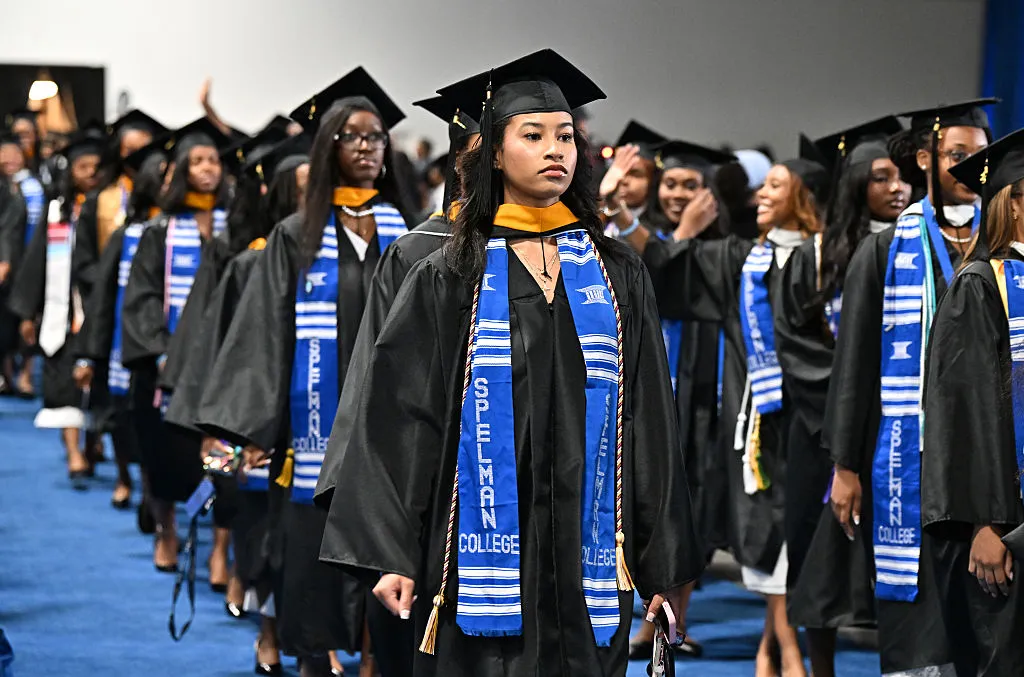
Photo: Paras Griffin | Getty Images
In June 2016, a wave of optimistic headlines swept across digital media. "Black women are now the most educated group in the United States," declared several outlets, citing a National Center for Education Statistics report. The news felt like a long-overdue victory—a narrative of resilience overcoming systemic barriers. There was only one problem: it wasn't entirely true. While the sentiment celebrated a remarkable cultural triumph, the data had been stretched into a myth that continues to circulate on social media today.
The confusion didn't arise from malice but from a misunderstanding of two very different statistical measurements: enrollment rates versus total degree attainment. When researchers noted that a higher percentage of Black women were actively enrolled in college relative to their own population size, the takeaway became a sweeping claim about the entire population of degree-holding adults. In reality, when we look at who holds a bachelor's degree or higher across America, the landscape looks different.
To understand the actual hierarchy, we look at adults aged 25 and older. According to data from the Postsecondary National Policy Institute, Asian women hold the highest percentage of bachelor's degrees or higher at 56.7%, followed closely by White women at 52.9%. Black women follow at 29.3%, with Hispanic/Latina women at 22.9%. These numbers do not diminish the incredible progress Black women have made—in fact, the pace of that progress is historic—but they correct the record on the "most educated" superlative.
Where the 'Most Educated' Claim Actually Comes From
The viral meme originated from a specific statistic regarding college enrollment rates in 2011. The U.S. Census Bureau found that 9.7% of all Black women were enrolled in college at that time. That percentage topped Asian women (8.7%), White women (7.1%), and White men (6.1%). Media outlets ran with this number but confused "current enrollment relative to population" with "total historical accumulation of degrees."
There is also an impressive internal statistic: Black women dominate degree attainment within their own community. They earn 64.1% of all bachelor's degrees, 71.5% of master's degrees, and 65.9% of doctoral degrees awarded to Black students. This means that within the Black demographic, women are outpacing Black men at a rate unmatched by any other racial or ethnic group. It is a stunning achievement of intra-group leadership—but it is not the same as being the most educated group in the entire country.
- Enrollment Leaders: Black women had the highest percentage of their demographic enrolled in college (9.7%) in the 2011 data cycle.
- Intra-Group Dominance: Black women earn nearly two-thirds of all degrees awarded to Black students.
- Overall Attainment: Asian women (56.7%) and White women (52.9%) hold the highest percentage of bachelor's degrees among all U.S. women.
The Hidden Problem: Pitting Black Women Against Black Men
Beyond the statistical inaccuracy, there is a deeper, more harmful issue with how this myth spreads. The headline only exists because it uses Black men as the baseline for comparison. When the media reported that Black women were the "most educated," they were looking at a dataset where the only group Black women were actually outperforming by a wide margin was Black men. By removing that context, the media turned a complex statistic about gender disparities within one community into a misleading headline about the entire country.
This framing creates an artificial, toxic rivalry—falsely presenting Black women's academic success as a victory over Black men, rather than looking at the distinct systemic pressures affecting both genders. Sociologists and Black community leaders have repeatedly warned that this divide-and-conquer narrative distracts from the real structural enemies: a school-to-prison pipeline that pushes young Black men out of education and a debt-to-low-wage pipeline that squeezes Black women who stay in.
When you look past the headlines, the data does not show a competition; it shows two different arms of the same structural struggle. Black men face disproportionate rates of harsher school disciplinary actions, racial profiling, and mass incarceration—forces that actively push them away from higher education pipelines at early ages. Black women, meanwhile, are heavily funneled into higher education but then targeted by predatory student lending and systemic underpayment, leaving them with the highest debt burdens in the country. One group is locked out; the other is squeezed dry. Neither is winning.
Framing the data as "Black women vs. Black men" also acts as a classic distraction. It shifts focus away from the staggering inter-racial wealth gap. Data from The Education Trust shows that Black men (23.6%) and Black women (30.1%) graduate college at rates that are much closer to each other than either is to White or Asian demographics. Pitting Black women against Black men obscures the reality that both genders are shut out from generational wealth, capital, and equitable corporate pay compared to their White counterparts.
How This Myth Actively Harms Black Women
Perhaps the most overlooked consequence of this viral myth is the real-world damage it inflicts on Black women themselves. When society buys into a fake statistic claiming Black women are "at the top," it creates a false narrative of supreme privilege and success that obscures their actual economic and social struggles. Psychologists and sociologists have documented several distinct ways this myth causes tangible harm.
1. It Weaponizes the "Superwoman" Trap. Sociologists point to a phenomenon called the "Strong Black Woman Schema"—a cultural stereotype requiring Black women to be entirely self-reliant, hyper-resilient, and emotionally invulnerable. Labeling Black women as "the most educated" feeds directly into this trap. It treats them like superheroes who can effortlessly conquer systemic racism and sexism on their own. The consequences are severe: burnout, anxiety, depression, and lower rates of mental and physical health help-seeking. Admitting to struggle directly conflicts with the "successful superhero" narrative, so Black women suffer in silence.
2. It Justifies Defunding Support Systems. When public and political figures believe Black women are already dominating higher education, it becomes incredibly easy to argue that they no longer need equity programs or targeted financial support. This myth provides a shield for institutions to dismantle Diversity, Equity, and Inclusion (DEI) initiatives, race-conscious scholarships, and student debt relief programs. The reality, however, is that Black women still face the lowest graduation completion rates among women due to a lack of institutional resources and financial pressures. Preaching that they are already winning the race cuts off the funding they need to survive college.
3. It Masks Extreme Wage and Wealth Gaps. The myth acts as a smoke screen for corporate America. If a company can point to viral articles claiming Black women are thriving academically, it diverts focus from how badly they are failing them financially. It allows employers to bypass the reality that college-educated Black women face a massive "degree discount"—frequently earning less than men or White women with lower educational credentials. Instead of holding corporate boards accountable for the 64-cent wage gap, the myth implies that if a Black woman is struggling, she just hasn't worked or studied hard enough yet.
4. It Gaslights the Community's Material Reality. Ultimately, the largest harm of this lie is that it forces Black women to live in a state of cognitive dissonance. They are publicly applauded as "the standard of excellence" while privately struggling under the highest student loan debts in the nation, minimal generational wealth, and intense corporate pushback. By flattening their complex reality into a feel-good soundbite, the myth celebrates the effort Black women make while completely erasing the cost of that effort.
The Education-to-Income Paradox
Correcting the "most educated" myth is not meant to diminish Black women's academic drive. Rather, it highlights a more urgent issue: Education does not equal economic freedom. Despite rapid gains in graduate school enrollment, Black women face a steep wage gap that a diploma cannot seem to close. On average, Black women earn roughly 64 cents for every dollar earned by a non-Hispanic White man. More shockingly, a Black woman with a bachelor's degree often earns less than a White man with only a high school diploma.
This "Education-Wage Paradox" is worsened by student debt. Because Black families have less intergenerational wealth to draw upon, Black women graduate with the highest average student loan debt of any demographic. They pay that debt off more slowly due to lower post-graduation wages, meaning a higher percentage of their income goes to interest rather than building assets like homes or retirement funds. In fact, White families headed by someone without a high school diploma often have a higher net worth than Black families headed by someone with a college degree.
The Concrete Ceiling and the Pivot to Entrepreneurship
While white women often discuss the "glass ceiling," women of color face what researchers call a "concrete ceiling"—a barrier that is completely opaque and much harder to break. Black women remain severely underrepresented in C-suite executive roles, regardless of their credentials. They are frequently funneled into lower-paying support sectors, such as Human Resources or Diversity roles, rather than revenue-generating positions that lead to wealth accumulation.
In response to these corporate barriers, many Black women have pivoted to entrepreneurship. They are currently one of the fastest-growing groups of business owners in America, leveraging their high educational attainment to build independent wealth outside of traditional corporate structures. This pivot is a testament to resilience: when the existing system fails to reward the degree, they build a new system.
So, what is the accurate saying? Sociologists suggest that instead of "Black women are the most educated," the precise truth is: "Black women are the fastest-growing group of college degree earners relative to their own demographic, and they outpace men in their community more than any other group." It is a mouthful, but it is a truth that celebrates momentum without masking the persistent economic inequality that remains—and without forcing Black women into a harmful "superwoman" narrative that denies them the support, resources, and recognition they truly deserve.
No Ads. By Us. For Us.
This article was only made possible by readers like you. We hope it inspired you to support Emerald Book, so we can continue producing content like this.
We will never show you ads, never sell your data, and never require a subscription to consume our content. Your gift helps us keep the truth accessible.
Please click the Support button on the bottom right of your screen to make a gift of any amount today.
Thank you for making this work possible.