

Emerald Pages
◆
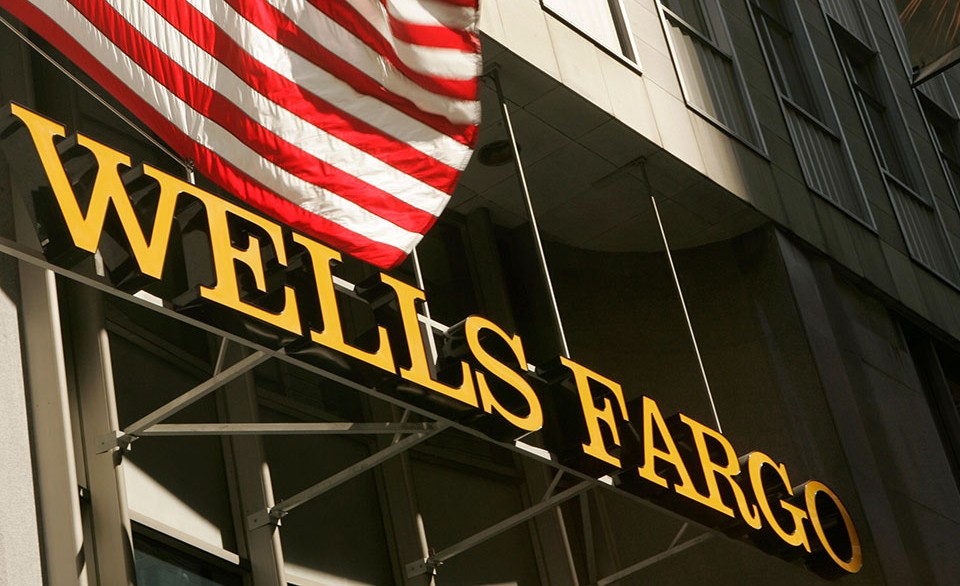
Photo: Euromoney
A federal judge has officially ended a multi-year shareholder battle against Wells Fargo, granting final approval to a $110 million settlement that directly addresses systemic discriminatory hiring and mortgage lending practices. On May 15, 2026, Judge Trina Thompson of the U.S. District Court for the Northern District of California signed the Final Approval Order, closing a consolidated derivative lawsuit that accused the bank’s leadership of failing their fiduciary duties.
Unlike a traditional class-action payout, this settlement establishes a restorative framework aimed at repairing structural inequities. The litigation, brought by shareholders including the City of Plantation Police Officers' Retirement Fund and the City of Pontiac Reestablished General Employees' Retirement System, alleged that senior executives and board directors ignored red flags while systemic discrimination took root within two critical areas of the bank’s operations.
The first major allegation centered on mortgage lending. A 2022 Bloomberg investigation revealed that during the 2020 refinancing surge, Wells Fargo approved less than half of refinancing applications from Black homeowners. Out of every single major U.S. mortgage lender, Wells Fargo stood alone as the institution that rejected more Black applicants than it accepted. White applicants with nearly identical financial profiles faced significantly higher approval rates, pointing to automated racial gaps in the bank’s underwriting algorithms.
‘Sham’ Interviews and a Whistleblower’s Warning
Simultaneously, shareholders uncovered a troubling pattern within the bank’s hiring practices. To meet internal diversity goals and appear progressive in public SEC filings, Wells Fargo managers allegedly conducted fake job interviews with nonwhite and female candidates. The positions, however, had already been filled or promised to other people before the minority candidates ever sat down. A former executive, Joe Bruno, raised ethical alarms about what he called a superficial corporate quota stunt. After being fired, Bruno’s whistleblower account triggered heavy media scrutiny and subsequent legal action.
- Refinancing Denials: Wells Fargo approved fewer than 50% of Black homeowners’ refinancing applications in 2020.
- ‘Sham’ Interviews: The bank conducted fake job interviews with nonwhite candidates to feign progress toward diversity goals.
- Whistleblower Retaliation: Executive Joe Bruno was fired after raising ethical alarms about the hiring practices.
The bank officially denied any legal wrongdoing to avoid further trial costs. Nonetheless, under the final court order, Wells Fargo agreed to modify its automated underwriting logic to use more holistic criteria and maintain the financial assistance programs for at least three years.
How the $110 Million Is Distributed
The settlement’s structure deviates from a typical cash payout to investors. Instead, the court approved a two-part distribution that prioritizes impacted borrowers and corporate governance remedies.
The majority of the funds—$100 million—will flow into a Borrower Assistance Fund. This program provides direct grants, down-payment assistance, and closing-cost credits to low- and moderate-income (LMI) borrowers across more than 50 designated U.S. metropolitan areas, including Charlotte, North Carolina. Eligible applicants must be looking to buy or refinance a home within one of the court-designated regions and have household income beneath the local LMI threshold.
The remaining $10 million comes from insurance companies representing the Board of Director Defendants and will be paid directly back to Wells Fargo, covering internal governance improvements and legal costs. A third-party administrator will manage applications, with the program set to launch by the end of summer 2026 and run for three years or until the fund is exhausted.
(Note: This settlement is separate from Wells Fargo’s unrelated 2016 consumer class-action lawsuit over fake unauthorized accounts, which also carried a $110 million price tag.)
For borrowers wondering if they qualify, the specific list of metropolitan areas aligns heavily with regions where the bank maintains a massive retail footprint. The court’s final approval order ensures that rather than sending generic claim forms to individuals, the $100 million functions as an open grant and financial assistance program designed to repair structural lending inequities at scale.
No Ads. By Us. For Us.
This article was only made possible by readers like you. We hope it inspired you to support Emerald Book, so we can continue producing content like this.
We will never show you ads, never sell your data, and never require a subscription to consume our content. Your gift helps us keep the truth accessible.
Please click the Support button on the bottom right of your screen to make a gift of any amount today.
Thank you for making this work possible.