

Emerald Pages
◆
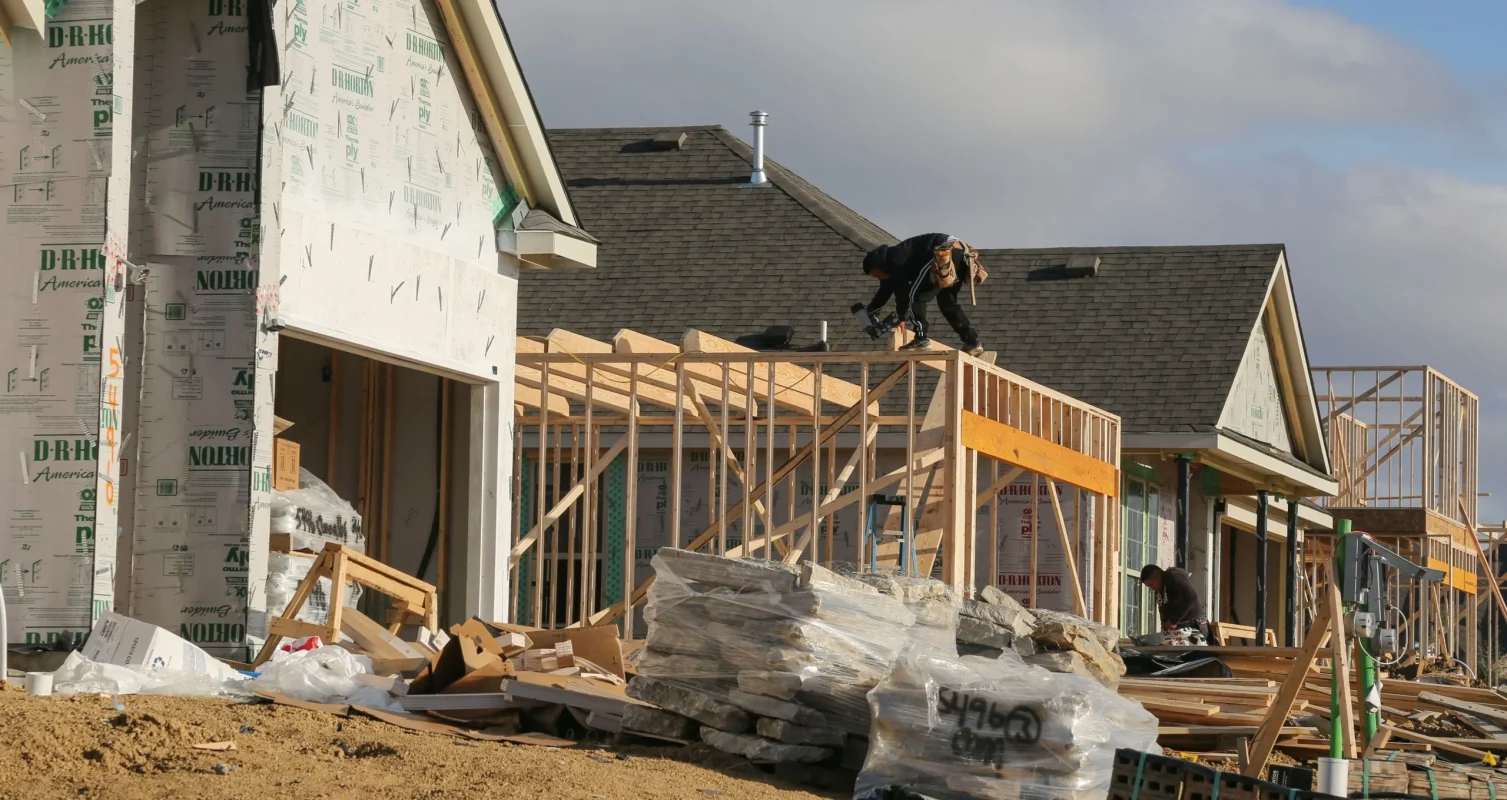
Photo: Ron Baselice | Tribune News Service
For millions of working-class Black Americans, the front door to generational wealth has always been the same: homeownership. But when the nation's largest homebuilder, D.R. Horton, builds roughly one out of every seven new homes in the United States, that front door comes with strings attached—strings that critics say are designed to snap shut after the sale is finalized.
D.R. Horton interacts with the Black economy primarily as a major provider of entry-level housing and a source of subprime-adjacent financing incentives that disproportionately affect minority first-time homebuyers. Over two-thirds of D.R. Horton homes historically close below the $400,000 threshold, directly targeting the exact price band where many low-to-middle income and Black first-time buyers shop. According to data from the National Association of Realtors (NAR), Black buyers make up 49% of first-time homebuyers nationally. That means D.R. Horton's market dominance shapes real estate trends, wealth building, and consumer debt within Black communities more than almost any other single corporate entity.
The builder's in-house lending arm, DHI Mortgage, offers attractive incentives like below-market interest rate buy-downs, making purchasing accessible to Black buyers who might otherwise be priced out by traditional bank financing. But a growing body of legal action, including the nationwide class-action lawsuit Robinson v. D.R. Horton, accuses the builder and its lending arm of running a deliberate "payment suppression scheme." The lawsuit alleges that D.R. Horton targets buyers with artificially low monthly payment quotes by omitting true post-construction property taxes — calculating payments based only on the value of the unimproved land.
The Payment Shock That Wipes Out Equity
Within 6 to 12 months of closing — right after D.R. Horton sells the mortgage off to another corporate servicer — the county updates the tax assessment to reflect the fully built home. Homeowners report their monthly mortgage bills suddenly skyrocketing by $600 to over $1,000 per month to make up for the tax escrow deficit. For families with strict budgets, this artificial "payment shock" strips away savings or forces them straight into foreclosure. The very tool meant to build wealth becomes a wealth-destruction engine.
- 49% — Share of first-time homebuyers nationally who are Black (NAR data).
- 1 in 7 — New U.S. homes built by D.R. Horton, giving them outsized influence over entry-level inventory.
- $600–$1,000+ — Reported monthly payment increases after tax reassessment in alleged suppression cases.
- 16 states — Homeowners in at least 16 states have filed complaints over structural defects and financing practices.
While homeownership is widely recognized as the single largest tool for narrowing the racial wealth gap, numerous investigations from coast to coast detail severe structural and quality defects in D.R. Horton builds — including premature mold, cracked foundations, and HVAC failures. Because many working-class Black families lack deep cash reserves, paying out-of-pocket for thousands of dollars in sudden repairs on a "brand new" home erodes their disposable income and actively strips away the equity they worked so hard to build.
The Build-to-Rent Pivot: Locking Buyers Out
To maximize profits, D.R. Horton has increasingly constructed entire single-family subdivisions explicitly to sell directly to Wall Street institutional landlords. Instead of selling homes exclusively to individual buyers looking to build generational wealth, the company sells whole blocks of starter homes to massive private equity firms in bulk. Consumer advocates note that this trend crowds out individual buyers, keeping minority households locked into renting and locking them out of the wealth-building economy entirely.
When Black homeowners try to sue D.R. Horton for structural defects or predatory lending practices, they encounter another barrier: mandatory arbitration clauses embedded in sales contracts. These clauses force legal disputes out of public courtrooms and into private, closed-door arbitration panels — effectively keeping the broader community from understanding how widespread these systemic issues are, though recent court victories are finally allowing some collective class-action lawsuits to move forward.
A Survival Guide for Black Homebuyers
Rather than avoiding D.R. Horton entirely — which is often impractical for working-class families because the builder dominates entry-level inventory — Black homebuyers must exercise extreme caution, bypass the company's internal financing incentives, and bring independent experts to the table. Financial protection requires rejecting DHI Mortgage in favor of external lenders like local credit unions, independently verifying post-construction tax calculations using county appraiser websites, and hiring two independent home inspectors — one pre-drywall and one at final walkthrough. Most critically, buyers should hire a real estate attorney to strike the mandatory arbitration clause from the contract before signing.
D.R. Horton presents a high-stakes trade-off for Black America: they provide the entry-level inventory that allows thousands of working-class families to achieve homeownership, while simultaneously engaging in practices that critics say financially devastate those same buyers. The path forward requires not avoidance, but vigilance — and a refusal to close until every inspection is passed, every tax figure is verified, and every legal right is preserved in writing.
No Ads. By Us. For Us.
This article was only made possible by readers like you. We hope it inspired you to support Emerald Book, so we can continue producing content like this.
We will never show you ads, never sell your data, and never require a subscription to consume our content. Your gift helps us keep the truth accessible.
Please click the Support button on the bottom right of your screen to make a gift of any amount today.
Thank you for making this work possible.