

Emerald Pages
◆
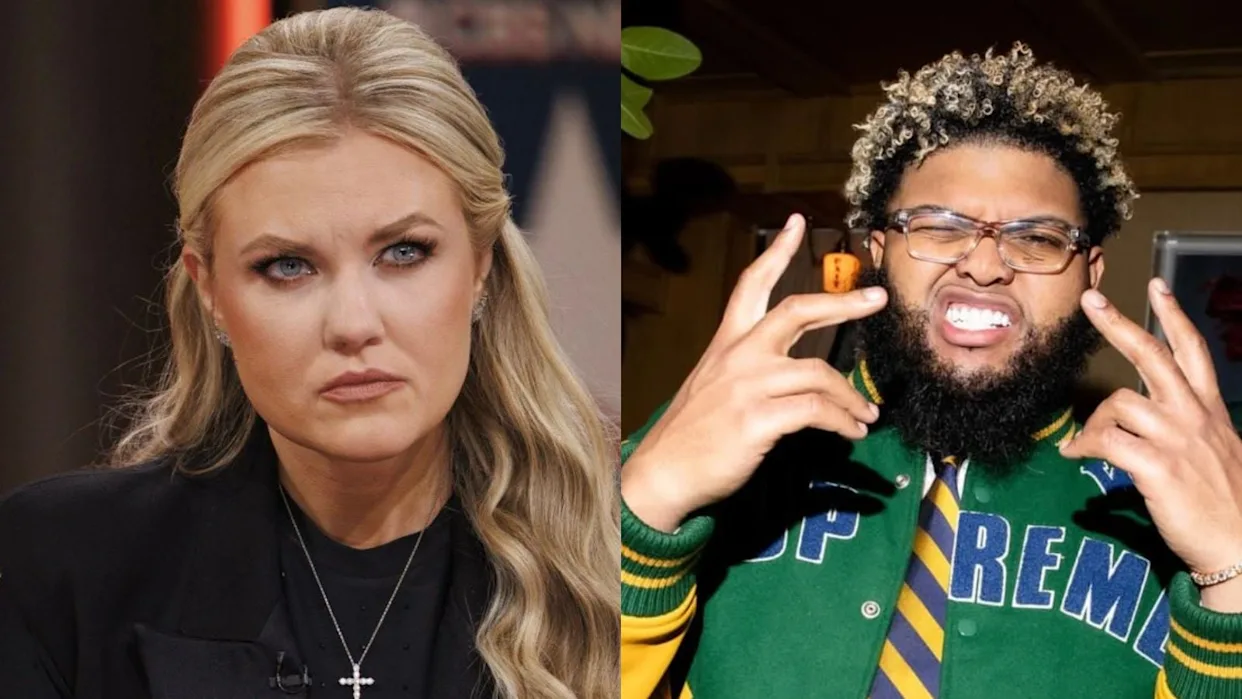
Photo: @druski | Instagram
In the autumn of 2017, a 23-year-old college dropout named Drew Desbordes stood outside an ExxonMobil gas station in Gwinnett County, Georgia, holding a stack of fake dollar bills. He pressed "post" on his first Instagram sketch under the handle @druski2funny, unsure if anyone outside his friend group would ever see it. Less than a decade later, that same awkward energy would evolve into a $14 million entertainment empire, a history-making BET Awards hosting gig, and the title of hip-hop's favorite comedian.
Druski's journey represents a fundamental shift in how comedy stardom is achieved in the 21st century. Unlike the generations before him — who cut their teeth in the green rooms of New York and LA comedy clubs — Druski built his entire fanbase, network, and multimillion-dollar brand strictly through social media. No open mics. No stand-up specials as a launching pad. Just a smartphone, a gift for anthropological observation, and an uncanny ability to make the internet laugh at itself.
The rise of Druski is not a story of overnight success. It is a blueprint for the modern digital creator — one built on character-driven relatability, strategic networking within hip-hop culture, and the creation of an interactive universe that turned passive viewers into paying ticket holders.
The Gwinnett County Class Clown
Born on September 12, 1994, in Columbia, Maryland, Desbordes moved to suburban Atlanta as a child and considers Georgia his true home. Growing up in Gwinnett County, he was notoriously known as the school class clown at South Gwinnett High School, routinely putting on unsanctioned stand-up routines during middle and high school classes. He credits the massive diversity of the North Atlanta suburbs with giving him the ability to study different cultures and perfectly mimic various regional accents and social archetypes.
After high school, he enrolled as a sports broadcasting and analytics major, first attending Georgia Gwinnett College before transferring to Georgia Southern University. But college became a turning point for reasons beyond academics. Druski struggled with severe depression, stopped attending his classes, and spent hours watching YouTube clips of comedy legends like Steve Harvey and Gary Vaynerchuk for inspiration. Recognizing his natural humor, his college peers continuously pressured him to share his talents online. On October 2, 2017, he finally did. Within two semesters of starting college, he officially dropped out to focus entirely on content creation.
Finding His Voice Through Characters
Druski's early content relied on observational, anthropological humor rather than heavy scripting. He focused on hyper-relatable, exaggerated caricatures of everyday people. But his career reached an entirely new level when he introduced his first deeply fleshed-out character: Kyle Rogger, a spot-on parody of a privileged, toxic Southern fraternity brother. The multi-part series went viral across college campuses, with Druski's dedication to the bit — including specific physical mannerisms like constantly tugging on his shorts — catching the attention of mainstream music executives.
- Kyle Rogger: A parody of a toxic, ultra-privileged fraternity brother that became a campus sensation.
- The Overly Confident Friend: Skits mocking fake tough guys, awkward bosses, and clueless peers.
- The Industry Exec: A manipulative, fast-talking music business insider that resonated deeply with hip-hop artists.
While he built a steady following in the late 2010s, his audience exploded during the COVID-19 pandemic lockdowns. With the world stuck indoors doom-scrolling, his rapid-fire, deadpan Instagram content served as premium digital entertainment, pushing his videos onto millions of feeds globally. His follower count began increasing by tens of thousands a day.
The Celebrity Co-Sign That Changed Everything
Druski's unique ability to bridge internet comedy with hip-hop culture caught the attention of major music stars. Before Drake officially reached out, Druski's content was already spreading organically through the hip-hop community. Drake, who is notoriously tapped into internet culture, noticed a specific wave of Druski's skits in late 2019 and early 2020 — particularly the "Hypeman/Yes-Man" friend series and relatable sketches about tough guys secretly listening to emotional R&B music.
Those videos led to a life-changing direct message from Drake's team. Drake eventually flew Druski out to Nike's World Headquarters in Oregon to star in his 2020 blockbuster music video for "Laugh Now Cry Later." In the video, Druski plays a hilariously aggressive friend who tackles Drake during a football scene and aggressively consoles him when he starts crying. Druski has openly cited this video as the definitive "co-sign that opened the doors for endless possibilities."
From there, the dominoes fell quickly. Jack Harlow formed a close friendship with Druski, featuring him in music videos and bringing him along as an opening act on tour. Lil Yachty and Lil Baby collaborated frequently on content, cementing his title as "hip-hop's favorite comedian." Because he was already confident and deeply knowledgeable about rap culture, Druski didn't freeze up around icons. He treated them like his regular hometown friends, which made celebrities want to create content with him — transferring their massive audiences directly to his page.
Cultivating "Coulda Been Records"
To turn temporary viral fame into a permanent media entity, Druski created Coulda Been Records. This satirical, fake record label began as Instagram Live sessions where he hilariously auditioned, roasted, and interrupted aspiring underground artists. The format became a massive internet franchise, using the platform's split-screen feature to bring random internet followers into his broadcast to be auditioned in real time. The chaotic, interactive live streams went viral daily on TikTok, doubling his audience.
The interactive model created a cult-like community, allowing Druski to successfully transition his digital audience into paying ticket buyers for massive live arena tours. Coulda Been Records eventually expanded into live reality-style spin-offs and ticketed comedy tours that now sell out major venues across the United States — proving that internet-born stardom can fill traditional arenas just like classic stand-up.
The Erika Kirk Parody: When Comedy Conquered the News Cycle
In March 2026, Druski achieved something no internet comedian had done before — he completely dominated the national political news cycle. The Erika Kirk parody, dropped on March 25, 2026, became arguably the biggest, most chaotic viral moment of his entire career. The skit exploded to over 184 million views on X (formerly Twitter) because it blurred the line between comedy, politics, and internet culture in ways that had never been seen before.
The three-minute video, titled "How Conservative Women in America Act," featured Druski undergoing an unbelievable transformation. His makeup team put him in a blonde wig, full white face makeup, and a white pantsuit. Walking around holding a Bible while fireworks shot off behind him, he hilariously mimicked Kirk's specific talking points and speech patterns. While he never officially named Erika Kirk — the widow of late Turning Point USA founder Charlie Kirk — the internet instantly decoded the parody. The video even directly mocked a viral speech Kirk had given weeks prior, where she told an audience to protect "young white male men."
Because Erika Kirk became the CEO of Turning Point USA following her husband's tragic assassination in September 2025, the skit divided the internet down the middle. Fans and other comedians praised the sketch as a masterpiece of political satire, heavily praising the makeup artist and calling it Druski's most accurate impression yet. Conservative figures and commentators slammed the skit as "disgusting" and "beneath contempt," arguing that it was highly insensitive to mock a grieving widow.
The viral storm grew so large that it drew comments from political figures and celebrities. During an event at the White House, Donald Trump weighed in on the controversy, telling Erika Kirk that she was doing a great job and should "sue his ass off" — referring directly to Druski. A massive rumor circulated that Kirk had sent Druski a legal notice. However, Druski's representatives officially stepped in to confirm that no lawsuit or cease-and-desist letter was ever issued. Meanwhile, YouTuber and boxer Jake Paul threatened to do a comedy skit in "blackface" to match Druski's "whiteface" video, igniting a whole separate wave of internet backlash.
After weeks of staying quiet, Erika Kirk finally addressed the skit on The Charlie Kirk Show. She expressed frustration, stating, "Every morning, I wake up to a new headline lying about me. I have comedians dressing up in whiteface..." However, at a later Turning Point USA event, she tried to shrug off the drama, stating that she doesn't have time for the internet and is choosing to tune out the "noise."
The moment went down as a definitive turning point in Druski's career, proving that his comedy was no longer just a hip-hop niche — it could completely dominate the national, mainstream news cycle. A comedian who started by parodying fraternity brothers on Instagram was now being mentioned by the former President of the United States.
The Numbers That Define an Empire
Druski's growth from zero followers in 2017 to over 12.8 million on Instagram alone reflects a textbook "snowball effect." His follower growth timeline tells the story: 2017-2018 (0 to ~5,000 followers) was the "Red Lobster grinding phase." 2019 brought him to ~100,000 followers as his Kyle Rogger skits circulated on college meme pages. 2020 saw an unprecedented spike from 100,000 to 1.5 million followers as the pandemic hit and the Drake video dropped. By 2022, he reached 4.5 million followers thanks to Coulda Been Records. By 2024, he had 8.2 million. And by 2026, driven by major corporate sponsorships, his BET Awards host announcement, and the massive exposure from the Erika Kirk parody, his Instagram audience climbed past 12.8 million.
The financial growth has been equally staggering. According to the Forbes Top Creators List, Druski is among the most financially successful self-made internet comedians in the world. In 2023, he brought in $10 million in annual revenue. By 2025, his annual earnings skyrocketed to $14 million, largely driven by his media house 4Lifers Entertainment, corporate brand deals, and live touring.
His history-making achievements now include being named the youngest host in BET Awards history (2026, at 31 years old, surpassing Kevin Hart), becoming the first comedian to ever appear on the cover of Billboard magazine's "No. 1" issue (late 2025), and receiving the 2026 Webby Special Achievement Award for shaping and redefining the structure of modern internet comedy through his Coulda Been Records universe and Coulda Fest arena tour.
Druski is entirely a product of the internet age. Unlike traditional comedians, he has explicitly stated that he did not start on a physical stage. His comedy was built for smartphones, utilizing specific video lengths, fast editing, and text overlays tailored for Instagram and TikTok. In the modern entertainment industry, a massive digital following is massive leverage, and Druski used his millions of followers to pitch and secure mainstream media deals, television appearances, and major corporate sponsorships on his own terms. What started as a broke college dropout filming skits outside a gas station is now a multimillion-dollar blueprint for the next generation of digital creators — one that now includes the power to reshape the national political conversation with a single three-minute video.
No Ads. By Us. For Us.
This article was only made possible by readers like you. We hope it inspired you to support Emerald Book, so we can continue producing content like this.
We will never show you ads, never sell your data, and never require a subscription to consume our content. Your gift helps us keep the truth accessible.
Please click the Support button on the bottom right of your screen to make a gift of any amount today.
Thank you for making this work possible.