

Emerald Pages
◆
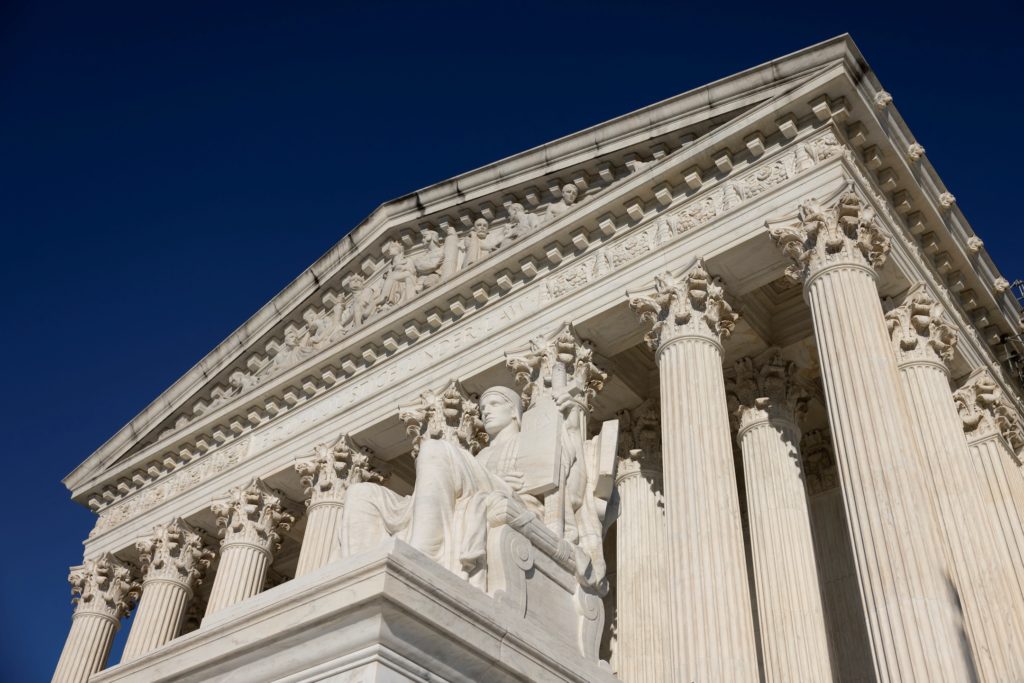
Photo: Kevin Mohatt | Reuters
Racism is not merely a belief. The consensus across sociology, public health, and economics is now unambiguous: racism is best understood as "prejudice plus power." Under this definition, individual prejudice only transforms into systemic racism when backed by the legal, cultural, economic, and institutional power of a dominant societal group to oppress others. Decades of empirical data from the American Sociological Association, the National Institutes of Health, and the Brookings Institution demonstrate how racial hierarchies are upheld not just by individual malice, but through interconnected institutional structures across law, economics, healthcare, and environmental policy. The evidence is overwhelming: wealth gaps, health disparities, housing segregation, maternal mortality differentials, and environmental racism are not the sum of individual bad actors but the predictable output of a system.
And yet, the American legal system cannot remedy what it cannot see. This is not a bug. It is not an oversight. It is a fundamental structural failure embedded in the very architecture of American jurisprudence. United States law does not explicitly use the word "racism" in its foundational statutes. Instead, it provides protections against "racial discrimination"—a distinctly different concept. Discrimination is an external action: the unfair treatment of a person based on a characteristic. Racism, sociologically defined, is the system that makes that discrimination predictable, durable, and self-replicating across generations.
The Legal Framework: Built for Individuals, Inept to Systems
The American legal framework is designed to target how racism manifests in practice through constitutional protections (the 14th Amendment's Equal Protection Clause), civil rights statutes (Title VII of the Civil Rights Act of 1964, the Fair Housing Act), and criminal hate crime laws. These are powerful tools—against interpersonal racism. When a specific manager refuses to hire, a landlord discriminates, or an individual commits a violent act motivated by racial animus, the law acts decisively. The law is exquisitely calibrated to identify the singular bad actor.
However, the law is structurally incapable of addressing systemic racism. The reason rests in a foundational legal doctrine established by the Supreme Court in the landmark 1976 case Washington v. Davis. The Court ruled that under the 14th Amendment's Equal Protection Clause, a law or policy is not unconstitutional simply because it has a "disparate impact"—racially unequal outcomes. To win a constitutional lawsuit, a plaintiff must prove "discriminatory intent"—evidence that lawmakers or officials acted with the specific, conscious purpose of harming a particular racial group.
This intent requirement is the central structural failure. Systemic racism, by definition, functions through facially neutral policies without explicit bias. It persists in governmental and institutional policies in the absence of any individual discriminatory intent. As the NIH has documented, "a characteristic of racism is that its structure and ideology can persist in governmental and institutional policies in the absence of any individual discriminatory intent." The law demands a confession; the system produces outcomes without one.
- The "Good Soldier" Phenomenon: A bank loan officer runs a Black couple's application through an automated algorithm. The algorithm rejects them because they live in a ZIP code with historically depressed property values—a direct result of 1950s redlining. The loan officer acted without prejudice. The court finds no wrongdoer. The systemic outcome remains unpunished.
- Diffusion of Responsibility: A legislator passes a sentencing law. A police officer patrols a specific neighborhood. A prosecutor files charges. A judge follows guidelines. The cumulative result: a Black defendant receives a harsher sentence than a white counterpart. No single actor broke a rule. The legal system cannot assign liability.
- Implicit Bias vs. Legal Intent: Cognitive psychology proves that implicit biases influence behavior. But the Supreme Court requires proof of explicit, conscious intent. Because humans rarely announce their biases, the law accepts any plausible non-racial excuse. Implicit bias is legally irrelevant.
Disparate Impact: A Vehicle with Flat Tires
Recognizing the cruelty of the intent standard, Congress created civil rights statutes that allow "disparate impact" claims—challenging policies that produce discriminatory effects even without proof of intent. Title VII of the Civil Rights Act and the Fair Housing Act include these provisions. This is the closest the law comes to addressing systemic outcomes.
But the Supreme Court has systematically hollowed out this vehicle. Under the "business necessity" defense, if an institution can show that a policy causing racial disparity serves a legitimate, non-racial purpose—such as using credit scores for loans or standardized tests for hiring—the law protects the practice. Furthermore, in Alexander v. Sandoval (2001), the Court ruled that private citizens cannot sue state agencies over disparate impact under Title VI of the Civil Rights Act; only the federal government can enforce those rules. The Economic Policy Institute has noted that "the premise that civil rights laws can eradicate racism within institutions founded on the doctrine of racism is not only a common overestimation—it is a legal fiction."
The Vehicles That Exist—And Why They Fail
The law does have legal vehicles to challenge racism, but their power depends entirely on whether the racism is interpersonal or systemic. Individual discrimination lawsuits (under Title VII or Section 1981) are effective against specific bad actors but require proving "but-for" causation. Private disparate impact claims allow class-action lawsuits using statistical evidence, but the business necessity defense routinely protects discriminatory policies. DOJ "Pattern or Practice" lawsuits can force entire police departments into consent decrees, but they require federal political will and resources. And the ultimate vehicle for systemic change—legislative action—requires elected politicians to act, which they rarely do.
The conclusion is inescapable: the American legal system is structurally incapable of remedying systemic racism because it was not designed to perceive it. The law demands a perpetrator; systemic racism distributes responsibility across millions of actors following neutral rules. The law requires intent; systemic racism operates through facially colorblind policies. The law protects individuals; systemic racism harms groups. This is not a failure of enforcement. This is a failure of architecture. And until the legal system adopts an epistemology that can hold neutral processes accountable for unequal outcomes, the sociological fact of systemic racism will remain empirically undeniable—and legally unremedied.
The law is not broken. It is working exactly as designed. And that design, tragically, was never meant to see the chains of the system—only the fingerprints of the individuals holding them.
No Ads. By Us. For Us.
This article was only made possible by readers like you. We hope it inspired you to support Emerald Book, so we can continue producing content like this.
We will never show you ads, never sell your data, and never require a subscription to consume our content. Your gift helps us keep the truth accessible.
Please click the Support button on the bottom right of your screen to make a gift of any amount today.
Thank you for making this work possible.