

Emerald Pages
◆
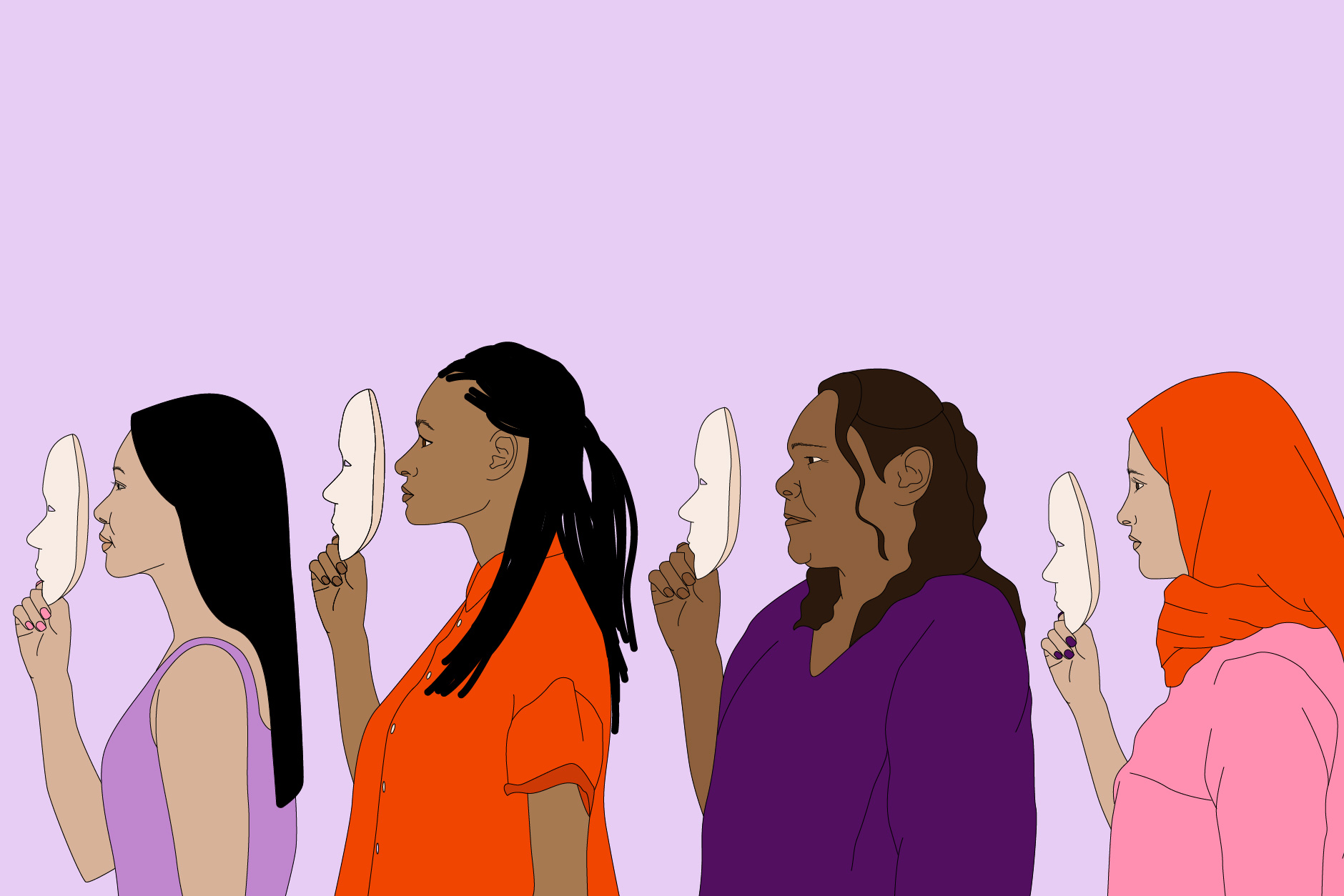
Photo: ABC News
For Black professionals, code-switching is rarely a choice—it is a survival strategy. The ability to toggle between cultural dialects, adjust vocal inflections, or modify behavioral presentation has long been framed as a professional asset. Yet a growing body of empirical research suggests this adaptation comes at an extraordinary cost. While code-switching may secure promotions and defuse social tension, the cumulative burden of chronic self-monitoring is quietly degrading mental stability, depleting cognitive reserves, and accelerating physical illness.
Data from institutions including the National Institutes of Health, Harvard Business Review, and Cornell University now quantify what many have long suspected: the pressure to suppress one's authentic self is not merely exhausting—it is pathogenic. The frameworks of allostatic load, racial battle fatigue, and neurocognitive interference reveal that code-switching operates as a chronic stressor, triggering measurable changes in brain function, hormone regulation, and cardiovascular health.
The Professional Tax: Quantifying the Workplace Penalty
A foundational quantitative study by McCluney and colleagues evaluated how code-switching functions as an impression management strategy among Black professionals. Across 498 participant trials, researchers used Perceived Professionalism Scales—Likert-based assessments of capability, fit, and leadership potential. The findings were unambiguous: Black employees who actively code-switched were rated as significantly more professional by both Black and White evaluators compared to those who did not. This establishes what researchers now call a "professional tax"—code-switching is not an optional preference but a quantifiable prerequisite for career survival.
Yet this professional gain is accompanied by immediate neurological debt. Using the Stroop Color-Word Task—a validated measure of cognitive flexibility and executive processing speed—researchers found that Black participants who engaged in code-switching immediately prior to testing demonstrated statistically significant delays in reaction times. The act of monitoring self-presentation causes immediate executive functioning depletion, reducing the brain's ability to process information efficiently.
Cognitive Resource Depletion: The Executive Function Tax
The cognitive neuroscience of code-switching reveals a specific mechanism of harm. When an individual suppresses natural linguistic or behavioral tendencies, the brain exerts what researchers call inhibitory control—a deliberate override of default neural pathways. Studies measuring mentalizing overload (the cognitive load required to anticipate external stereotypes) demonstrate that sustained stereotype threat appraisals create compounded cognitive load, diminishing short-term memory capacity and problem-solving efficiency.
- Stroop Task Delays: Code-switching prior to testing produced statistically significant reaction time delays, proving immediate executive function depletion.
- Working Memory Strain: Sustained stereotype threat diminishes short-term memory capacity by diverting neural resources to self-monitoring.
- Authenticity Deficits: High-frequency code-switching correlates with lower scores on the Authenticity Scale, measuring the gap between true identity and external presentation.
Psychological Devastation: Anxiety, Burnout, and Identity Dissonance
The psychological toll of chronic code-switching manifests across multiple clinical dimensions. Hypervigilance—a persistent, anxious state of alertness—becomes normalized as individuals constantly monitor their surroundings to avoid triggering racial stereotypes. This state of sustained anticipation produces coping fatigue and burnout, described by participants as acting under a continuous "burden of proof" to validate professional competence.
Using the Maslach Burnout Inventory (MBI), surveys indicate that Black professionals who report high-frequency code-switching score exponentially higher in emotional exhaustion and exhibit a 30% higher intent to leave their organizations compared to peers in affirming environments. Meta-analyses of bicultural individuals indicate that sustained frame-switching leads to stably elevated baselines on clinical scales measuring generalized anxiety and low mood. Identity dissonance—the suppression of cultural expressions—creates an internal schism, leading to loneliness, imposter syndrome, and a diminished sense of belonging.
Physiological Weathering: When Stress Becomes Illness
Perhaps the most alarming findings emerge from public health research measuring allostatic load—the cumulative wear and tear on the body from chronic stress. The biomarkers measured include resting blood pressure, cortisol levels, glycated hemoglobin (HbA1c), and C-reactive protein (CRP), an inflammatory marker. Arline Geronimus's foundational weathering framework demonstrates that navigating the demands of code-switching results in a high allostatic load score for Black adults.
The implications are stark: this accelerated cellular aging means Black individuals in high-stress, predominantly White spaces frequently exhibit the physical health metrics of individuals 10 years older chronologically. Elevated cortisol levels and prolonged systemic inflammation contribute directly to hypertension and heart disease. Chronic suppression of the immune response leaves the body vulnerable to infections and long-term illnesses, while the anxiety and cognitive load associated with linguistic self-presentation frequently disrupt healthy sleep patterns.
Racial Battle Fatigue: A Framework for Understanding
In public health and psychology research, the strain of code-switching is recognized as a core contributing factor to Racial Battle Fatigue (RBF), a framework coined by Dr. William A. Smith. RBF defines the cumulative result of race-related stress caused by navigating environments where marginalized individuals feel microaggressions or pressure to assimilate. This framework explicitly recognizes that the physical and emotional symptoms experienced by Black individuals—tension headaches, fatigue, chronic worry, gastrointestinal distress—are not psychosomatic aberrations but natural physiological responses to an unnaturally taxing environment.
The Digital Dimension: Code-Switching with Artificial Intelligence
A landmark 2022 CHI study, "It's Kind of Like Code-Switching": Black Older Adults' Experiences with a Voice Assistant for Health Information Seeking, shifted the conversation from interpersonal workplace dynamics to human-computer interaction. The research explored how technology built on non-inclusive, standardized linguistic models creates systemic health barriers.
The study cohort comprised 30 Black older adults aged 65 or older living in lower-income urban environments—a demographic traditionally neglected in health technology interventions. Participants were asked to formulate health queries using voice assistants (specifically Google Home). Grounded in sociolinguistics, the study examined interactions through the lens of African-American Vernacular English (AAVE) versus the "Standard English" pre-programmed into consumer artificial intelligence.
The findings revealed multiple systemic friction points. Participants struggled with the technological "wake-up" tax—formalized wake-up protocols requiring rigid syntax ("Hey Google") failed to recognize natural conversational variations like "Hi Google." The voice assistant consistently failed to accommodate natural pacing and pause structures, routinely interrupting or cutting off participants mid-sentence, leading to incomplete queries and irrelevant health information.
Most critically, participants reported a distinct feeling of "cultural code-switching" just to make the tool function. Because the automated speech recognition system was not trained on diverse cultural dialects, participants felt compelled to actively suppress their natural dialect and deliberately switch to Standard English. The cognitive burden proved significant: several participants noted they would need to physically write down their questions word-for-word before speaking them aloud. The friction caused severe user frustration, frequently driving participants to completely abandon their health information searches.
The Superwoman Schema: Gendered and Racialized Demands
Research published on Racial Discrimination and the Superwoman Schema (SWS) documents how Black women code-switch their mannerisms to intentionally disarm colleagues and avoid being stereotyped as "angry." This research explicitly linked the constant emotional regulation of the SWS to highly elevated Allostatic Load Indexes. Gender and occupational health researchers continue to track how Black female professionals navigate white-dominated corporate spaces while attempting to project strength and authority—a double bind that amplifies the physiological toll of code-switching.
Longitudinal Tracking: Daily Degradation of Well-Being
Recent developments in sociological data use ecological momentary assessments (EMA) to track individuals over extended periods. Studies measuring Social-Cognitive and Affective Antecedents of Code Switching show that daily spikes in code-switching directly correlate with a phenomenon called mentalizing—the energy-draining process of constantly trying to read, predict, and manipulate the mental states and biases of other people. The data indicates that daily fluctuations in code-switching positively correlate with direct spikes in vigilance and negative affect, confirming a day-to-day degradation of well-being.
The Double-Edged Sword: Acknowledging Benefits While Naming Harms
Research does not deny that code-switching confers benefits. Studies confirm that code-switching increases hiring rates, produces higher professionalism scores, and enables seamless navigation across diverse social spaces. Habitual code-switching trains the brain's executive functioning networks, resulting in superior conflict resolution and mental processing agility—advantages identical to those found in multilingual individuals.
But the accompanying risks are equally measurable. Increased hiring rates correlate with chronic self-monitoring and workplace burnout. Linguistic agility accompanies immediate cognitive fatigue and executive resource depletion. Seamless social navigation produces internal identity dissonance and feelings of "not belonging." The question is not whether code-switching works—it does, by the metrics that dominant institutions have established. The question is what the human body pays for that compliance.
The research is unequivocal: chronic code-switching degrades mental health, depletes cognitive reserves, and accelerates physical illness through measurable biological pathways. For institutions that genuinely seek equity, the implication is clear—reducing the burden of code-switching requires changing the environments that demand it, not simply celebrating the resilience of those who perform it.
No Ads. By Us. For Us.
This article was only made possible by readers like you. We hope it inspired you to support Emerald Book, so we can continue producing content like this.
We will never show you ads, never sell your data, and never require a subscription to consume our content. Your gift helps us keep the truth accessible.
Please click the Support button on the bottom right of your screen to make a gift of any amount today.
Thank you for making this work possible.