

Emerald Pages
◆
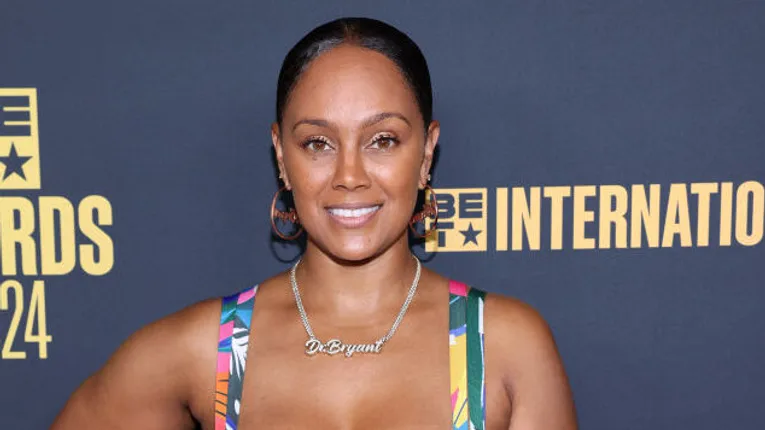
Photo: Natasha Campos | Getty Images
For years, the name "Dr. Cheyenne Bryant" has commanded respect across Black media spaces. From MTV's Teen Mom Family Reunion to The Breakfast Club, from Forbes to Oprah Daily, the psychology expert and life coach has been presented as a credentialed authority. But a growing chorus of licensed clinicians, academic experts, and concerned community members is now asking a pointed question: What exactly is she a doctor of?
The answer, according to extensive public record searches and Bryant's own recent admissions, appears to be nothing verifiable. Despite branding herself as "Dr. Cheyenne Bryant" for years—charging clients between $350 and $1,500 per session—there is no independent record of her doctoral dissertation, no active clinical license in any U.S. state, and no paper trail confirming the advanced degree she claims to hold. Critics say this isn't a simple administrative error. It's a calculated grift that preys on the Black community's trust.
The controversy reached a fever pitch in May 2026, when Bryant sat for interviews with The Breakfast Club and journalist Marissa Mitchell to address what she called "the rumor mill." Instead of producing a diploma, transcript, or dissertation, Bryant offered a convoluted explanation involving the 2019 closure of her alleged alma mater, Argosy University. She claimed that when the for-profit institution collapsed, its digital portals were wiped clean, and a state-appointed record keeper only retained transcripts for two years—a window she allegedly missed.
The Missing Dissertation: A Digital Ghost
Academic experts are not buying Bryant's story. Doctoral dissertations from accredited U.S. universities are routinely indexed in ProQuest, the national academic database. Comprehensive searches for "Cheyenne Bryant" yield zero results. While ProQuest indexes nearly 600 dissertations from Argosy University—her claimed alma mater—her name is entirely absent. Other former Argosy graduates have publicly stated that they easily retrieved their official transcripts through state agencies or platforms like Parchment, directly contradicting Bryant's claim of permanent data loss.
Perhaps most damning: Bryant has never produced a physical diploma, a graduation photograph, or a student-copy transcript. When pressed for final proof in May 2026, she told journalists, "My proof is not something I have to give individuals... My obedience is to God, not to people"—a statement many interpreted as a definitive admission that no documentation exists.
- No ProQuest record: Zero dissertations found under "Cheyenne Bryant" in the national doctoral database.
- No active license: Not listed as a licensed psychologist or therapist in California or any other state.
- No physical proof: Has never produced a diploma, transcript, or graduation photo despite years of public practice.
- Contradicted by peers: Other Argosy alumni have successfully obtained their transcripts after the school's closure.
Bryant has stated that she was offered a full financial aid refund due to Argosy's collapse but declined it, claiming acceptance would have legally voided her academic credits. However, legal experts note that accepting a refund for a failed program does not automatically erase a legitimately earned doctorate—nor would it delete a dissertation from ProQuest, an independent database unaffiliated with any single university.
The Price of Influence: $350 to $1,500 Per Session
While Bryant's credentials remain unverified, her pricing is very real. According to her official website, a standard virtual life coaching session costs $350. An in-person office visit runs $750. For those wanting Bryant to travel to their location, the fee is $1,500 plus all travel expenses. Group coaching is $225 per person, and speaking engagements start at $500.
These rates sit at the absolute ceiling of both the psychological and coaching markets—without any of the consumer protections that come with licensed care. A licensed psychologist typically charges $100 to $250 per session, is board-regulated, can diagnose medical disorders, and qualifies for insurance reimbursement. A certified ICF life coach, the gold standard in the unregulated coaching industry, averages $100 to $150 per session. Bryant charges more than both, despite holding no verifiable credentials.
Because she explicitly markets herself as a "life coach" rather than a licensed therapist, Bryant legally avoids the consequences of practicing without a license. But critics argue this is a semantic shield designed to evade accountability. The life coaching industry is almost entirely unregulated in the United States—anyone can call themselves a coach, charge whatever they want, and face no board oversight if a client experiences harm.
From Community Activist to MTV Stardom
Bryant's rise to national fame follows a blueprint that predates her credential controversy. Born September 6, 1982, to teenage parents, she earned dual bachelor's degrees in Psychology and Pan-African Studies from California State University, Northridge, followed by a Master's in Marriage, Family, and Child Therapy from the University of Phoenix—degrees that are verifiable and not in dispute.
Before television, Bryant built genuine community credibility. She served as President of NAACP Branch #1069 in Southern California, spearheaded the Harbor City Skate Park project for inner-city youth, and founded a 501(c)(3) non-profit providing school supplies and clothing to disadvantaged families. Her civic work earned her an "NAACP Square" street dedication and a "Woman of the Year" nod from the WNBA's Los Angeles Sparks.
The pivot to national fame came when MTV cast her as the on-camera life coach and co-producer for Teen Mom Family Reunion. The network formatted her name on screen explicitly as "Dr. Cheyenne Bryant," giving millions of viewers the immediate impression of academic legitimacy. Her theatrical conflict-resolution style went viral, leading to bookings on major podcasts, features in Forbes and Insider, and a self-help book titled Mental Detox.
But reality TV fame proved to be a double-edged sword. As her platform grew, licensed clinical psychologists and therapy boards began auditing her credentials. The same visibility that built her empire ultimately exposed its foundation of sand.
Predatory or Just Entrepreneurial?
Bryant has consistently maintained that she has "never presented herself as a licensed mental health professional" and that her platforms clearly reflect her role as a life coach. Her defenders argue that she is simply a savvy entrepreneur who found a legal loophole in the wellness industry, and that her high prices reflect market demand, not fraudulent claims.
But critics see a darker pattern. By retaining the "Dr." title without verifiable credentials, charging luxury-tier prices, and targeting a community that already faces barriers to affordable, licensed mental healthcare, Bryant is accused of exploiting Black trust for personal gain. The concern is not abstract: unlicensed coaches have no legal obligation to maintain confidentiality (no HIPAA protection), no mandated reporting requirements, and no board to answer to if a client suffers psychological harm.
In a May 2026 Instagram video, Bryant addressed the criticism directly, stating that she no longer practices under a license because she "makes more money" and is "not bound by strict boards." The clip was widely condemned by mental health professionals as an admission that financial gain, not patient safety, drives her business model.
What the Black Community Should Know
Bryant's story is not just a celebrity gossip item—it's a cautionary tale for anyone seeking personal development or mental health support. Because the life coaching industry is unregulated, consumers must protect themselves. Credible coaches hold credentials from the International Coaching Federation (ICF), provide verifiable educational backgrounds, and offer formal service agreements that explicitly state they do not provide mental health therapy.
For those seeking actual psychological care, licensed therapists—psychologists, clinical social workers, marriage and family therapists—are regulated by state boards, carry malpractice insurance, and can be held accountable for misconduct. Many offer sliding-scale fees and accept insurance.
The lesson of Dr. Cheyenne Bryant is simple: a large Instagram following and a reality TV credit are not substitutes for verifiable credentials. In a community that has historically been underserved by mainstream healthcare, the rise of celebrity "experts" with unverified degrees represents a genuine danger. Trust, once exploited, is not easily rebuilt.
No Ads. By Us. For Us.
This article was only made possible by readers like you. We hope it inspired you to support Emerald Book, so we can continue producing content like this.
We will never show you ads, never sell your data, and never require a subscription to consume our content. Your gift helps us keep the truth accessible.
Please click the Support button on the bottom right of your screen to make a gift of any amount today.
Thank you for making this work possible.