

Emerald Pages
◆
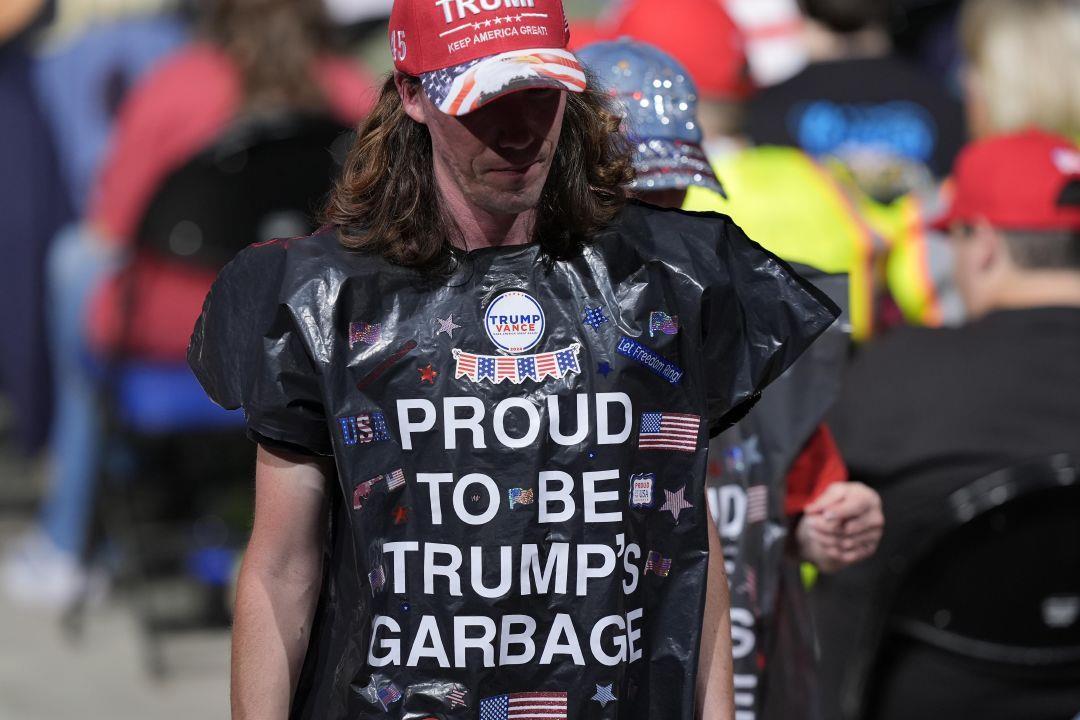
Photo: Alex Brandon | AP Photo
It is May of 2026. Gas prices have spiked, inflation remains stubbornly above the Federal target, and the sweeping tariffs promised as a panacea have instead driven the cost of household goods upward. By nearly every empirical metric tracked by the Treasury Department and the Federal Reserve, Donald Trump’s second-term economic agenda has failed to deliver the immediate relief voters were promised. Yet, his approval rating among his core white, working-class base remains remarkably resilient.
This resilience presents a political paradox. If a candidate promises to lower grocery prices on "day one," and over one year later prices are higher, rational choice theory would predict mass defection. But human beings are not rational actors; we are emotional ones. For a significant segment of white voters, the decision to support Trump was never primarily about detailed policy feasibility. It was a vote cast in the emotional register—a childlike longing for a nostalgic past, a cathartic release of grievance, and a deep trust in a "strongman" archetype, regardless of his methods.
This stands in stark contrast to another key demographic: Black Americans. While pundits often accuse Black voters of "monolithic" thinking, political scientists point to a sophisticated, risk-averse heuristic known as "linked fate." Where white Trump voters often displayed what psychologists call "affective intelligence" (voting based on how a candidate makes them feel), Black voters have historically deployed a defensive, pragmatic logic born from a history that precludes the luxury of throwing a vote away on a charismatic feeling.
The Childlike Logic of Nostalgia and the "Strongman"
For many white voters—particularly those without college degrees and living in rural or de-industrialized areas—the 2024 election was an act of psychological time travel. The slogan "Make America Great Again" taps into what researchers call the "Golden Age bias": the brain’s tendency to edit out the negative memories of the past (recessions, foreign policy blunders, social strife) and leave a glowing, idealized version of "how things used to be." This nostalgia acts as an emotional anesthetic against the anxiety of rapid demographic change and economic volatility.
When experts warned that Trump’s universal tariff plan would reignite inflation, these warnings were dismissed not due to a lack of intelligence, but due to a rejection of the source. Media echo chambers and algorithms on platforms like Truth Social created "belief rigidity," reinforcing the idea that credentialed economists are part of the "corrupt elite." As behavioral studies from the University of Rochester (2026) show, these feedback loops ensure that a user's political views harden rather than evolve when faced with contradictory evidence.
- Emotional Reasoning: Trump’s norm-breaking aggression signals strength to voters in a "hyper-vigilant" threat state, even if that aggression breaks democratic norms.
- Immunization to Evidence: Legal indictments and policy failures are framed within the echo chamber as "coordinated attacks," triggering a protective "martyr effect" rather than critical doubt.
- Parasocial Loyalty: Supporters feel a personal connection to Trump akin to a family member, making defection feel like a betrayal of honor, not just a political disagreement.
The Pragmatic Calculus of "Linked Fate"
Contrast this with the political psychology of the Black electorate. Professor Michael Dawson’s theory of "linked fate" suggests that Black voters often ask a fundamentally different question than white voters. Instead of "What does this candidate do for me individually?" they ask, "What does this candidate do for the safety and progress of my racial group?" This is not conformity; it is a hyper-logical survival mechanism in a society where systemic threats (voter suppression, police violence, economic discrimination) have historically targeted the group collectively.
While the white Trump voter might afford the luxury of "protest voting" or chasing a charismatic disruptor, the typical Black voter views the election through a lens of risk management. Even when Black voters disagree with the Democratic Party on specific issues (such as social conservatism or religious values), the historical record shows that defecting to the GOP carries a perceived existential risk to civil rights gains. This is a "captive electorate" strategy—not out of blind loyalty, but out of a cold calculation that a third-party vote is a wasted vote in a two-party system that directly impacts the safety of their community.
This is not to say Black voters are immune to emotion. The pride and collective joy surrounding the elections of Barack Obama or Kamala Harris demonstrate profound emotional resonance. However, that emotion is generally tethered to a historical context of overcoming barriers. Conversely, the emerging fracture among young Black men in 2024-2026—who are flirting with Trump due to economic pressures and a weakening of "linked fate"—actually proves the rule. As younger generations feel the historical threat of racism is less acute, they begin to vote more like their white counterparts: individualistically and emotionally. They are adopting the "childlike" logic of immediate gratification over collective defense.
Conclusion: Two Americas, Two Psychologies
The data as of mid-2026 is clear: Trump cannot fulfill his core economic promises. The courts have blocked his tariff powers, gas prices are up, and consumer goods remain expensive. The white voter who based their decision on a "feeling" of strength may be disappointed, but their psychological need for belonging in the MAGA tribe overrides the factual reality. They are voting to preserve their identity, not their wallet.
The Black voter, meanwhile, views this chaos with the weary logic of a seasoned survivor. Having never had the luxury of believing in a "golden age" that excluded them, they vote defensively to prevent harm. One voting pattern is driven by the search for a father figure to restore a mythical past; the other is driven by the need for a shield against a very real present.
No Ads. By Us. For Us.
This article was only made possible by readers like you. We hope it inspired you to support Emerald Book, so we can continue producing content like this.
We will never show you ads, never sell your data, and never require a subscription to consume our content. Your gift helps us keep the truth accessible.
Please click the Support button on the bottom right of your screen to make a gift of any amount today.
Thank you for making this work possible.