

Emerald Pages
◆
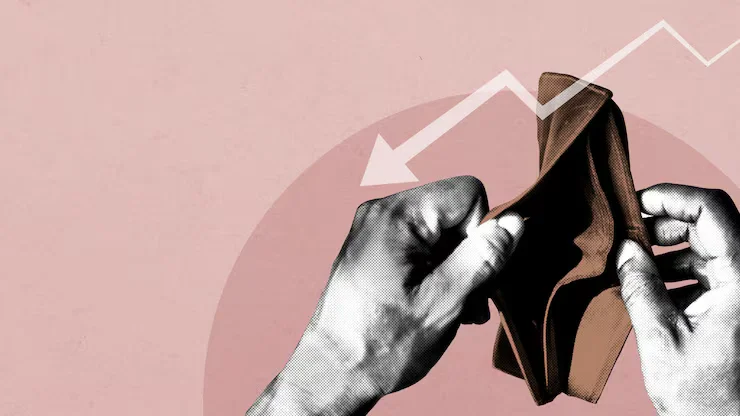
Photo: Freepik
Today, the U.S. Bureau of Labor Statistics delivered a sobering report: the annual inflation rate had jumped to 3.8% in April, up sharply from 3.3% in March, marking the highest annual inflation rate recorded in three years. On a month-to-month basis, consumer prices accelerated by 0.6%. While economists noted the surge was driven by familiar culprits—energy prices spiking 17.9% annually due to the ongoing war with Iran and shelter costs rising 0.6%—the data masked a more troubling reality for Black America. For millions of Black households and business owners, the national inflation figure tells only half the story; the other half is a quiet, devastating divergence into what analysts now call a "Black recession."
While the headline inflation rate captures broad trends, Black households often experience a higher "real" inflation rate because they spend a disproportionate share of their income on non-discretionary "survival costs." According to analysis by the Federal Reserve Bank of Richmond and The Black Wall Street Times, Black families spend larger percentages of their budgets on essentials like food, utilities, and gasoline. When gasoline prices rise 28.4% year-over-year (as they did in April) and food costs increase 0.5% in a single month (the highest monthly rate since last December), families with less financial margin face immediate, painful trade-offs. Furthermore, research indicates Black households consume more goods with volatile prices, making budgeting significantly harder compared to white households, and turning every trip to the grocery store or gas station into a compounding crisis.
The impact of rising prices extends far beyond monthly budgeting; it is actively dismantling the already fragile wealth foundations of Black America. Inflation erodes the purchasing power of cash savings and disproportionately hurts those without appreciating assets. White households hold approximately 84% of total U.S. wealth, while Black households hold only 4%. Core inflation (excluding volatile food and energy) edged up to 2.8% annually, but because Black families are far less likely to own stocks or significant real estate, they benefit little from the asset price increases that often accompany inflation. The median Black household holds roughly $44,100 in net worth compared to $284,310 for White households. This smaller cushion makes it nearly impossible to absorb unexpected price hikes without falling into high-cost debt, thereby widening the racial wealth gap with every percentage point the Consumer Price Index climbs.
Homeownership: A Closing Door
The Federal Reserve’s traditional remedy for inflation—raising interest rates—has created a devastating "shadow" over the housing market that specifically blocks the primary path to generational wealth for Black families. Even before the April 2026 spike, rising rates had choked the market. According to HBCU Money and the NAACP, Black homeownership fell to 43.9% in mid-2025, down from 45.3% a year prior. With mortgage rates remaining elevated as the Fed continues its fight against 3.8% inflation, first-time Black homebuyers are being systematically priced out of the market. This not only denies families the stability of homeownership but also deprives them of the primary tool for building intergenerational wealth, cementing the rental class divide along racial lines.
- Employment & Wage Lag: Black unemployment reached 7.5% by early 2026, a level considered recessionary for that demographic even as the national average remained lower. Wages lag behind rapid increases in healthcare and housing.
- Sector Volatility: Black workers are overrepresented in service and manufacturing roles, which are more vulnerable to inflation-driven cost-cutting and AI automation.
- Cash Flow Strain: As more revenue is diverted to interest payments from rising variable rates, less is available for payroll, inventory, and equipment for Black-owned firms.
The 'Double Squeeze' on Black-Owned Businesses
For Black entrepreneurs, the high interest rates of May 2026 are creating a "double squeeze": they face both the national trend of expensive borrowing and persistent systemic disparities that make loans even costlier. Recent policy changes in early 2026 have added further uncertainty. Executive orders have shifted federal support away from disadvantaged firms, potentially resulting in $10 billion to $15 billion in lost federal contracting and support annually. Efforts to dismantle or defund the Minority Business Development Agency (MBDA) and the CDFI Fund have reduced specialized assistance, leaving the roughly 3.3 million Black-owned businesses in the U.S. to navigate a hostile lending environment alone.
The numbers paint a stark picture of systemic lending discrimination. Research from the Foster School of Business shows that Black-owned firms are charged roughly 3.09 percentage points more in interest than white-owned firms with similar credit risk. Black entrepreneurs are 2.5 times more likely to be denied bank loans, and only 16% of Black business owners receive all the financing they apply for, compared to 35% of white owners. For those who turn to the U.S. Small Business Administration (SBA) as a primary source of funding, rates have climbed significantly as of May 2026. SBA 7(a) variable rates are currently capped at 10.5% to 13% APR, while SBA Express loans range between 12.75% and 14.75% APR. These elevated rates directly impact daily survival, diverting revenue from payroll and inventory to interest payments, and contributing to a higher failure rate—approximately 80% of Black-owned businesses close within 18 months, often due to a lack of affordable capital.
Despite these overwhelming hurdles, there remains a single bright spot of resilience: Community Development Financial Institutions (CDFIs). According to the U.S. Black Chambers, Inc., loan approvals from CDFIs increased by 22% recently, as these lenders prioritize underserved communities. However, for every entrepreneur who secures a lifeline, countless others face a future where the color of their credit determines the cost of their survival, and where a "stable" national economy masks a deepening state of emergency for Black wealth, homeownership, and enterprise.
No Ads. By Us. For Us.
This article was only made possible by readers like you. We hope it inspired you to support Emerald Book, so we can continue producing content like this.
We will never show you ads, never sell your data, and never require a subscription to consume our content. Your gift helps us keep the truth accessible.
Please click the Support button on the bottom right of your screen to make a gift of any amount today.
Thank you for making this work possible.