
Prince Henry “the Navigator”
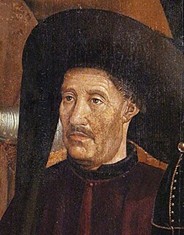
Name: Prince Henry “the Navigator”
Lifespan: 1394–1460
Nationality: Portuguese
Title: Prince, Infante of Portugal
Historical Role:
Prince Henry is widely remembered for sponsoring early Portuguese maritime exploration along the west coast of Africa. While often celebrated for advancing navigation and exploration, his expeditions laid the foundation for European colonization and the transatlantic slave trade.
Actions That Harmed the Black Community:
August 22, 1415 – Led the Conquest of Ceuta, North Africa
Prince Henry participated in Portugal’s capture of Ceuta from its African Muslim rulers.
This invasion marked the start of European military expansion into Africa, resulting in the killing and enslavement of many North Africans and disruption of local trade networks.
1434 – Sponsored Gil Eanes’ Voyage Beyond Cape Bojador
Henry financed and directed Gil Eanes’ successful voyage past Cape Bojador (modern Western Sahara).
This opened sub-Saharan Africa to European exploitation and set the stage for violent raids and human capture along the coast.
1441 – Ordered the First Slave-Raiding Expedition
Under Henry’s command, Antão Gonçalves and Nuno Tristão captured Africans near Cabo Branco (Mauritania) and brought them to Portugal.
This was an organized European slave raid on sub-Saharan Africans, beginning a system of human trafficking sanctioned by a European prince.
1444 – Authorized the first Large-Scale Slave Auction in Lagos, Portugal
Henry approved and financed voyages bringing hundreds of enslaved Africans from Arguin Island to Lagos. He personally profited from the sale and oversaw its organization.
This event institutionalized slavery as a royal and commercial enterprise, laying the groundwork for the Atlantic slave trade.
1445–1448 – Commissioned the Arguin Fortress and Trading Post
Henry ordered the construction of a fortified post on Arguin Island, Mauritania, to serve as a center for trading enslaved Africans and gold.
This became one of the first permanent European slave-trading stations, incentivizing local warfare to supply captives.
1450–1460 – Expanded Slave Raiding and Trade Networks Along the West African Coast
Henry continued funding expeditions along the West African coast. Captives were taken through raids or purchased from conflicts his agents encouraged.
These actions destabilized African communities and reinforced the concept of Africans as commodities.
November 13, 1460 – Death of Prince Henry the Navigator
By his death, Henry had personally established and financed the European slave trade in Africa.
His policies created the legal, economic, and racial framework that later evolved into the transatlantic slave trade, causing centuries of harm to Black communities in Africa and the Americas.
Legacy:
While celebrated in European history for navigation and exploration, Henry’s actions contributed to centuries of suffering for African people. Modern perspectives critically view him as a figure whose pursuit of maritime dominance directly enabled the enslavement and systemic oppression of Black communities.
Summary:
Prince Henry “the Navigator” was a key figure in initiating the European Atlantic slave trade. His exploration and trading systems created long-lasting harm for African communities, marking him as an instrumental actor in the exploitation and commodification of Black people.
Bibliography
1415 – Conquest of Ceuta (North Africa)
- Gomes Eanes de Zurara, Chronica da Tomada de Ceuta (1450).
- Portuguese Conquest of Ceuta. De Re Militari (Medieval Military History Society). https://www.deremilitari.org/RESOURCES/SOURCES/ceuta.htm
- Henry the Navigator – Biography. Encyclopædia Britannica. https://www.britannica.com/biography/Henry-the-Navigator
- National Geographic Education, “Legacy of Henry the Navigator.” https://education.nationalgeographic.org/resource/legacy-henry-navigator
1434 – Gil Eanes Voyage Beyond Cape Bojador
- Gil Eanes and the Portuguese Explorations. Q-Files History of Discovery. https://www.q-files.com/history/age-of-discovery/portuguese-exploration.
- Prince Henry the Navigator. Encyclopædia Britannica (see above).
- African Passages, Lowcountry Adaptations – Atlantic Slave Trade Origins. Lowcountry Digital History Initiative (College of Charleston). https://ldhi.library.cofc.edu/exhibits/show/africanpassageslowcountryadapt/introductionatlanticworld/trans_atlantic_slave_trade
1441 – First Slave-Raiding Expedition
- Africans in America: Part 1. PBS. https://www.pbs.org/wgbh/aia/part1/1p259.html
- StudentsofHistory.com, “Prince Henry the Navigator.” https://www.studentsofhistory.com/prince-henry-the-navigator
1444 – Slave Auction in Lagos, Portugal
- Henry the Navigator. Encyclopædia Britannica (entry above).
- Algarve History Association, “Prince Henry the Navigator.” https://www.algarvehistoryassociation.com/en/portuguese-history/portugal/127-henry-the-navigator
- African Passages, Lowcountry Adaptations (LDHI again).
the birth of the trans-Atlantic system.
1445–1448 – Arguin Fortress and Trading Post
- Prince Henry the Navigator. Wikipedia. https://en.wikipedia.org/wiki/Prince_Henry_the_Navigator
- Atlantic Slave Trade Timeline. LDHI (CofC).
1450–1460 – Expansion of Slave Raiding Networks
- Africans in America: Part 1. PBS (see above).
- African Passages, Lowcountry Adaptations. LDHI (CofC).