

Emerald Pages
◆
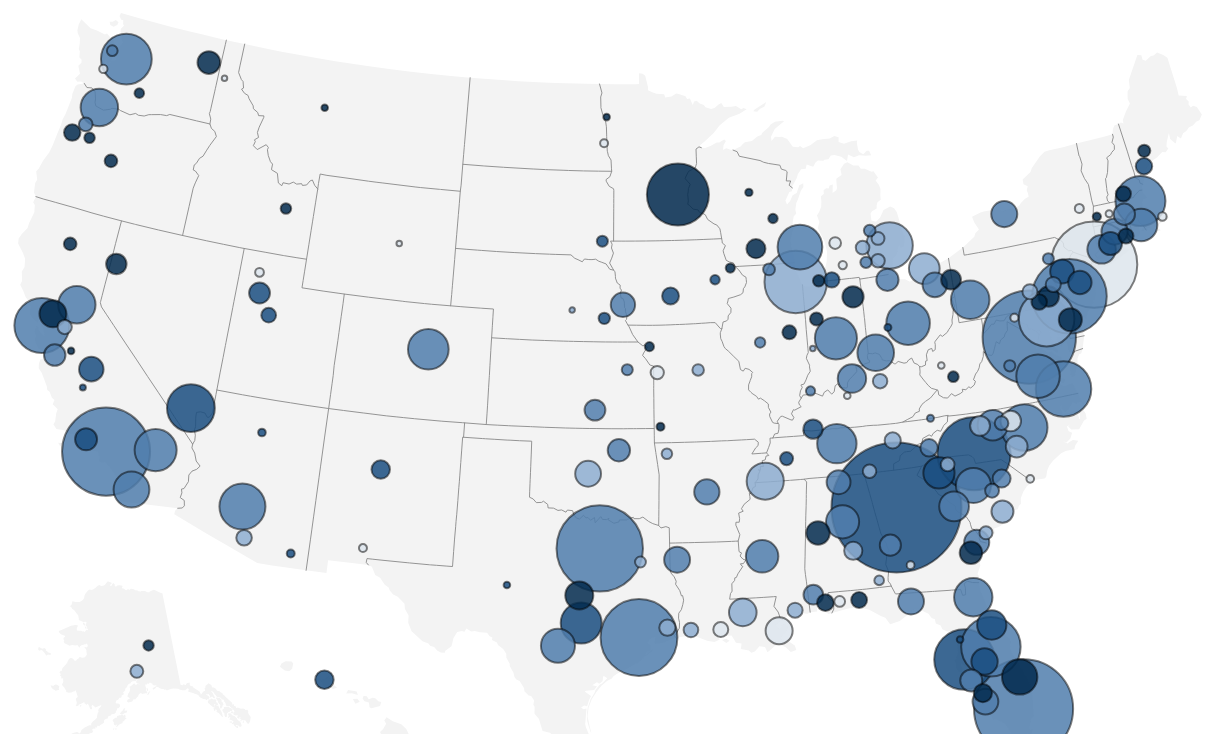
Photo: Brookings Institution / Getty Images
For too long, the Black economy has been treated as a monolith—or worse, invisible. But when you actually map the data, a far more complex and compelling picture emerges. The numbers reveal not just a massive consumer base, but a distinct economic ecosystem with its own patterns of ownership, spending behavior, and growth trajectories. Understanding this map is the first step toward recognizing opportunity—and closing gaps that have persisted for generations.
Let's start with the top line: Black American buying power is projected to reach $2.1 trillion by 2026, according to the Selig Center for Economic Growth at the University of Georgia. That figure alone would rank the Black consumer market as the 10th largest economy in the world, ahead of countries like Canada ($2.0 trillion), Italy ($1.9 trillion), and Brazil ($1.8 trillion) in nominal GDP terms. But aggregate numbers only tell part of the story. The real insight lies in where and how this spending occurs—and who captures it.
Consumer Behavior: Where the Dollars Flow
According to Nielsen IQ (2025), Black households allocate a higher percentage of their income to specific categories compared to the general population. In beauty and personal care, Black consumers spend 1.5x the national average, representing nearly 20% of the total market despite being 13.6% of the population. Footwear spending is 1.4x higher, telecommunications 1.3x higher, and children's apparel 1.2x higher. These patterns reflect both cultural preferences and structural factors, including marketing targeted at Black consumers and historical brand loyalties.
McKinsey & Company's 2025 "Black Consumer Report" found that Black consumers are 3.2x more likely to try a new product if they know it's from a Black-owned brand, and 68% say they actively seek out Black-owned alternatives when available. This preference creates a significant opportunity for Black entrepreneurs, but the supply side has yet to catch up. The report also noted that Black consumers are more brand-loyal than the general population, with 57% reporting they stick with brands they trust compared to 41% of white consumers.
The beauty gap is particularly striking. While Black consumers account for nearly 20% of beauty spending, less than 3% of beauty brands sold at major retailers are Black-owned. This disconnect has fueled a wave of Black-owned beauty and wellness startups— brands like Mented Cosmetics, Bread Beauty Supply, and Topicals—that are capturing market share precisely because they understand the consumer. Many of these brands have achieved national distribution through Target, Sephora, and Ulta, demonstrating that the demand is real when access is provided.
Who Owns: The Ownership Gap
While Black households represent roughly 13.6% of the U.S. population (U.S. Census Bureau, 2025), Black-owned businesses account for just 2.2% of firms with paid employees (Annual Business Survey, 2024). This ownership gap represents a staggering leakage of wealth. If Black businesses employed and generated revenue at the same rate as all U.S. businesses, the economy would gain an estimated 2.5 million jobs and add $700 billion in additional economic output annually.
The gap is not for lack of ambition. According to the Kauffman Foundation, Black Americans start businesses at a higher rate than any other demographic group—roughly 0.48% of the Black adult population starts a business each month, compared to 0.35% for whites. The bottleneck is not intention; it's access to capital and networks.
The Federal Reserve's 2025 Small Business Credit Survey found that Black business owners are denied loans at nearly 3x the rate of white business owners (42% vs. 14%). When they do receive loans, they receive smaller amounts—on average, Black borrowers receive $57,000 compared to $93,000 for white borrowers. This capital gap compounds over time, limiting ability to hire, invest in inventory, or scale operations. The average Black-owned firm generates $564,000 in annual revenue, compared to $1.1 million for white-owned firms—a gap that persists even when controlling for industry and location (McKinsey, 2025).
- $2.1 trillion: Projected Black buying power by 2026 (Selig Center for Economic Growth).
- 2.2%: Share of U.S. businesses with employees that are Black-owned (Annual Business Survey, 2024).
- $1.1 million vs. $564,000: Average revenue gap between white-owned firms and Black-owned firms (McKinsey, 2025).
- 48%: Growth rate of Black women-owned businesses since 2019 (fastest of any demographic group) (American Express State of Women-Owned Businesses, 2025).
- $8.2 billion: Combined annual revenue of the top 100 Black-owned businesses (Black Enterprise BE 100s, 2025).
- 3.2x: Likelihood of Black consumers trying a product if it's from a Black-owned brand (McKinsey, 2025).
- 34%: Share of Black-owned businesses concentrated in health care, social assistance, and professional services (U.S. Census, 2024).
- 42% vs. 14%: Loan denial rates for Black vs. white business owners (Federal Reserve, 2025).
Geographic Shifts: Where Growth Is Happening
Geographic concentration matters. While Atlanta, Washington DC, and Chicago have long been centers of Black affluence and business activity, the fastest growth in Black business ownership is now occurring in the South and Southeast. According to the Kauffman Foundation's 2025 "Growth Entrepreneurship Report," Black business formation rates have surged in:
Charlotte, NC (+42% since 2020): The Charlotte metro area has emerged as a hub for Black professional services firms, particularly in finance and consulting, leveraging the city's status as a major banking center. The proportion of Black-owned businesses with employees grew from 4.1% to 5.8% in five years.
Raleigh-Durham, NC (+38%): The Research Triangle's tech boom has created opportunities for Black-owned tech and STEM-related firms. Local incubators like the Raleigh Founded network report that Black founder applications doubled between 2022 and 2025.
Houston, TX (+31%): Houston's diverse economy and relatively low cost of entry have attracted Black entrepreneurs across sectors, from energy services to health care. The Greater Houston Black Chamber reported a 40% increase in membership since 2021.
Nashville, TN (+29%): The city's explosive population growth has created demand for Black-owned businesses in hospitality, entertainment, and professional services.
These metros combine lower costs of living with growing Black professional populations, creating fertile ground for new ventures. Meanwhile, Black spending in the suburbs has exploded—up 52% since 2020—as more Black families move outward from urban cores (Brookings Institution, 2025). This suburban shift has implications for where Black-owned businesses locate and which markets they serve.
The Digital Transformation
The pandemic accelerated a digital transformation in Black spending and Black business operations. E-commerce adoption among Black households jumped from 60% to 82% between 2019 and 2024 (Pew Research Center, 2025). This shift has enabled Black-owned businesses to bypass traditional retail gatekeepers and sell directly to consumers.
Platforms like Etsy and Shopify saw Black seller growth rates exceed 120% during this period. Shopify's 2025 diversity report noted that Black merchant revenue grew 2.5x faster than the platform average, indicating both increased participation and stronger performance. The data shows that Black consumers are not just early adopters of technology—they are driving trends in social commerce, with 73% of Black consumers using TikTok or Instagram for product discovery compared to 54% of the general population (NielsenIQ, 2025).
Digital platforms have also enabled the growth of "Buy Black" marketplaces—curated e-commerce sites like WeBuyBlack, The Black Owned Market, and Official Black Wall Street—that aggregate Black-owned products and make them discoverable to conscious consumers. These platforms reported combined traffic growth of 215% between 2020 and 2025, suggesting sustained consumer interest beyond moments of racial reckoning.
Sectoral Breakdown: Where Growth Is Concentrated
Growth is not uniform across sectors. The industries where Black-owned businesses are expanding fastest include:
Health Care and Social Assistance (34% of Black-owned employer firms): This sector, including home health care services, outpatient clinics, and social service organizations, has seen sustained growth driven by an aging population and Medicaid expansion in many states. Black women, in particular, are overrepresented in this sector, running 58% of Black-owned health care businesses.
Professional Services (22%): Consulting, legal services, accounting, and architecture firms have grown as corporate diversity programs create vendor opportunities and as Black-led institutions mature. The number of Black-owned law firms grew 18% between 2020 and 2025, according to the American Bar Association.
Technology (tripled from 12,000 to 36,000 firms): Between 2017 and 2024, the number of Black-owned tech firms tripled (Intuit 2025 Small Business Report). While this growth starts from a small base, it signals that barriers to tech entrepreneurship are slowly lowering—through coding bootcamps, venture capital diversity initiatives, and platforms that reduce startup costs.
Food and Beverage: Black-owned restaurants and food brands have gained visibility through media attention and delivery platforms. Black Restaurant Week, now operating in 35 cities, reported that participating businesses saw average revenue increases of 27% in 2025.
Federal contracting represents a significant and growing revenue stream. Black-owned businesses received $12.4 billion in federal contracts in fiscal 2025, a 15% increase from 2023 (U.S. Small Business Administration). However, this still represents only about 2% of total federal contracting dollars, far below the 13.6% population share.
Employment and Labor Force Dynamics
Black-owned businesses are significant employers within their communities. According to the 2024 Annual Business Survey, Black-owned employer firms employ approximately 1.4 million workers and generate $206 billion in annual revenue. The average Black-owned employer firm has 8 employees, slightly smaller than the national average of 12, reflecting the capital constraints that limit scaling.
Importantly, Black-owned businesses are more likely to hire Black workers. Research from the Stanford Institute for Economic Policy Research (2025) found that Black-owned firms employ a workforce that is 32% Black, compared to 12% for white-owned firms and 18% for all U.S. businesses. This multiplier effect means that growing Black-owned businesses directly addresses employment gaps in Black communities.
The Wealth Gap Context
Despite these growth trends, the racial wealth gap remains stark and persistent. The median Black family holds approximately $24,500 in net worth compared to $250,400 for the median white family (Federal Reserve Survey of Consumer Finances, 2025). This means that even as Black-owned businesses grow, they start with far less personal capital to invest and have thinner safety nets when businesses face downturns.
Homeownership, the primary wealth-building vehicle for most American families, tells a similar story: 44% for Black households versus 74% for white households. The gap has widened since the 2008 financial crisis, during which Black homeowners lost a disproportionate share of their wealth. Student debt also disproportionately burdens Black households, with 68% of Black graduates carrying student debt compared to 56% of white graduates, and average balances 25% higher (Brookings Institution, 2025).
These structural realities shape the Black economy—and underscore why mapping it accurately matters. High spending power coexists with low wealth because money flows through communities rather than settling in them. The goal of Black economic development is not just to capture more spending, but to transform spending into ownership and ownership into lasting wealth.
Banking and Financial Services
The financial services landscape for Black consumers and businesses is distinct. According to the FDIC's 2025 National Survey of Unbanked and Underbanked Households, 13.8% of Black households are unbanked (no checking or savings account), compared to 2.5% of white households. An additional 28% are underbanked, meaning they have a bank account but also rely on alternative financial services like check cashers and payday lenders.
This gap creates both a challenge and an opportunity. Black-owned banks and credit unions—there are currently 22 Black-owned banks and 56 Black-owned credit unions in the United States—serve communities that mainstream institutions often neglect. These institutions have seen renewed attention and deposits since 2020, with the largest, OneUnited Bank, reporting asset growth of 35% over five years. However, they remain small relative to the need, holding combined assets of less than $6 billion compared to trillions in the banking system.
The Path Forward: Policy and Private Sector Responses
Addressing the gaps in the Black economy requires coordinated action across sectors. The Biden administration's 2025 executive order on racial equity directed federal agencies to increase procurement from disadvantaged businesses by 50% by 2028, building on the $12.4 billion awarded in 2025. State-level initiatives, including California's $1.2 billion investment in Black-serving institutions and New York's Minority and Women-Owned Business Enterprise program, are creating additional pathways.
In the private sector, corporate supplier diversity programs have expanded. The Billion Dollar Roundtable, which recognizes corporations spending at least $1 billion annually with minority-owned suppliers, now has 28 members, up from 18 in 2020. Tech companies including Google, Microsoft, and Meta have committed a combined $500 million to venture funds backing Black founders through initiatives like the Google for Startups Black Founders Fund.
Community-based solutions are also scaling. Community Development Financial Institutions (CDFIs) like Hope Credit Union and Local Initiatives Support Corporation (LISC) deployed $3.2 billion to Black-owned businesses in 2025, with repayment rates exceeding those of traditional small business loans. Business leagues and networking organizations—including the National Black Chamber of Commerce, Black Business Association, and local chapters—are building the social capital that complements financial capital.
Conclusion
Mapping the Black economy requires moving beyond stereotypes and seeing the full picture: a diverse, dynamic, and digitally native market that is both a consumer powerhouse and a burgeoning source of enterprise. The data is clear: the Black economy is not a niche. It is a central, growing, and undervalued engine of American prosperity.
The $2.1 trillion in spending power is real. The 48% growth in Black women-owned businesses is real. The 2.2% ownership share is real. The $24,500 median Black family wealth is real. All of these numbers coexist, and understanding their relationships is essential for anyone seeking to participate in—or invest in—the Black economy.
The question is not whether to pay attention to the Black economy. The question is who will capture the insight first, and who will act on it to build wealth that lasts.
No Ads. By Us. For Us.
This article was only made possible by readers like you. We hope it inspired you to support Emerald Book, so we can continue producing content like this.
We will never show you ads, never sell your data, and never require a subscription to consume our content. Your gift helps us keep the truth accessible.
Please click the Support button on the bottom right of your screen to make a gift of any amount today.
Thank you for making this work possible.