

Emerald Pages
◆
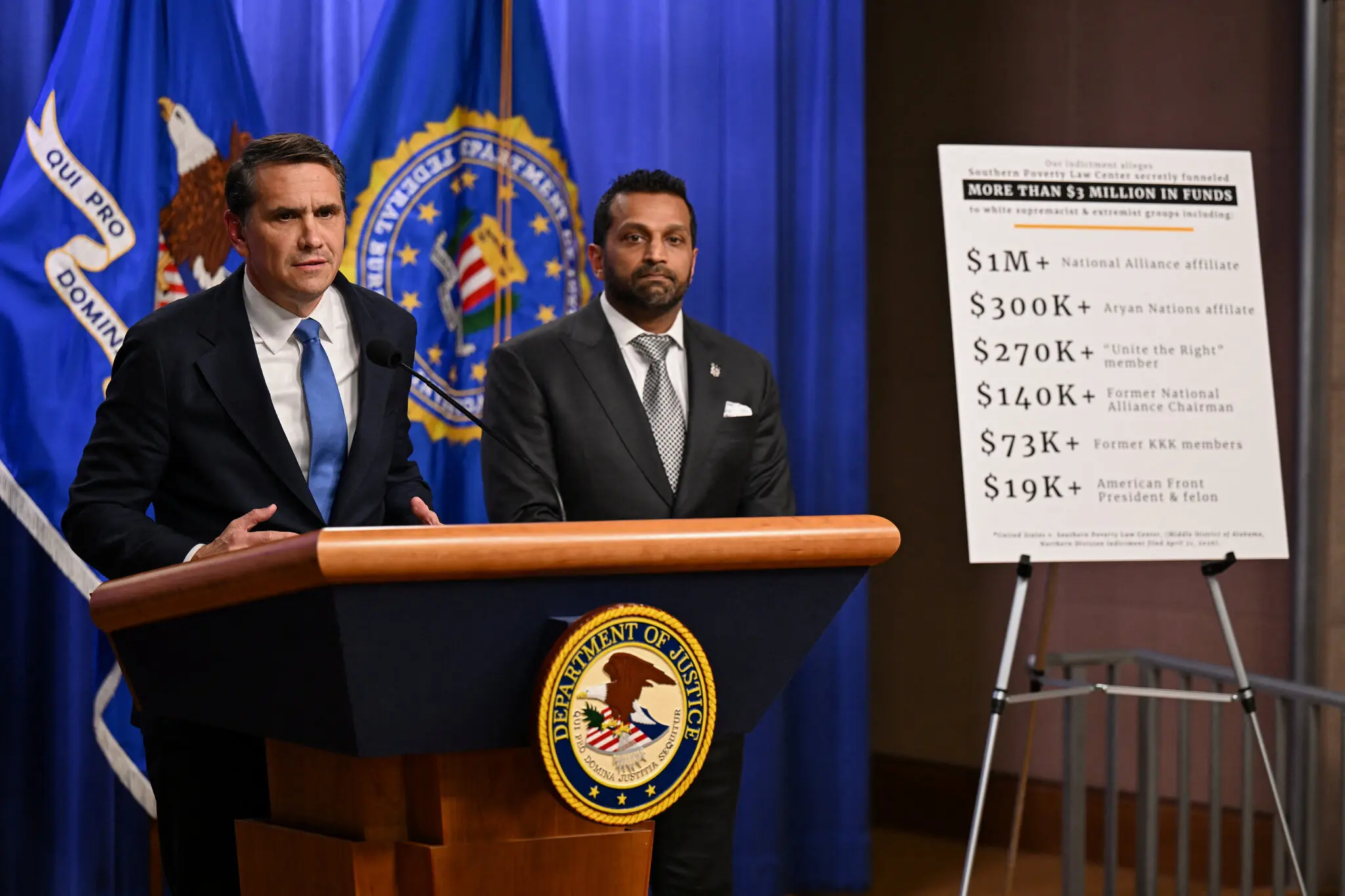
Photo: The New York Times
In a moment that would have seemed unthinkable a decade ago, the Southern Poverty Law Center (SPLC)—the iconic civil rights organization that has tracked white supremacist hate groups for over fifty years—is now the subject of a formal investigation. The very institution that helped dismantle the Ku Klux Klan and has won over $500 million in judgments against hate groups is being scrutinized not for wrongdoing, but for doing its job too well. This investigation is not an isolated event. It is the logical culmination of a decades-long campaign rooted in a profound and willful educational failure: the failure to teach white Americans the full, unvarnished truth about Black history, Black economic progress, and the ongoing need for remedial justice.
The attack on the SPLC follows a familiar blueprint. First, dismantle public education about systemic racism. Then, brand any acknowledgment of that racism as "divisive." Finally, target the institutions built to remedy it. This blueprint has already been tested and proven effective. Over the past five years, we have watched coordinated assaults on Diversity, Equity, and Inclusion (DEI) programs, the effective end of affirmative action by the Supreme Court, and a tidal wave of "reverse racism" lawsuits filed by organizations claiming that efforts to level an unlevel field are themselves discriminatory. The investigation of the SPLC is simply the final frontier: the moment when the watchdogs themselves are muzzled.
The underlying cause of all these phenomena is the same: a catastrophic educational gap regarding Black American history. When critics sue organizations for "reverse racism" or attack DEI initiatives as discriminatory against white people, they reveal a staggering ignorance of America's economic reality. They view the playing field as level, seeing only that the game has begun. In truth, the field remains not only unleveled but is actively being tilted by a legacy of policies that denied Black Americans access to the G.I. Bill, federally backed home loans, and high-wage industrial jobs well into the late 20th century. Without the knowledge of this lived history, fairness begins to look like oppression to the uninitiated. And the SPLC—which has meticulously documented this ongoing reality—becomes the enemy.
The Erasure of 160 Years of Black Economic Progress
What is at stake is not just symbols but substance. The four decades following the civil rights movement—roughly 1965 to 2005—saw the most significant expansion of the Black middle class in American history. This was fueled directly by affirmative action in higher education and federal contracting, as well as a societal (though imperfect) commitment to DEI. These policies worked. They were not handouts; they were surgical remedies for specific, documented historical injustices. Yet, because many white Americans have never been taught about the New Deal's exclusion of domestic and agricultural workers (primarily Black labor), or the decades of "separate but equal" that starved Black schools of resources, they cannot comprehend why a remedy was required in the first place.
- The Wealth Gap Reality: According to the Federal Reserve’s 2026 Racial Wealth Snapshot, the median white household holds $284,310 in wealth, compared to $44,100 for the typical Black household. While the ratio has shifted slightly to about 6-to-1 (down from 10-to-1 a decade ago), the absolute dollar-value gap increased by nearly $50,000 between 2019 and 2022 because white families started with significantly larger asset bases.
- The Education Gap: As of 2025, only 12 states have a K-12 mandate for Black history instruction. In regions without these mandates, Black history is often excluded or relegated to a few weeks. The College Board's AP African American Studies course expanded to 700 schools in 2024 to combat this, but it faces bans or credit restrictions in at least 17 states due to local laws limiting classroom discussions on race.
- The Legal Backlash: Following the 2023 Supreme Court ruling against affirmative action, federal court filings for workplace discrimination hit a record high of over 20,000 in 2025. Legal experts from HR Dive and Reuters attribute this surge to a massive spike in "reverse discrimination" claims, as the EEOC and conservative advocacy groups increasingly target Diversity, Equity, and Inclusion (DEI) programs as systemicly biased against white and male applicants.
The current offensive is rolling back that hard-won progress. By suing organizations for "reverse racism," by banning books about systemic injustice, and now by investigating the SPLC, anti-DEI activists are effectively arguing that the remedy is the disease. They are attempting to freeze history at the exact moment of peak inequality, declaring the work finished simply because they are tired of hearing about it. The SPLC is being investigated not because it has done something wrong, but because it has done its job effectively: it named the rot of white nationalism, and those who have been educated to believe that anti-racism is the "real racism" have begun to shoot the messenger.
The irony is tragic. In their ignorance of Black history, these activists fail to see that they are repeating the most destructive patterns of that history. The destruction of Black Wall Street in Tulsa, the violent backlash to Reconstruction, and the redlining of the 20th century were all predicated on the same lie: that Black advancement must come at the direct expense of white prosperity. It is a zero-sum fallacy. A nation where all citizens have equal access to capital, housing, and education is a richer, safer, and more stable nation for everyone. But you cannot see that truth if you believe the field is already level. You cannot see the solution if you refuse to diagnose the disease.
Until America commits to a comprehensive, mandatory education in Black American history—not as a "diversity side dish" but as the core narrative of the American economic miracle and its failures—this cycle will continue. The attacks on DEI, the lawsuits for reverse racism, and now the investigations into the SPLC are not evidence of progress. They are evidence of a retreat into a fantasy. They are the loud, aggressive demands of those who have been shielded from reality, demanding that the ugly truth be dismantled so they can continue to believe in a fairness that has never, in over 400 years, actually existed. The unleveled field remains, but now the referees are being fired for calling the fouls—and the last scorekeeper, the SPLC, has been dragged into the courtroom.
No Ads. By Us. For Us.
This article was only made possible by readers like you. We hope it inspired you to support Emerald Book, so we can continue producing content like this.
We will never show you ads, never sell your data, and never require a subscription to consume our content. Your gift helps us keep the truth accessible.
Please click the Support button on the bottom right of your screen to make a gift of any amount today.
Thank you for making this work possible.