

Emerald Pages
◆
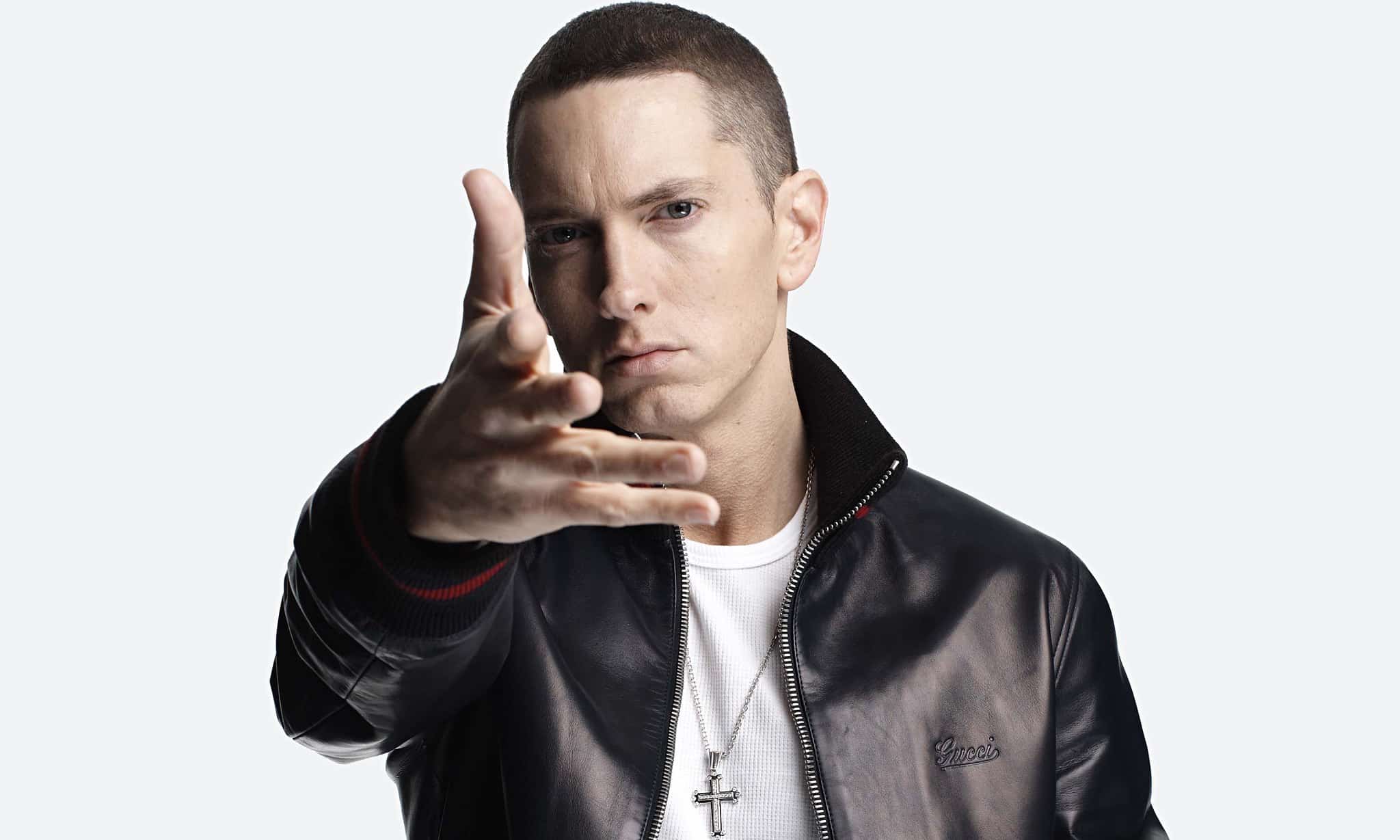
Photo: Eminem in black by Sebastian Vital | CC BY 2.0
There is a door that Black people forgot how to lock. We didn't lose the key—we never made one. For fifty years, hip-hop has been the most influential cultural movement on the planet, and for fifty years, we have watched non-Black artists walk through our doors, eat at our tables, and then complain about the temperature of the food. The most successful example is Marshall Mathers, a man so gifted that he forced the culture to acknowledge him, but so protected by his whiteness that he will never truly be one of us.
Let me be clear about what we are saying. Eminem is a phenomenal technical rapper. His pen game is legendary. But he will never—can never—be considered the greatest rapper of all time. Not because he lacks skill, but because no non-Black person can ever hold the crown in a Black art form. The "Greatest of All Time" in hip-hop is a title that carries the weight of struggle, authenticity, and lived Black experience. It is not a Grammy. It is not a plaque. It is a mantle that requires you to have been forged in the same fire as the culture itself. Eminem, for all his Detroit hardship, can walk into any room in America and be seen as a rapper first. The rest walk in as Black men who rap. That distinction is everything.
The privilege operates on a sliding scale. Consider DJ Khaled. He is Palestinian American, not Black, yet he has mastered the art of Black sonic architecture. He screams "Another one!" over beats crafted by Black producers, featuring Black artists, and builds a brand that radiates hip-hop royalty. But when the cameras stop rolling, Khaled is a businessman in a way that Black DJs and producers rarely get to be. He benefits from the cool of Blackness without the cost. He can pivot to luxury watches and mainstream media hosting because his proximity to Black culture is an accessory, not an identity. The same applies to DJ Vlad, who has built an empire extracting interviews from Black rappers, often positioning them in ways that highlight dysfunction and trauma. Vlad gets the clicks. Vlad gets the access. But Vlad can log off and be a white man in America. He never has to worry about being the story.
The Post Malone Paradox
Then there is the most brazen example: Post Malone. Here is a white man who came into hip-hop wearing gold grills, mumbling over trap beats, and openly admitting he doesn't relate to the culture he was profiting from. He later pivoted to country and rock with zero loss of fanbase or revenue. That is the ultimate privilege. He borrowed Black vernacular, Black fashion, and Black sonic textures to launch his career, and when he got bored or the heat became too much, he simply left. He didn't burn any bridges because for him, the bridge was never load-bearing. For Black artists, you cannot leave hip-hop. Hip-hop leaves you when you are no longer profitable. You are tied to it because it is your inheritance. Post Malone got a rental car; we bought a house we might lose in a tax lien.
The pattern is undeniable. These figures all wholeheartedly participate when the spotlight is bright and the checks are clearing. They stand on stage with Black artists. They talk about the struggle. They use the slang. But when the conversation turns to police brutality, to systemic denial of loans, to the experience of being followed in a store, they are silent—or worse, they are absent. They don't have to carry that weight. They get the privileges of being Black (the cultural cachet, the rhythmic inheritance, the "edge") and the privileges of being white (safety, mobility, the ability to be seen as an individual rather than a representative).
- The Extraction Economy: Non-Black figures extract monetary and social value from Black creativity without reinvesting in Black liberation or ownership.
- The Revolving Door: When hip-hop faces censorship, backlash, or devaluation, these artists are shielded by whiteness and can pivot to other genres seamlessly.
- The Ceiling: No matter how skilled, a non-Black artist will always be described as "one of the best white rappers" rather than simply "the best rapper." That ceiling is cultural, not technical.
We Keep Inviting Them to the Cookout
The hardest truth in this essay is not about Eminem or Post Malone. It is about us. Black people keep inviting everybody to the cookout. We celebrate the "unity" of a white artist succeeding in hip-hop. We cheer when DJ Khaled gets a star on the Walk of Fame. We give DJ Vlad exclusive interviews because we want the platform. In our hunger for validation and reach, we have forgotten that the cookout is not a public park. It is our backyard. It is where we talk about our day, our pain, our joy without having to translate or perform. When we let everyone in all the time, the cookout stops being a sanctuary and becomes a stage.
We are not arguing for segregation. We are arguing for boundaries. Hip-hop is a global art form now, and everyone is welcome to listen, to learn, and to be inspired. But participation trophies in Black culture need to stop. Eminem deserves his flowers, but he does not deserve the throne. DJ Khaled deserves his success, but he does not get to claim Blackness as a costume. Post Malone deserves his career, but he does not get to treat hip-hop like a stepping stone. And we, as Black people, deserve the right to say: You can eat at the table, but you cannot run the kitchen.
The next time you see a non-Black artist being celebrated as the "savior" or "greatest" of something Black, ask yourself: Would they be here if they couldn't leave? Would they love us if we weren't profitable? And then ask yourself the harder question: Why are we still holding the door open?
No Ads. By Us. For Us.
This article was only made possible by readers like you. We hope it inspired you to support Emerald Book, so we can continue producing content like this.
We will never show you ads, never sell your data, and never require a subscription to consume our content. Your gift helps us keep the truth accessible.
Please click the Support button on the bottom right of your screen to make a gift of any amount today.
Thank you for making this work possible.