

Emerald Pages
◆
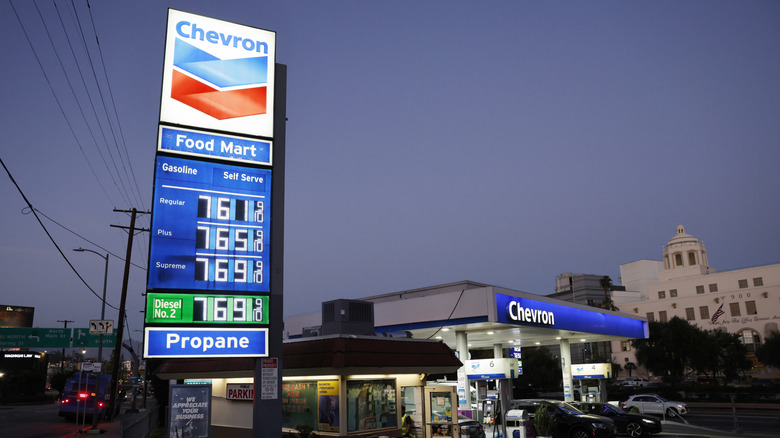
Photo: Mario Tama | Getty Images
We told you so. For years, Black America has been shouting from the rooftops, through ballot boxes, op-eds, church pulpits, and kitchen tables: a second Trump term would destroy the economy. With less than 15 percent of Black Americans ever casting a ballot for Donald Trump—a figure that held steady across 2016, 2020, and 2024—our opposition was not a political preference. It was a warning. We saw the disaster coming because we always feel the first tremors of economic collapse. We begged the nation to listen. You didn't. And now, as we stand at the precipice of deeper crisis with an active war against Iran, gas at $4.04 per gallon, and Black unemployment stubbornly holding at 7.1%—the highest of any racial group—every single thing we predicted, every warning delivered has come to fruition. And the worst is yet to come.
Let us be clear about what Black voters saw that the rest of America refused to see. In 2020, despite record voter turnout, Trump failed to crack 12% of the Black male vote and hovered near 8% among Black women—a rejection margin so vast it surpasses almost any other demographic divide in modern history. Political pundits called it "disloyalty" to a Republican party they claimed was changing. Economists should have called it what it was: a survival instinct. Black households, still scarred by the 2008 recession that wiped out generations of Black wealth, recognized the fragility of Trump-era tax structures, deregulation, and reckless foreign posturing long before the white-collar world did. We warned that tax cuts for billionaires would starve social programs. We warned that tearing up international treaties would lead to war. We warned that pumping cheap rhetoric while ignoring structural inflation would crush working families. You called us alarmists. Today, those alarms are sirens.
The consequences of ignoring Black America are no longer theoretical. They are written into every receipt, every job report, and every gold-star family flag. Today, the United States is actively engaged in a military conflict with Iran. The crisis began with airstrikes in late February 2026 involving the U.S., Israel, and Iran. In response, Iran closed the Strait of Hormuz—a chokepoint through which nearly 20% of the world's oil passes. Crude prices have hovered around $110 per barrel as a result. A two-week ceasefire was brokered in early April, but it is set to expire on April 22, 2026—just two days from now. The Institute for the Study of War estimates that the conflict has already inflicted between $300 billion and $1 trillion in economic damage on Iran alone. The cost to American taxpayers and working families rises by the day.
The War at the Pump and on the Paycheck
As of April 20, 2026, the national average for regular gasoline stands at $4.04 per gallon—a dramatic increase from pre-conflict levels. Black households, which already spend a larger percentage of their income on transportation and energy, are feeling this squeeze acutely. In many Black-majority urban neighborhoods, gas prices are even higher due to localized supply disruptions and price gouging. We told you that a foreign policy built on bravado rather than diplomacy would lead to war and $4 gas. You didn't listen. Now every trip to the pump is a reminder of the cost of ignoring Black voices.
Meanwhile, the job market is flashing warning signs that Black workers feel first. The Bureau of Labor Statistics reports that the U.S. economy added 178,000 jobs in March 2026—a rebound from a loss of 133,000 jobs in February. While the headline number shows growth, the volatility is deeply concerning. The overall unemployment rate sits at 4.3 percent. But for Black Americans, the rate is 7.1 percent—down slightly from 7.7 percent in February, but still the highest unemployment rate among all racial groups. When Black unemployment is nearly double the national average, the economy is not "recovering." It is recovering for some, while leaving others behind.
- Gas Prices: National average at $4.04 per gallon as of April 20, 2026—driven by the U.S.-Israel-Iran conflict and Iran's closure of the Strait of Hormuz.
- Active War: Military conflict began with airstrikes in late February 2026. A fragile ceasefire expires April 22, 2026. The Institute for the Study of War estimates $300 billion to $1 trillion in economic damage to Iran alone.
- Job Market Volatility: The U.S. lost 133,000 jobs in February 2026, then added 178,000 in March—a concerning zigzag that signals economic instability.
- Black Unemployment: At 7.1% (March 2026), Black unemployment remains the highest of any racial group, nearly double the 4.3% national rate.
- The Ceasefire Clock: The current truce ends April 22, 2026. Military analysts expect hostilities to resume, potentially pushing gas prices past $4.50 and triggering further job losses.
Kamala Harris Was Right: We Were the Canaries, and You Ignored the Song
Perhaps the most painful part of this unfolding catastrophe is the prescience of Vice President Kamala Harris—a woman Black voters rallied behind precisely because she understood the economics of our communities. During her 2019 presidential primary run and repeatedly throughout her vice presidency, Harris was unequivocal. She predicted that a return to Trump-era policies—tariff posturing, tax giveaways to the top 1%, the gutting of international alliances, and the withdrawal from nuclear oversight—would result in four specific disasters: an unmanageable spike in the cost of living, a resurgence of gas prices above $4.00, the high likelihood of an unnecessary foreign entanglement, and a job market that leaves Black workers behind.
At the time, centrist commentators called her "too pessimistic" and "divisive." Today, as we live through an active war with Iran, $4.04 gas, volatile job reports, and Black unemployment at 7.1%, her statements read not as predictions, but as receipts. Harris’s warnings were rooted in the economic reality experienced by her most consistent supporters: Black families. She noted that when you remove strategic petroleum reserves without a replenishment plan and simultaneously antagonize oil-producing nations, gas prices inevitably soar. When you cut social safety nets to fund corporate tax breaks, the cost of living shifts onto the backs of renters and hourly workers. And when you destabilize diplomatic norms—withdrawing from the JCPOA and escalating regional provocations—global conflicts ignite, pulling American resources into wars that have no clear exit strategy.
Black voters, who have historically borne the brunt of military drafts and economic recessions, understood this trifecta intuitively. We voted against the policies that would cause it. We warned our neighbors. We warned our coworkers. We warned the nation. And yet, we are now living inside that very prediction.
The Worst Is Yet to Come: The Ceasefire Ends in Two Days
If you think this is bad, you haven't been paying attention to what Black economists are saying now. The two-week ceasefire brokered in early April ends on April 22, 2026—just two days from this publication. Military analysts expect hostilities to resume. When they do, the Strait of Hormuz will likely close again. Crude oil, currently hovering around $110 per barrel, could spike to $130 or higher. Gas prices, already at $4.04 nationally, could surge past $4.50 or even $5.00 in hard-hit regions. Black communities, already paying the highest energy costs as a percentage of income, will be devastated.
The job market, which showed a fragile rebound in March after a brutal February loss, could tip back into negative territory. The Federal Reserve faces an impossible choice: raise interest rates to fight inflation (triggering mass unemployment) or hold steady while prices spiral. Black workers, always the first to be laid off and the last to be rehired, will bear the heaviest burden. Economists are increasingly using the "R-word"—recession—in their internal projections. Some are whispering "depression."
The conclusion is inescapable and devastating: America's economic engine is seizing up because the nation refused to listen to the mechanics who have been signaling the problem for generations. Black economic opinion—characterized by a deep skepticism of trickle-down theory, a preference for regulated markets, a fierce opposition to foreign adventurism, and an intuitive understanding of inflation's human cost—has been overwhelmingly, painfully, and repeatedly correct. The unified vote against the policies that led to the Iran war, $4 gas, volatile job markets, and persistent Black unemployment was not a "bloc vote." It was a forecast. It was a warning. It was a cry for help.
We told you so. But that phrase offers no comfort as we watch our communities suffer. The question now is not whether Black America was right—history has already answered that question. The question is whether America will finally, belatedly, desperately start listening before the worst of what we see coming arrives. The ceasefire ends in two days. The war could escalate. Gas could hit $5. Jobs could vanish. And the only way out is to heed the voices you have ignored for so long: end the unnecessary war, rebuild the social safety net, tax the wealthy, and listen to Black people when we tell you what's coming. We've never been wrong. You just haven't been listening.
No Ads. By Us. For Us.
This article was only made possible by readers like you. We hope it inspired you to support Emerald Book, so we can continue producing content like this.
We will never show you ads, never sell your data, and never require a subscription to consume our content. Your gift helps us keep the truth accessible.
Please click the Support button on the bottom right of your screen to make a gift of any amount today.
Thank you for making this work possible.