

Emerald Pages
◆
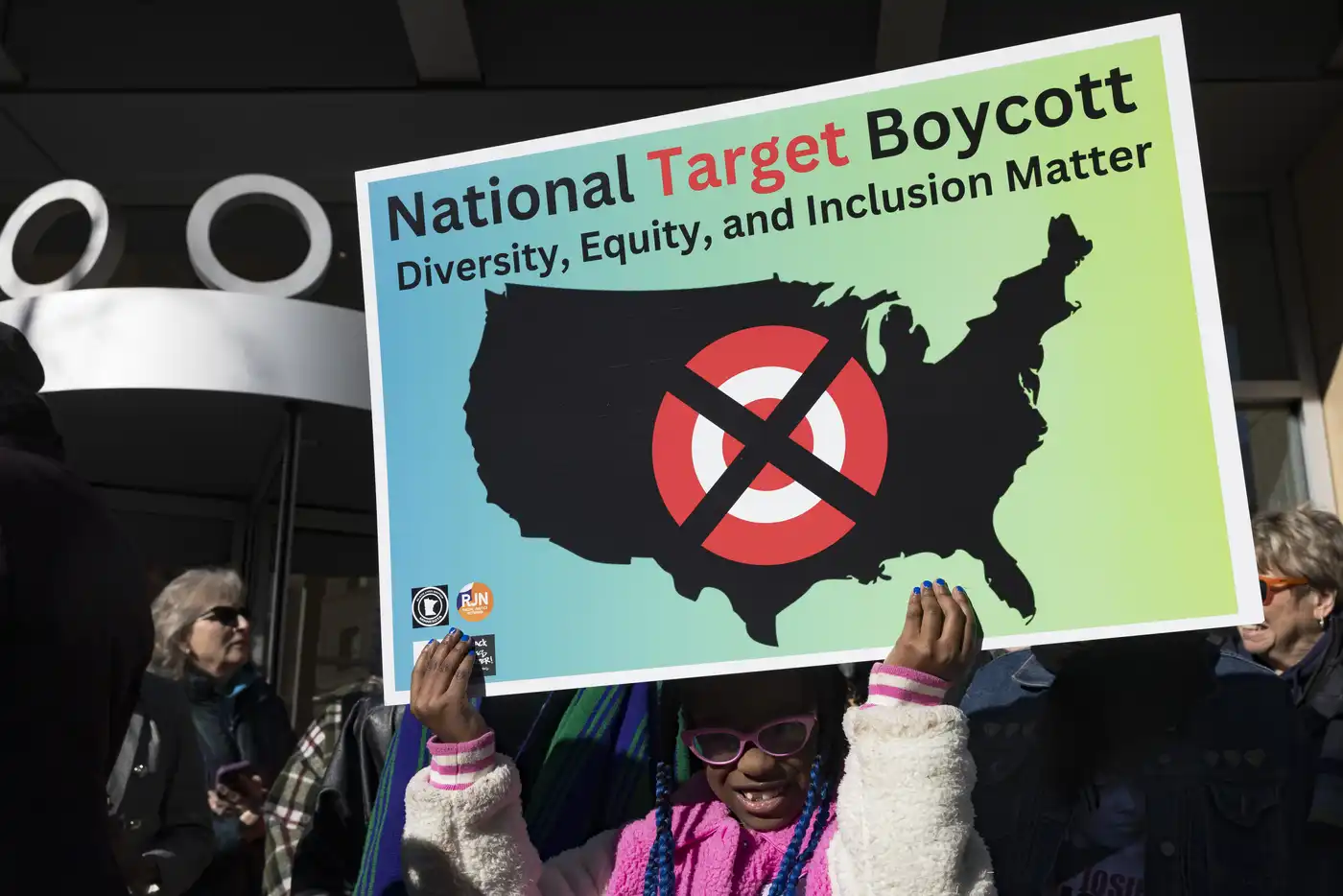
Photo: MPR News
The hypocrisy is staggering, yet we wear it like a second skin. We announce a boycott of Target over its rollback of DEI initiatives, vowing to never spend another dime on overpriced home goods from a corporation that feigns allyship. Then, with the same credit card, we drive through the Starbucks drive-thru, deposit our paychecks into Chase, and order dinner from DoorDash. We are quick to demand perfection from a Black-owned startup with a clunky app, yet we extend endless grace to a white-owned megabank that has been caught red-handed in predatory lending. Make it make sense.
The biggest lie we have internalized is that Black-owned businesses must be flawless to deserve our money. We require them to have the customer service of the Ritz-Carlton, the logistics of Amazon, and the prices of Walmart. And even when they achieve this impossible trifecta, we wring our hands and call them "too expensive." We compare the handcrafted bag from a Black designer in Harlem to the mass-produced knockoff from SHEIN. We compare the locally-sourced meal from a Black chef to the dollar menu. This is not economics. This is a trap. And it is the primary mechanism keeping us economically weak.
The $74 Billion Fast Food Hypocrisy
Let me make this painfully specific. You will not shop at a Black-owned soul food spot because the wait is 20 minutes and the sweet potato pie is $7 a slice. You leave a one-star review because the cashier was "short with you." But on the way home, you spend $12 at McDonald's for a meal that arrives in 90 seconds, served by a worker making poverty wages, prepared with ingredients linked to hypertension, diabetes, and colon cancer—diseases that are decimating our community.
You refuse to download the app for a Black-owned delivery service because it "crashes sometimes." But you happily tap your phone at Taco Bell for a "Cravings Box" filled with sodium, preservatives, and seed oils that doctors have been warning us about for decades. You won't try the new vegan spot opened by the Black couple down the street because it's "too expensive" at $15 a plate. Yet you spent $18 last week at Burger King on two Whopper meals, fries, and a shake—food that has zero nutritional value and a 100% track record of funding industries that actively lobby against our health.
The math is not complicated. Black Americans spend an estimated $74 billion annually on fast food. That is not an exaggeration. Billions of dollars flowing directly to corporations like Yum! Brands (KFC, Taco Bell), Restaurant Brands International (Burger King, Popeyes), and McDonald's. These companies have zero loyalty to us. They pull their DEI programs the moment the political winds shift. They place their franchises in our neighborhoods specifically to sell us ultra-processed poison. And we thank them by showing up three times a week.
Meanwhile, the Black-owned smoothie bowl shop that uses organic ingredients struggles to keep its lights on because we decided it's "bougie" and "inconvenient." The Black-owned meal prep service that could actually help us reverse our obesity and diabetes rates gets labeled "too expensive" while we spend double that amount on DoorDash fees and lukewarm french fries. We have been conditioned to accept mediocrity and toxicity from white-owned corporations while demanding Michelin-star excellence from our own people. That is not consumer behavior. That is self-sabotage.
The Unemployment Gap Doesn't Lie
Look at the data. While pundits scream about a "booming economy," the disparity tells a different story. In the current economic climate—marked by inflation, interest rate hikes, and whispers of a looming collapse—Black unemployment has consistently remained nearly double that of white unemployment. According to recent Bureau of Labor Statistics data, even as the "headline" numbers fluctuate, the gap persists like a scar. When the white economy catches a cold, the Black economy is rushed to the ICU. We feel the blow first, and we recover last. This is not an accident; it is a feature of a system where we have no buffer.
- The Trap: Waiting for a perfect Black business that doesn't exist while funding our own displacement.
- The Reality: Chase Bank profits from overdraft fees that hit Black communities hardest; Target walked back equity commitments when they became politically inconvenient; McDonald's sells us disease while donating to anti-Black politicians.
- The Solution: Radical economic insulation. Spend imperfectly. Buy Black, even when it hurts a little. Especially when it's food that actually nourishes us.
This is where the "Boycott Target, Bank at Chase" logic collapses. You cannot fight fire with a squirt gun. A boycott is a weapon, but if you withdraw your dollars from Target only to stuff them into Chase, you haven't divested; you've just moved your money from the frying pan into the fire. We are terrified of the "clunkiness" of Black-owned fintech apps, yet we trust the very institutions that redlined our grandparents. We need to stop looking for saviors in the market and start building our own lifeboats.
Buy Black, Even When It's Bad
We propose a radical, uncomfortable, and necessary shift. We need to buy Black even when the business is bad. Yes, you read that correctly. Even if the customer service is slow. Even if the app crashes on a Tuesday. Even if the price is 15% higher than Amazon. Even if the fried chicken isn't as salty as Popeyes. Why? Because when a Black business grows, we grow. When a Black bank has capital, we get loans. When a Black logistics company scales, we get jobs. When a Black restaurant thrives, it hires our teenagers, sources from Black farmers, and keeps the money circulating in our block. Perfection is a luxury of the oppressor. We are building infrastructure in a war zone.
This is not an argument for segregation. We are not suggesting we build a wall around the white economy. That is impossible, nor is it desirable. We need access to global markets, technology, and capital. But we desperately need a buffer. A buffer is a cushion. A buffer absorbs the shock when the inevitable recession comes, or when DEI falls out of fashion, or when a hostile political administration targets our communities. The buffer is a network of Black-owned enterprises that are robust enough to hire our people when the Fortune 500 lays them off.
So, delete the Chase app. It won't be convenient. You might have to drive further to a credit union or a Black-owned bank. Skip the drive-thru this week. Spend that $12 at the Black-owned juice bar or the Caribbean spot with the slow service. Buy the overpriced candles from the Black-owned boutique. The app might be clunky, but the algorithm wasn't designed to exclude you. We have spent centuries making white men rich while they perfected their platforms. It is time to invest in our own imperfection.
Stop looking for the perfect Black business. It does not exist because it has never been funded. We have been so busy boycotting the villains that we forgot to fund the heroes. The path to economic power is not a purity test; it is a long, messy, expensive grind. When we finally decide that our survival is worth the inconvenience of a glitchy app or a higher price tag or a 20-minute wait for our food, the unemployment gap will begin to close. Until then, we will continue to boycott Target with one hand, sign our paychecks over to Chase with the other, and poison ourselves at McDonald's in between. Make it make sense.
No Ads. By Us. For Us.
This article was only made possible by readers like you. We hope it inspired you to support Emerald Book, so we can continue producing content like this.
We will never show you ads, never sell your data, and never require a subscription to consume our content. Your gift helps us keep the truth accessible.
Please click the Support button on the bottom right of your screen to make a gift of any amount today.
Thank you for making this work possible.