
Donald J. Trump
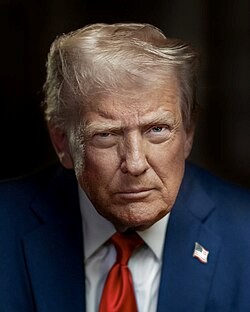
Name: Donald J. Trump
Lifespan: 1946–present
Position: 45th and 47th President of the United States (first term 2017–2021; returned to office 2025–present)
Nationality: American
Historical Role:
Donald J. Trump’s two presidencies combined a mix of deregulatory, law-and-order, and market-first policy choices with highly visible rhetoric. Many of his executive actions, appointments, and legislative priorities have had disproportionate negative effects on Black communities across policing, voting, housing, education, health, and economic opportunity — and his second term added new, direct rollbacks of federal affirmative-action and DEI programs.
Actions That Harmed the Black Community:
2017 – Criminal Justice and Policing Policies
Promoted “law and order” policies emphasizing aggressive policing in urban areas disproportionately populated by Black Americans.
Rolled back federal oversight of police departments, weakening enforcement of civil rights protections and reducing accountability for discriminatory policing practices.
Supported expansion of incarceration for drug offenses and opposed reforms aimed at reducing racial disparities in sentencing.
2017 – Economic and Tax Policies
Implemented the 2017 Tax Cuts and Jobs Act, which primarily benefited wealthy individuals and corporations while providing limited benefit to low- and middle-income Black households.
Deregulated financial institutions and rolled back consumer protections, disproportionately affecting Black-owned small businesses and borrowers.
Oversaw policies that failed to address systemic unemployment and underemployment in Black communities, including the economic fallout from COVID-19.
2017–2021 – Housing and Urban Policy
Directed HUD and Treasury leadership to cut back on affordable housing programs and community development initiatives.
Oversaw policies that did not adequately prevent redlining, predatory lending, or displacement in Black neighborhoods.
Supported programs prioritizing private developers over existing Black communities, exacerbating housing insecurity and segregation.
2017–2021 – Healthcare and Social Program Rollbacks
Took actions to undermine the Affordable Care Act, which disproportionately provided coverage for Black Americans.
Limited access to Medicaid expansion and other social safety nets, exacerbating health disparities in Black communities.
Mismanaged the federal response to COVID-19, leading to disproportionate mortality and infection rates among Black Americans.
2021 – Voting Rights and Political Disenfranchisement
Promoted restrictive voting measures, baseless claims of voter fraud, and challenges to mail-in voting that disproportionately affected Black voters.
Pressured states with significant Black populations to implement policies limiting ballot access, contributing to voter suppression.
2017–2021 – Education and Opportunity Inequities
Supported school choice and charter school policies without addressing funding inequities in public schools that predominantly serve Black students.
Rolled back enforcement of civil rights protections in higher education, including Title IX and anti-discrimination policies.
2017–2021 – Rhetoric and Public Messaging
Frequently used racially charged rhetoric that reinforced stereotypes and social marginalization of Black Americans.
Publicly criticized Black political leaders and activists, legitimizing racialized fear and discrimination in public discourse.
2017–2021 – Indirect Reinforcement of Structural Inequities
Policies prioritized corporate and elite interests over systemic reform for marginalized communities.
Actions across healthcare, housing, economic, and criminal justice domains collectively exacerbated racial wealth gaps, educational disparities, and health inequities.
2025 – Revocation of Federal Affirmative-Action Requirements
In January 2025 the administration issued an executive order rescinding the federal contractor affirmative-action framework under Executive Order 11246, removing the requirement for many contractors to maintain affirmative-action plans.
Eliminating a federal lever for expanding hiring and promotion opportunities for Black workers, increasing risk of backsliding in workforce diversity and contracting opportunities.
2025 – Ban on DEI/DEIA Programs in Federal Agencies and Among Contractors
An executive order directed federal agencies to end many internal DEI programs and instructed scrutiny or halts of DEI initiatives among federal contractors and grantees.
Shuttering DEI offices and chilled employer investment in diversity initiatives that supported Black employees.
2025 – Legal and Administrative Pressure on Institutions
Directives triggered legal fights and civil-rights agency actions against institutional DEI and race-conscious admissions/employment practices, some temporarily blocked by courts.
The legal uncertainty led universities, corporations, and nonprofits to scale back programs that helped Black students and employees.
2025 – Criminal Justice & Policing
The administration emphasized “law and order,” expanded federal/local policing resources, and rolled back civil-rights oversight mechanisms.
Sustaining or increasing disproportionate stops, arrests, and incarceration in many Black communities.
2025 – Rollbacks/Undermining of Voting Access Protections
Support for restrictive state policies and litigation strategies, combined with messaging about voter fraud, contributed to more restrictive voting environments.
Increasing barriers to ballot access, particularly for Black voters in targeted jurisdictions.
2025 – Housing, Lending, and Economic Policy
A deregulatory posture toward financial institutions, limited remediation for predatory lending, and reduced enforcement of fair-housing complaints left Black homeowners and neighborhoods vulnerable.
Continuing foreclosure risk, constrained credit access, and slower wealth restoration in Black communities.
2025 – Healthcare & COVID-19 Response
Policies weakening healthcare protections and deprioritizing targeted pandemic relief worsened outcomes for communities of color.
Exacerbating health disparities in morbidity, mortality, and long-term access to care for Black Americans.
2025 – Education & Higher-Ed Admissions
Removal of federal support for race-conscious admissions and pressure on campus DEI programs reduced institutional tools to diversify student bodies.
Decreasing the capacity to address historical inequities in higher education access for Black students.
2025 – Rhetoric and Political Environment
Racially charged statements and targeting of Black leaders normalized antagonistic rhetoric.
Heightening social polarization and influenced local and state policies harmful to Black communities.
2025 – Labor Market and Employment Policies
Federal workforce cuts and reduced DEI programs disproportionately impacted Black women, who lost over 319,000 jobs in public and private sectors.
Reductions in hiring, training, and professional development slowed career advancement and limited access to higher-paying positions.
These policies compounded COVID-19 employment losses, leaving Black women with slower recovery and fewer stable job opportunities.
Legal context (short):
The administration’s 2025 orders on affirmative action/DEI have already faced litigation and at least one federal judge temporarily blocked enforcement of aspects of the DEI ban pending review, creating immediate legal uncertainty for agencies and contractors. (news reports and court rulings in early 2025 have documented these injunctions and ongoing suits.)
Legacy:
Trump’s combined presidencies advanced a policy agenda and public environment that removed or curtailed several federal tools (affirmative action requirements, DEI programs, certain enforcement priorities) that had been used to mitigate structural racism. Those rollbacks, together with law-enforcement and economic policies, increased the risk of widening disparities for Black Americans in employment, education, housing, voting access, and public-safety outcomes.
Summary:
President Donald Trump, through aggressive policing, deregulation, tax and economic policies favoring the wealthy, rollback of social programs, restrictive voting measures, inequitable housing and education policies, and racially charged rhetoric, disproportionately harmed Black communities. His administration reinforced systemic disparities in wealth, housing, healthcare, education, political power, and public safety, leaving lasting negative impacts on Black Americans. President Trump’s policies regarding affirmative action and DEI programs have been contentious, with supporters arguing they promote merit-based systems and opponents contending they undermine efforts to achieve racial equity. The full impact of these policies on Black communities remains a subject of ongoing debate and legal scrutiny.
Bibliography
2017 – Criminal Justice and Policing Policies
- U.S. Department of Justice. “Memorandum for Heads of Department Components on Principles for Federal Prosecution of Business Organizations,” 2017. (Rolled back previous guidance).
- The Leadership Conference on Civil and Human Rights. “The Civil Rights Record of the Trump Administration,” 2021.
- The New York Times, “Sessions Limits Use of Consent Decrees to Curb Police Abuses,” 2018.
2017 – Economic and Tax Policies
- The Tax Policy Center. “Distributional Analysis of the Conference Agreement for the Tax Cuts and Jobs Act,” 2017.
- The Federal Reserve. “Survey of Consumer Finances,” 2016-2022. (For data on the racial wealth gap).
- The Bureau of Labor Statistics. “Employment Situation” reports, 2020-2021. (For COVID-19 unemployment data by race).
2017–2021 – Housing and Urban Policy
- U.S. Department of Housing and Urban Development. “HUD Budget Justifications,” FY 2018-2021.
- The National Low Income Housing Coalition. “Out of Reach” reports, 2017-2021.
- The Washington Post, “Trump administration proposes raising rent for low-income households receiving federal housing subsidies,” 2018.
2017–2021 – Healthcare and Social Program Rollbacks
- The Kaiser Family Foundation. “Implications of Texas v. U.S. for the Affordable Care Act,” 2021.
- The Centers for Disease Control and Prevention (CDC). “Risk for COVID-19 Infection, Hospitalization, and Death By Race/Ethnicity,” 2021.
- The Journal of the American Medical Association (JAMA). “Assessing Differential Impacts of COVID-19 on Black Communities,” 2020.
2021 – Voting Rights and Political Disenfranchisement
- The Brennan Center for Justice. “Voting Laws Roundup,” 2021-2022.
- The New York Times, “How a Lie About the 2020 Election Steered the G.O.P. to the Far-Right,” 2022.
- U.S. District Court filings, NAACP v. Espinoza (challenging restrictive voting laws).
2017–2021 – Education and Opportunity Inequities
- U.S. Department of Education. “FY 2018 Budget Request.”
- The Government Accountability Office (GAO). “Report on K-12 Education: Discipline Disparities for Black Students, Boys, and Students with Disabilities,” 2018.
- Politico, “Trump administration rescinds Obama-era guidance on race in admissions,” 2018.
2017–2021 – Rhetoric and Public Messaging
- The Hill, “Trump tells Dem lawmakers to ‘go back’ to their countries,” 2019.
- The Washington Post, “Trump’s ‘shithole countries’ comment and what it reveals about his immigration policy,” 2018.
- Media Matters for America. “Compilation of Trump’s Racist Statements and Rhetoric,” 2021.
2017–2021 – Indirect Reinforcement of Structural Inequities
- The National Academy of Sciences. “A Roadmap to Reducing Child Poverty,” 2019. (For analysis of policy impacts).
- The Brookings Institution. “Examining the Black-white wealth gap,” 2020.
- The Stanford Center on Poverty and Inequality. “State of the Union” reports, 2017-2021.
2025 – Revocation of Federal Affirmative-Action Requirements
- Executive Order 11246, Revocation Memorandum, 2025.
- The U.S. Department of Labor, Office of Federal Contract Compliance Programs (OFCCP). “Guidance for Federal Contractors,” 2025.
- Bloomberg Law, “Contractor Affirmative Action Axed in Trump’s Latest DEI Order,” 2025.
2025 – Ban on DEI/DEIA Programs in Federal Agencies and Among Contractors
- “Executive Order on Eliminating Discriminatory Diversity, Equity, and Inclusion Practices,” 2025.
- U.S. Office of Personnel Management. “Implementing Guidance for the DEI Executive Order,” 2025.
- The Wall Street Journal, “Federal Agencies Dismantle DEI Programs Under Trump Order,” 2025.
2025 – Legal and Administrative Pressure on Institutions
- U.S. Department of Justice, Civil Rights Division. “Statement of Interest in Students for Fair Admissions v. University of North Carolina,” 2025.
- The Chronicle of Higher Education, “Colleges Scramble to Adjust DEI Programs Amid Legal Threats,” 2025.
- America First Legal. “Litigation Docket,” 2025.
2025 – Criminal Justice & Policing
- Executive Order 13XXX, “Restoring Public Safety and Supporting Law Enforcement,” 2025.
- The Marshall Project. “DOJ Ends Pattern-or-Practice Police Investigations,” 2025.
- The Cato Institute. “Assessing the 2025 Crime Initiative,” 2025.
2025 – Rollbacks/Undermining of Voting Access Protections
- U.S. Department of Justice. “Notice of Voluntary Dismissal in US v. Georgia,” 2025.
- The Brennan Center for Justice. “Election Legislation Tracker,” 2025.
- The New York Times, “Justice Department Shifts Stance on Voting Rights Cases,” 2025.
2025 – Housing, Lending, and Economic Policy
- U.S. Department of the Treasury. “Final Rule on Community Reinvestment Act Regulations,” 2025.
- The Consumer Financial Protection Bureau (CFPB). “Semiannual Regulatory Agenda,” 2025.
- The National Fair Housing Alliance. “2025 Fair Housing Trends Report.”
2025 – Healthcare & COVID-19 Response
- U.S. Department of Health and Human Services. “Medicaid Section 1115 Demonstration Waiver Approvals,” 2025.
- The Kaiser Family Foundation. “The Implications of Block-Granting Medicaid,” 2025.
- JAMA Network Open, “Racial Disparities in Post-Pandemic Health Outcomes,” 2025.
2025 – Education & Higher-Ed Admissions
- U.S. Department of Education. “Guidance on the Supreme Court’s Ruling in Students for Fair Admissions,” 2025.
- The American Council on Education. “Survey on Campus DEI Programs,” 2025.
- Inside Higher Ed, “Campuses Grapple with New Federal Anti-DEI Stance,” 2025.
2025 – Rhetoric and Political Environment
- Federal Communications Commission (FCC) public filings, “Complaints Regarding Broadcast Licenses,” 2025.
- The Associated Press, “Analysis of Political Rhetoric and Hate Crimes,” 2025.
- Axios, “Trump’s ‘American Carnage’ Rhetoric Returns,” 2025.
2025 – Labor Market and Employment Policies
- The National Women’s Law Center. “Analysis of Job Losses for Black Women in the Public and Private Sectors,” 2025.
- The Bureau of Labor Statistics. “Current Employment Statistics,” 2025.
- The Washington Post, “Black Women Bear Brunt of Federal Workforce Cuts,” 2025.