
Alfred Moore Waddell
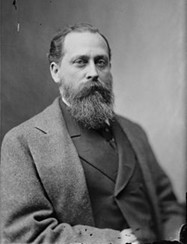
Name: Alfred Waddell
Lifespan: 1834–1912
Position: Mayor of Wilmington, North Carolina (1898)
Nationality: American
Historical Role:
Alfred Waddell was a white supremacist politician and journalist who played a central role in the Wilmington Coup and Massacre of 1898, the only successful coup d’état in U.S. history. Waddell and other white leaders sought to overthrow the multiracial government of Wilmington, which included Black elected officials, and replace it with an all-white administration. Waddell used inflammatory rhetoric to incite white mobs, directly contributing to the deaths, displacement, and disenfranchisement of Black citizens.
Actions That Harmed the Black Community:
November 10, 1898 – Incitement of White Mob Violence
Waddell publicly encouraged white residents to “take back” Wilmington from Black political influence.
He led armed white mobs through the city, intimidating, assaulting, and murdering Black residents to seize control.
Dozens of Black citizens were killed, with estimates ranging from 60 to over 300.
November 10, 1898 – Overthrow of Wilmington’s Elected Government
Waddell and the white mob forcibly removed Black and white Fusionist officials from office, including the mayor and city council.
This coup replaced a legally elected, racially inclusive government with an all-white administration under Waddell’s leadership.
November 10–12, 1898 – Destruction of Black Property and Economic Base
Black-owned businesses, homes, and churches were looted and burned during the violence.
Waddell’s leadership enabled the systematic seizure of wealth, land, and economic opportunities from the Black community.
1898–1900 – Long-Term Political and Social Oppression
Following the coup, Waddell implemented policies that disenfranchised Black voters through literacy tests, poll taxes, and intimidation.
The massacre and subsequent political control cemented white supremacy in Wilmington for decades, suppressing Black political participation and civil rights.
1898–1912 – Normalization of White Supremacy
Waddell’s public speeches and editorials glorified racial violence and reinforced white supremacist ideology.
His actions legitimized extralegal violence as a tool to maintain racial hierarchy and control over Black communities.
Legacy:
Alfred Waddell is remembered as a key architect of the Wilmington Coup, which violently overturned democracy and entrenched white supremacy in North Carolina. His leadership directly caused the deaths, displacement, and disenfranchisement of Black citizens and the destruction of their property. Historians view Waddell as emblematic of the use of political power and mob violence to maintain racial oppression during the post-Reconstruction era.
Summary:
Alfred Waddell, through incitement and leadership of white mobs, orchestrated the 1898 Wilmington Coup and Massacre. He forcibly removed Black political leaders, oversaw widespread killings and property destruction, and entrenched white supremacy in Wilmington, causing long-lasting harm to Black communities politically, economically, and socially.
Bibliography
1898 – Incitement of White Mob Violence
- Prather, Leon H. We Have Taken a City: Wilmington Racial Massacre and Coup of 1898. John F. Blair, Publisher, 1984.
- Zucchino, David. Wilmington’s Lie: The Murderous Coup of 1898 and the Rise of White Supremacy. Atlantic Monthly Press, 2020.
- Cecelski, David S., and Timothy B. Tyson, editors. Democracy Betrayed: The Wilmington Race Riot of 1898 and Its Legacy. University of North Carolina Press, 1998.
1898 – Overthrow of Wilmington’s Elected Government
- Umfleet, LeRae. A Day of Blood: The 1898 Wilmington Race Riot. North Carolina Office of Archives and History, 2009. (The official report of the 1898 Wilmington Race Riot Commission).
- Waddell, Alfred M. “The Story of the Wilmington, North Carolina, Race Riots.” Collier’s Weekly, November 26, 1898. (A primary source account from the coup leader himself, justifying his actions).
- “The Wilmington Race Riot,” The News and Observer (Raleigh, NC), November 11-15, 1898. (Contemporary newspaper coverage, which played a key role in inciting the violence).
1898 – Destruction of Black Property and Economic Base
- Godwin, John L. Black Wilmington and the North Carolina Way: Portrait of a Community in the Era of Civil Rights Protest. University Press of America, 2000. (Details the long-term economic impact).
- Edmonds, Helen G. *The Negro and Fusion Politics in North Carolina, 1894-1901*. University of North Carolina Press, 1951.
- Reaves, Bill. *Strength through Struggle: The Chronological and Historical Record of the African-American Community in Wilmington, North Carolina, 1865-1950*. New Hanover County Public Library, 1998.
1898–1900 – Long-Term Political and Social Oppression
- Perman, Michael. *Struggle for Mastery: Disfranchisement in the South, 1888-1908*. University of North Carolina Press, 2001.
- Glenda E. Gilmore. *Gender and Jim Crow: Women and the Politics of White Supremacy in North Carolina, 1896-1920*. University of North Carolina Press, 1996.
- North Carolina Constitutional Amendment of 1900. (The legal document that enacted disenfranchisement, a direct result of the 1898 coup).
1898–1912 – Normalization of White Supremacy
- Ayers, Edward L. The Promise of the New South: Life After Reconstruction. Oxford University Press, 1992. (Places Wilmington within the broader context of the period).
- Tyson, Timothy B. The Ghosts of 1898: Wilmington’s Race Riot and the Rise of White Supremacy. The News & Observer, 2006.
- Waddell, Alfred M. Some Memories of My Life. J.J. O’Brien, 1908. (His autobiography, which reflects on his role and the ideology behind it).