

Emerald Pages
◆
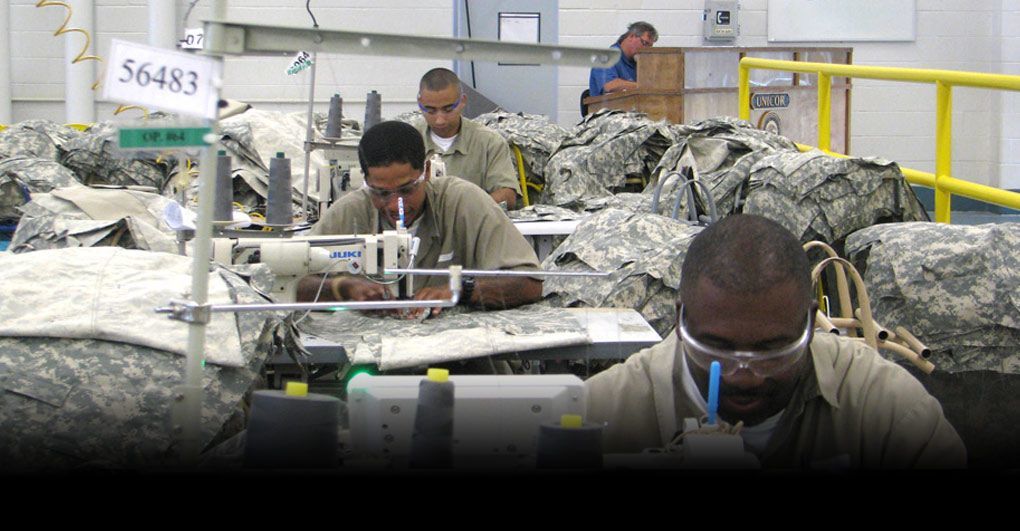
Photo: Federal Bureau of Prisons via Wikimedia Commons
There exists a quiet, seldom-discussed machinery beneath the surface of American public finance. It is a system where the aggressive policing of Black communities generates substantial revenue for municipalities, states, and private prison corporations, while simultaneously siphoning billions of dollars of wealth out of those very same neighborhoods. This is not merely a matter of social justice—it is an economic transfer mechanism, one that subsidizes the broader American economy at the direct expense of the Black economy.
Consider the numbers: between 2010 and 2020, cities and counties across the United States collected over $100 billion in fines and fees, the majority levied against low-income residents and disproportionately against Black motorists and pedestrians. In municipalities like Ferguson, Missouri, pre-2014 investigations revealed that fines and forfeitures accounted for nearly 20% of the city's general fund. This revenue model—dubbed "policing for profit"—turns law enforcement into a collection agency, extracting wealth from predominantly Black communities to balance municipal budgets, fund police pensions, and underwrite infrastructure projects that rarely benefit the neighborhoods where the revenue originated.
The extraction operates through multiple channels. Traffic stops, which Black drivers experience at rates 20-30% higher than white drivers, result in tickets that carry court costs, administrative fees, and license suspension penalties. A single $50 ticket can balloon into thousands of dollars in compounded fees. When individuals cannot pay, they face arrest, further court costs, and—most devastatingly—loss of employment. A suspended license often means an inability to commute to work, triggering job loss, housing instability, and a cascading cycle of economic precarity. This process, repeated millions of times annually, systematically removes Black workers from the formal economy.
The Carceral Economy: Growth at the Margins
The broader American economy has, over the past four decades, built significant infrastructure dependent on high incarceration rates. The private prison industry—with companies like CoreCivic and GEO Group—generates over $5 billion annually, much of it derived from contracts with states and the federal government. These companies are publicly traded, their stock portfolios benefiting from policies that maintain high occupancy rates. Meanwhile, the communities supplying these "clients" are disproportionately Black. One in three Black boys born today can expect to be incarcerated at some point in their lifetime, compared to one in seventeen white boys.
- $182 billion: Estimated annual cost of mass incarceration to the U.S. economy, yet this represents transfer payments and public expenditure, not wealth creation in Black communities.
- 2.3 million: People currently incarcerated in the U.S., with Black Americans representing 33% of the prison population despite being 13% of the general population.
- $13 billion: Annual revenue generated by the bail bond industry, which preys disproportionately on Black families who cannot afford pre-trial release.
- 40%: The reduction in lifetime earnings for Black men who experience incarceration, representing a staggering loss of intergenerational wealth transfer.
The economic beneficiaries of this system extend far beyond prison operators. Police departments themselves often operate asset forfeiture programs—civil and criminal—that allow law enforcement to seize cash, vehicles, and property without charging individuals with a crime. Under federal equitable sharing programs, local departments can retain up to 80% of seized assets. Between 2000 and 2019, the Department of Justice's asset forfeiture fund collected over $45 billion. While the stated purpose is to dismantle criminal enterprises, the reality is that the vast majority of seizures involve small-scale cash amounts from individuals never charged with any crime. The Black community bears the brunt of these seizures.
The Black Economy: A Story of Extraction
While the American economy—particularly the public sector, private corrections, and surveillance technology industries—has experienced measurable growth tied to policing and incarceration, the Black economy has suffered parallel devastation. The racial wealth gap, already vast, widens with each cycle of policing interaction. A study by the Brookings Institution found that Black families with comparable credit scores, income, and education to white families pay higher auto insurance premiums—a direct result of zip code-based risk assessment tied to policing density. They pay higher interest rates on loans, face predatory lending products, and experience housing discrimination that locks them out of the primary vehicle for wealth accumulation: home equity.
The multiplier effect of over-policing is destructive in ways that extend beyond immediate extraction. High rates of incarceration remove fathers, mothers, and breadwinners from households. The children of incarcerated parents experience lower educational attainment, reduced lifetime earnings, and higher rates of future system involvement. This is intergenerational wealth destruction engineered by policy. Each dollar extracted via fine or fee is a dollar not invested in education, not saved for a down payment, not passed down to the next generation.
A Reckoning and a Road Forward
Recognizing this economic reality does not require abandoning public safety. It requires decoupling municipal finance from policing revenue. Cities across the country—from Philadelphia to Los Angeles—have begun experimenting with citation reform, eliminating fees for low-income residents, and capping fine revenue as a percentage of general funds. The most transformative policies involve redirecting a portion of public safety budgets toward community-based violence intervention, mental health response, and economic development in historically over-policed neighborhoods.
For investors and policymakers alike, the opportunity lies in recognizing that the current system is not merely unjust—it is economically inefficient. The extraction model yields diminishing returns. Communities that are over-policed and under-invested in generate lower property values, reduced business formation, and suppressed consumer spending. Conversely, municipalities that have shifted resources toward economic development, small business support, and community health see rising tax bases and reduced long-term public safety costs. The choice is between a punitive extraction economy and a generative investment economy.
The Black economy, left to thrive without the weight of systemic extraction, represents one of the great untapped growth engines in America. Buying power already exceeds $1.8 trillion, and Black-owned businesses are the fastest-growing segment of entrepreneurship. But until the invisible tax of over-policing is eliminated—until fines cease to fund city halls and incarceration ceases to fuel corporate balance sheets—the Black economy will continue to hemorrhage capital it desperately needs to build generational wealth. The paradox is stark: the same system that props up certain sectors of the American economy does so by siphoning the future of the Black economy. A true economic reckoning demands we dismantle this transfer mechanism and replace it with investment, dignity, and the recognition that safety and prosperity are not zero-sum.
No Ads. By Us. For Us.
This article was only made possible by readers like you. We hope it inspired you to support Emerald Book, so we can continue producing content like this.
We will never show you ads, never sell your data, and never require a subscription to consume our content. Your gift helps us keep the truth accessible.
Please click the Support button on the bottom right of your screen to make a gift of any amount today.
Thank you for making this work possible.