

Emerald Pages
◆
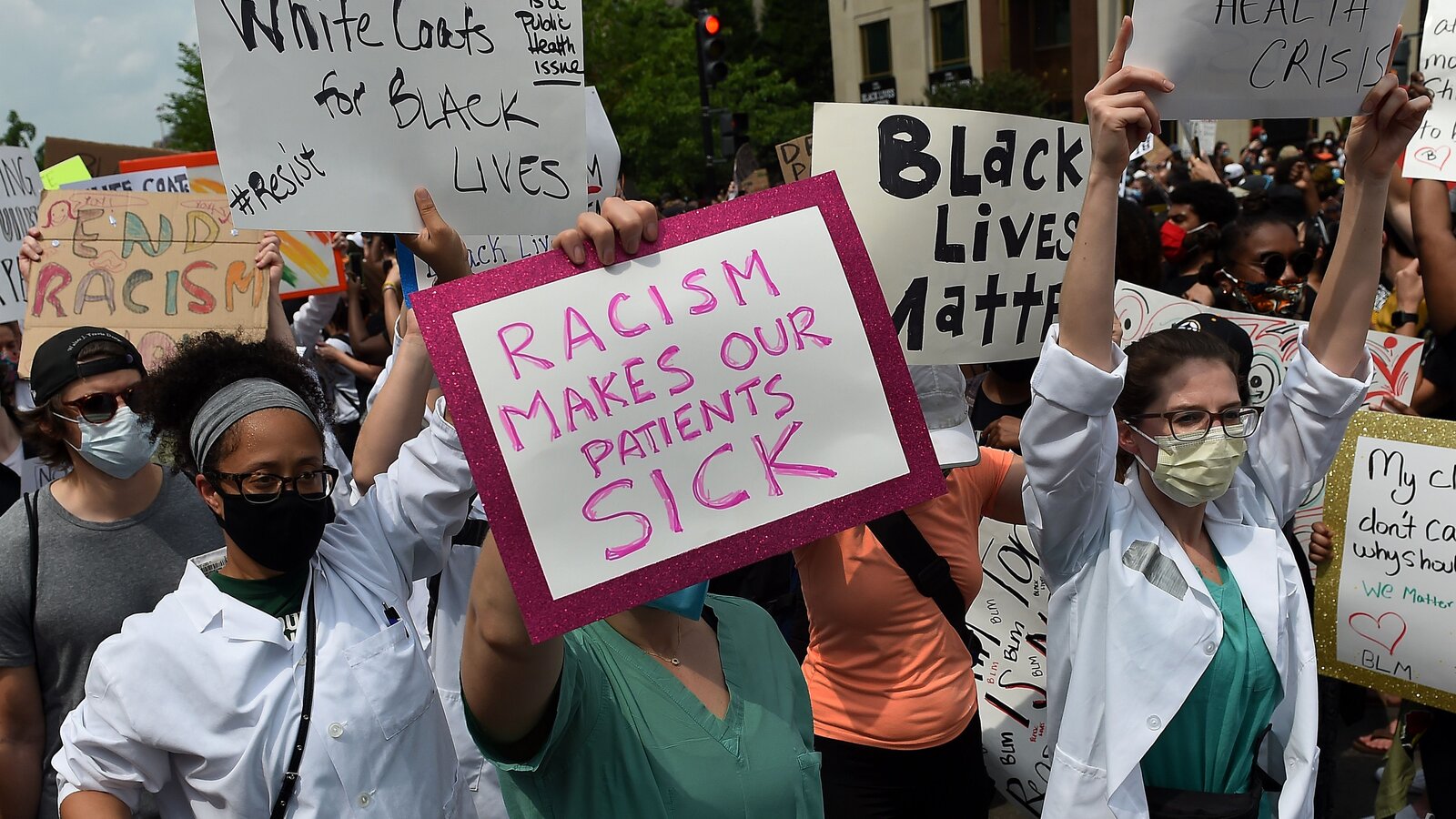
Photo: The New York Times
The question of reparations for Black Americans has long been framed as a moral debate—a reckoning with the original sin of American slavery. But framing it solely as morality misses the sharper, more urgent truth: reparations are an economic necessity. The racial wealth gap is not a natural phenomenon; it is the direct, quantifiable result of centuries of state-sanctioned extraction. From the stolen wages of enslaved labor to the systematic denial of homeownership through redlining, the American economy was built on the foundation of Black exclusion. Reparations are not a gift. They are a long-overdue settlement on a debt that continues to accrue interest.
Consider the math. Between 1619 and 1865, approximately four million Black people were held in chattel slavery. Economists estimate that the value of their stolen labor—calculated as unpaid wages, compounded at interest—ranges from $6 trillion to $14 trillion in today's dollars. That is wealth that should have built families, purchased land, funded education, and seeded businesses. Instead, it built Harvard, Yale, Princeton. It built Wall Street, the railroads, the cotton economy that financed America's industrial revolution. The capital that made America a global power was extracted from Black bodies and Black families, with zero compensation.
Emancipation did not bring restitution. Instead, Reconstruction was followed by a century of domestic terrorism, Black Codes, Jim Crow segregation, and state-sanctioned violence. During this period, Black Americans who had managed to acquire land—approximately 15 million acres by 1910—were systematically stripped of it through violence, fraudulent tax sales, and discriminatory court proceedings. The federal government, through programs like the New Deal's Federal Housing Administration, explicitly refused to insure mortgages in Black neighborhoods, a practice called redlining that locked generations out of the primary mechanism for middle-class wealth building: home equity.
The Wealth Gap by the Numbers
The cumulative effect is staggering. Today, the median white family holds approximately $285,000 in wealth. The median Black family holds roughly $45,000. This 6-to-1 ratio has remained virtually unchanged since the federal government began tracking it in the 1980s. For every dollar of wealth held by a white family, a Black family holds roughly 15 cents. These numbers represent not just a gap but a chasm—one that widens with each generation.
- $14 trillion: Estimated value of unpaid enslaved labor adjusted to today's dollars, according to economists at the Brookings Institution.
- $326 billion: Estimated wealth extracted from Black communities through redlining between 1930 and 1960 alone, based on FHA loan data.
- 98%: The percentage of Black families who were denied FHA mortgages between 1934 and 1968, compared to white families who received them at high rates.
- $84 trillion: The total intergenerational wealth transfer expected over the next two decades—the majority of which will flow to white families, further entrenching the gap.
These are not abstract numbers. They represent down payments never made. College educations never funded. Businesses never launched. Emergencies that became catastrophes because there was no savings cushion.
The Body Keeps the Score: How Wealth Deprivation Makes Us Sick
The economic extraction described above does not only show up in bank accounts. It shows up in hospital beds, in funeral homes, in the shortened lifespans of Black Americans. There is a term for what poverty and chronic stress do to the body: weathering. Coined by public health researcher Dr. Arline Geronimus, weathering describes the accelerated biological aging that occurs when bodies are subjected to decades of systemic oppression, discrimination, and economic precarity. It is why Black Americans experience chronic disease at younger ages. It is why maternal mortality for Black women is three to four times higher than for white women, regardless of education or income level. It is why the life expectancy gap between Black and white Americans remains stubbornly wide.
The mechanism is straightforward. Wealth buys health. A family with savings can afford to live in a neighborhood without lead pipes and mold. They can afford fresh produce and preventive care. They can afford to take time off work when sick, rather than pushing through and making conditions worse. They can afford to manage chronic conditions with medication rather than rationing pills. Poverty, by contrast, is a pathogen. It lodges itself in the body and attacks, year after year, until the body gives out.
- 3x: Black women are three times more likely to die from pregnancy-related causes than white women.
- 2x: The rate of infant mortality for Black babies compared to white babies.
- 40% higher: The rate of heart disease among Black adults compared to white adults.
- 4.5 years: The life expectancy gap between Black and white Americans—a gap that has widened in recent years.
- Weathering: The biological process where chronic stress accelerates aging, leaving Black bodies biologically older than their chronological age.
The medical establishment has long framed these disparities as problems of behavior or genetics. But the research is clear: when you control for wealth, most health disparities disappear or shrink dramatically. A Black family with the same income, education, and assets as a white family has health outcomes that are remarkably similar. The problem is not Black bodies. The problem is that Black families, on average, have one-tenth the wealth. They have been systematically denied the resources that protect health.
This is where reparations enters as a public health intervention. A 2022 study published in the Journal of the American Medical Association modeled the health impacts of a hypothetical reparations program. The researchers found that a $250,000 payment to every Black American adult would reduce the mortality gap by 35% within a decade. It would cut the infant mortality rate in half. It would prevent thousands of premature deaths annually. Reparations, in this framing, is not merely economic justice. It is a massive, targeted, evidence-based public health intervention—one that addresses the root cause of the Black health crisis rather than simply treating its symptoms.
The Economic Case for Closing the Debt
Opponents of reparations often frame them as unaffordable. But the opposite is true: the persistent racial wealth gap is itself a massive drag on the American economy. A 2020 study by Citigroup found that closing the racial wealth gap would have added $16 trillion to the U.S. economy over the prior two decades. That is $16 trillion in lost GDP—economic activity that never happened because Black families lacked the capital to start businesses, buy homes, and invest in education. The same study found that the health-related costs of the racial wealth gap—in emergency room visits, untreated chronic disease, lost productivity, and premature death—amount to over $200 billion annually.
Reparations, properly structured, would function as economic stimulus of historic proportions. Economist Julianne Malveaux estimates that a $10 trillion reparations program—distributed over 20 years—would generate $2.5 trillion in annual GDP growth, create millions of jobs, and generate hundreds of billions in new tax revenue. The multiplier effect of putting capital in the hands of those who have been systematically excluded is profound. Money given to low-wealth households is spent, not saved. It circulates. It builds Main Streets. It stabilizes neighborhoods. And, crucially, it buys health.
Moreover, reparations are not merely about individual payments. The modern reparations movement—championed by figures like Rep. Cori Bush and advocates at the National African American Reparations Commission—envisions a comprehensive framework that includes direct cash transfers, but also investment in education, homeownership, business development, community health infrastructure, and environmental remediation in communities poisoned by industrial neglect. It is about building institutions that have been systematically denied: community health centers, land trusts, community development financial institutions, and generational wealth vehicles that can survive and thrive.
Models That Work
The United States has already done reparations before—just not for Black Americans. The Homestead Act of 1862 gave away 270 million acres of public land, primarily to white settlers, creating the foundation for millions of families' wealth. The GI Bill provided education, housing, and business loans to returning veterans—but was administered locally in ways that systematically excluded Black veterans. Japanese Americans interned during World War II received $1.6 billion in reparations through the Civil Liberties Act of 1988, along with a formal apology. Native American tribes have received land settlements and trust fund payments. The precedent for redress exists. It has simply never been applied to the descendants of enslaved Africans at scale.
At the local level, Evanston, Illinois, became the first U.S. city to implement a reparations program, allocating $10 million for housing assistance to Black residents who experienced discrimination. California's Reparations Task Force released a landmark report in 2023, detailing hundreds of billions in harms and offering a blueprint for state-level action. While the political will at the federal level remains elusive, these local efforts demonstrate that reparations are not theoretical—they are implementable, measurable, and life-changing for recipients.
Critics ask: why now? But the question itself misunderstands the timeline. The demand for reparations is not new. It dates back to 1865, when General William Tecumseh Sherman issued Special Field Order No. 15, promising 40 acres and a mule to newly freed families—a promise rescinded weeks later after President Andrew Johnson reversed the order. The demand has been carried by generations: by Callie House and the Ex-Slave Pension Movement in the 1890s; by Rep. John Conyers, who introduced reparations legislation every year for three decades; by the Movement for Black Lives and the scholars and activists who have refused to let the question die.
Reparations are not a handout. They are a debt repayment. They are an acknowledgment that the American economy was built on uncompensated labor and systematically denied participation. They are an investment in a future where the wealth gap is not an immutable fact but a solvable problem. And they are the only cure for the disease that has been killing Black Americans for generations—a disease not of biology, but of policy; not of genetics, but of greed. The cost of doing nothing—economically, morally, medically, and socially—is far higher than the cost of finally, fully, paying what is owed. The question is not whether America can afford to do reparations. The question is whether America can afford to keep making us sick.
No Ads. By Us. For Us.
This article was only made possible by readers like you. We hope it inspired you to support Emerald Book, so we can continue producing content like this.
We will never show you ads, never sell your data, and never require a subscription to consume our content. Your gift helps us keep the truth accessible.
Please click the Support button on the bottom right of your screen to make a gift of any amount today.
Thank you for making this work possible.